This is not talked about. This is how German business deals with Russia

Long application processing times, difficult to obtain export permits and very limited payment methods: German industry associations leave no doubt that doing business with Russia is difficult, if not impossible.
“A particular problem is that even spare parts, software updates, remote access or service services can be very legally complex in individual cases,” reports the German Optical, Photonics, Analytical and Medical Industries Association (Spectaris), for example.
It is therefore all the more surprising that despite all these adversities, business – at least in the field of medical technology represented by Spectaris – seems to be in full swing. Export data from the Federal Statistical Office show that exports of medical technology products have increased significantly over the past two years. And there are more similar examples.
It is true that the total value of medical technology products exported from Germany to Russia decreased in 2021-2022 from approximately EUR 880 million (PLN 3.7 billion at the current exchange rate) to approximately EUR 800 million (PLN 3.3 billion). In the year following the Russian invasion of Ukraine, this value even dropped to approximately EUR 700 million (PLN 2.9 billion). Since then, exports have been growing again. In 2024, this value increased to approximately EUR 730 million (over PLN 3 billion), and in the previous year to approximately EUR 790 million (less than PLN 3.3 billion).
Operating in Russia is one of those topics that German companies willingly remain silent about. Despite several EU sanctions packages and public criticism of the country's involvement, approximately 1,600 German companies. Others continue to export goods to the country or import raw materials that are not subject to sanctions.
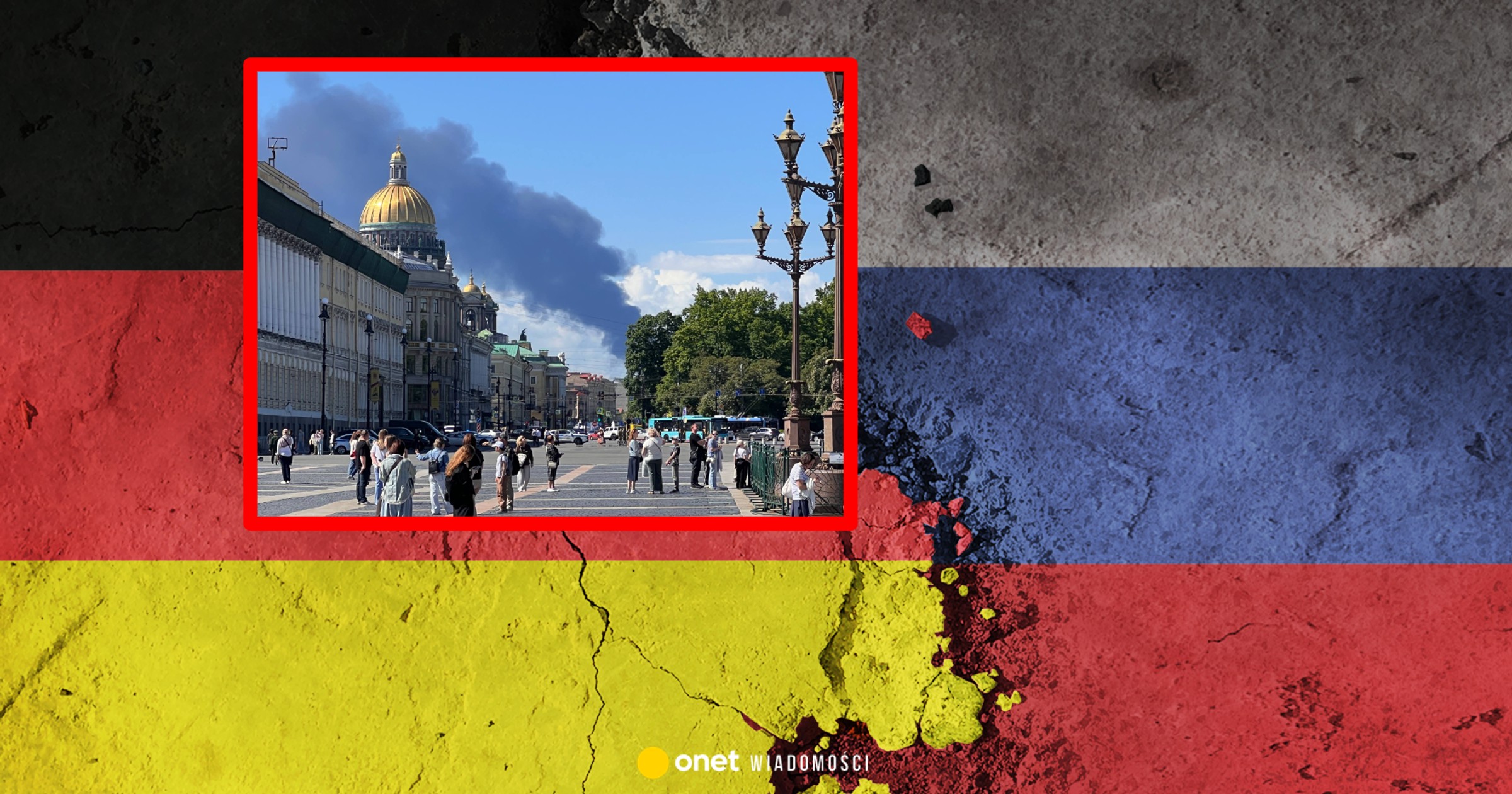
The St. Petersburg Economic Forum, to which Russian President Vladimir Putin invites this week, once again draws attention to the activities of German entrepreneurs in Russia. German guests also come at the warlord's call. Among the invited company heads there is, for example: Stefan Duerrwho along with the group EcoNiva operates in Russia as a milk producer. He also announced his presence Thomas Bruch from a German trading company Globus Holding. Far-right politicians are also expected Alternatives for Germany (AfD).
The criticism of German participation in Putin's prestigious meeting is enormous and once again raises a fundamental question about the German economy: how close can relations with Russia be maintained? It is true that the volume of trade between Germany and Russia decreased from almost EUR 60 billion (PLN 254 billion) in 2021 to approximately EUR 8 billion (PLN 33.8 billion) last year. There is no doubt, however, that apart from the concerns from the DAX index, there are still many medium-sized enterprises in this country – and in some sectors, activity is even growing again.
The Eastern Committee of the German Economy wants German companies to limit their activities in Russia to a minimum. “Since February 2022, the process of withdrawing from the Russian market has been proceeding at a rapid pace,” the association reports. He points to the value of imports from Russia, once mainly natural gas and crude oil, which since the beginning of the war has dropped from approximately EUR 33 to EUR 1.3 billion (from PLN 139 billion to PLN 5.5 billion). Instead of energy raw materials, Germany currently buys mainly food and feed, fertilizers and metals from this country – and to a relatively small extent..
But there is also an economic reality beyond these falling trade numbers and company announcements to leave the market. José A. Campos Nave, partner at the international law firm Spencer West based in London, knows the situation of German entrepreneurs in Russia very well. Campos Nave served the Russian market for the consulting firm Rödl for five years – including after the Russian invasion of Ukraine in 2022.
Small and medium-sized enterprises remain in Russia
According to the expert there has never been a great exodus of German companies from this country.
Only 20 to 30 percent German companies have withdrawn from Russia since the beginning of the war. The rest still operate there in adapted structures
says Campos Nave.
According to the expert, the fact that the number of enterprises in Russia has decreased significantly in statistics is also due to the legal “constructions” that many companies use. — Many enterprises are reducing the number of companies. Five companies are then merged into one, for example, explains Campos Nave.
Especially medium-sized enterprises with production plants are not interested in withdrawing from the country. In the event of withdrawal, they would have to sell the plants significantly below their market value.
— Large corporations that are under public scrutiny make such lossy sales. Medium-sized enterprises avoid this and in many cases try to stay in Russia, says a business consultant.
Persistence may even pay off for them in the end.
If the war ended, the companies that remained in Russia would obviously have a huge advantage
says Campos Nave.
For example, the German manufacturer of agricultural machinery Claas only suspended the operations of its factory in Krasnodar after the outbreak of the war. “Currently, combine harvesters are no longer produced there. That's why we supply combine harvesters from Germany, which are still clearly exempt from sanctions,” says the company. As a result of the war, activity in Russia “declined very significantly.” Agricultural machinery is specifically excluded from EU sanctions packages because it is needed for food production.
According to the Eastern Committee of the German Economy withdrawal from Russia has become virtually impossible for businesses due to Russian retaliatory measureswithout the risk of total loss and damages lawsuits or even criminal investigations. “Our observations show that only in individual cases it is possible to liquidate operations in Russia – but the value is much lower,” we read.
Before Putin's war against Ukraine began, 6,800 German companies operated in Russia. After the withdrawal of industrial concerns such as Volkswagen and Siemens, the largest foreign representatives in the country are now international companies from the food or household chemicals industries. They are under constant pressure from the Russian authoritieswhich may subject foreign enterprises to compulsory administration at any time. This happened with Bosch Siemens Hausgeräte, Stada, DMG Mori, Wintershall and Uniper. Most recently, in January 2026, Russia placed the Danish building materials company Rockwool under receivership.
What changed as a result of the war was supplier structure of Russian enterprises. According to Campos Nave, supply chains to Germany and Europe are interrupted in many cases. – However, the gap left by Europe was filled by Chinese companies – says the expert. It is true that initially the quality of industrial suppliers from Asia was not comparable to European quality, but now it is China has also significantly caught up in terms of quality.
However, in the food, pharmaceutical and medical technology industries, these interrupted supply chains are not visible. For humanitarian reasons, this activity is exempt from sanctions against Russia. And many companies in these industries apparently use it extensively.
The Eastern Committee of the German Economy reports that chemical and pharmaceutical products, food and feed account for more than half of German exports to Russia. The main emphasis in exports is on medicines and medical technology. After the war begins, it is not only exports of medical technology that increase. “Sales of German pharmaceutical products in Russia have even increased recently,” reports the Eastern Committee.
In turn, large companies from the medical technology and pharmaceutical industries deny that their operations in Russia are growing. “We have significantly reduced our operations and no longer supply military hospitals, for example,” says medical technology company Siemens Healthineers. Turnover in Russia has been declining since the beginning of the war and in fiscal year 2025 was less than one percent of total turnover.
The pharmaceutical company Bayer also emphasizes that in response to the Russian invasion of Ukraine in February 2022, it has suspended all activities in Russia that are not related to the supply of necessary products in the field of health and agriculture. The company emphasizes its “ethical obligation” not to deny civilians access to essential health and agricultural products, as this would result in a multifold increase in the number of deaths in this war. “Over the last five years, our turnover in Russia amounted to approximately 2 percent of the group's turnover,” says Bayer.
Competitor Merck argues similarly, citing a “humanitarian responsibility to patients who depend on our products for chronic and life-threatening diseases.” Therefore, “medicines necessary for life” continue to be supplied to Russia, and “in full compliance with all international sanctions regulations.”
Despite all the business difficulties in Russia and corporate reticence, medical technology industry association Spectaris appears to at least have reservations about sanctions against the Putin-ruled territory. “The industry does not fundamentally question the political goals of the sanctions. However, it notes that in individual cases practical obstacles may hamper the provision of supplies to patients,” Spectaris reports.