Beyond the specter of Vietnam: Is Trump's Iran adventure the beginning of America's decline as a superpower?

In 1965, in a famous speech to justify military intervention in Vietnam, President Lyndon B. Johnson argued that Washington's goal was to ensure that “every country can shape its own destiny.” Johnson admitted, however, with a hint of cynical realism, that “the weaknesses of man are such that force must often precede reason.”
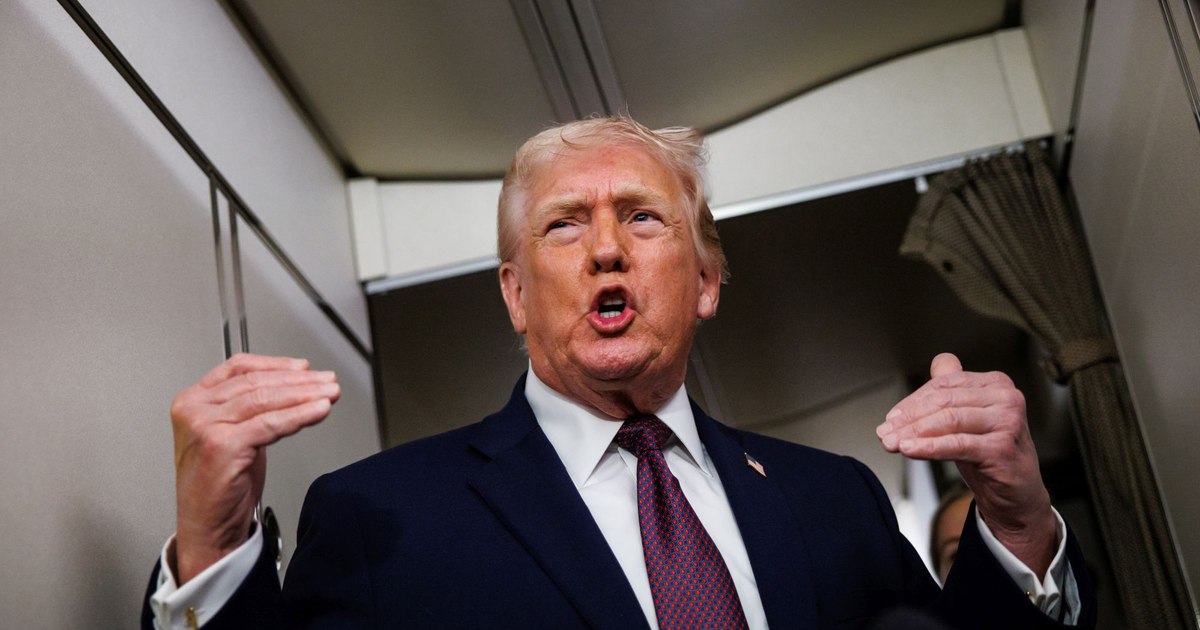
US President Donald Trump/PHOTO:Getty Images
That era bequeathed an elegant justification of the moral mission of the United States, a template that presidential speechwriters have consistently turned to in times of crisis. But modern history shows that White House leaders, intoxicated by the illusion of absolute military superiority, have repeatedly been drawn into asymmetric conflicts, only to find themselves bogged down and worn down by adversaries they grossly underestimated.
It was thought that Donald Trump would be immune to such a fate. An avowed opponent of “endless wars,” he seemed like a leader who would never confuse brute force with strategic victory. However, Trump's “little trip to Iran” – judging by the drafts of the peace accords circulating in chancelleries – is universally perceived as a failure of all proportions. The June 2025 war appears today as a monument to confused objectives and poor planning, writes The Guardian.
In terms of scale, the current conflict, of course, does not compare to the trauma of Vietnam, which lasted for years and claimed the lives of 58,220 American soldiers. By comparison, the Iran file looks like a simple short-term operation. But at the level of geopolitical consequences, this “excursion” could represent the turning point in which the US is forced to admit not only the lack of an effective battle plan, but the absence of a grand strategy adapted to the contemporary interconnected world.
The roots of American cynicism and the shadow of the past
The irony is that Trump's political rise is itself a byproduct of Vietnam. Historian Fredrik Logevall, a professor at Harvard University, points out that Americans' alienation, resentment, cynicism and deep distrust of institutions have their roots in that era. “Americans have moved from naivety to a cynicism that threatens democracy,” he says.
In this polarized ecosystem Trump flourished. Domestically, the consequences of the Iranian crisis will not match Vietnam: society has not been torn apart, and the number of victims is incomparably lower. At most, the inflation caused by the energy shock will electorally tax an already unpopular administration in November's by-elections.
Internationally, however, the shock waves risk being much more lasting than those of 1975. The fall of Saigon did not produce the “domino effect” in Southeast Asia anticipated by Henry Kissinger, with communism confined to Cambodia and Laos. Instead, Trump's chosen war in the Middle East signals a systemic collapse on several fronts.
The Collapse of Israeli Strategy and the Reconfiguration in the Gulf
First, the conflict marks the failure of Israel's two-decade strategy to bring about regime change in Tehran. Danny Citrinowicz, former head of the Iran Department of Israel's military intelligence services, describes the war as “an operational success but a strategic fiasco” for the Jewish state.
Second, the Gulf monarchies are radically reassessing their security partnerships, wondering whether American bases on their territory are still a guarantee or, on the contrary, a magnet for attacks. Statements by Iran's new Supreme Leader, Mojtaba Khamenei, that the Middle East is no longer safe for Americans may sound like propaganda. But equally, Trump's claims that Saudi Arabia or Qatar will continue to normalize relations with Israel through the Abraham Accords sound today, as former ambassador Dan Shapiro puts it, “as delusional as a moon made of green cheese.”
The American-Israeli war against Iran did not topple the regime, it destroyed the lives of ordinary people. “The priority is no longer politics, but survival”
“The Gulf states prefer an imperfect peace because they see no other way out,” summarized Barbara Leaf, former US undersecretary of state for the Middle East.
The “Madman” Theory and the Failure of American Deterrence
For military analysts, this conflict has definitively established cheap drones as the great equalizer on the modern battlefield, a lesson that Iran has learned from the war in Ukraine far better than the Pentagon. US Defense Secretary Pete Hegseth promised “death and destruction from the sky”, hitting 13,000 targets in the first month, but the result was not victory, but the alarming depletion of US missile stockpiles.
Trump's impulsive strategy is strikingly reminiscent of the “Madman Theory” applied by Richard Nixon during Vietnam. Nixon hoped that by inducing the North Vietnamese to believe that he was obsessed and unpredictable with his hand on the nuclear button, they would beg for peace. History repeats itself: Trump banked on the rapid collapse of the regime in Tehran by applying the “Venezuela model” – identifying a domestic opposition figure (such as former president Mahmoud Ahmadinejad, inexplicably favored by Israel over the son of the exiled shah) to take power. The plan failed, and the Tehran regime, accustomed to a culture of resistance, survived the wave of assassinations.
Ali Vaez, an expert at the International Crisis Group, notes that this war gave Iran three unexpected gifts: domestic ideological revitalization, discrediting the idea of foreign military intervention among the population, and repairing its deterrence strategy in the Strait of Hormuz, where Tehran understood how geography and globalization give it an invaluable asset.
The “suicide of a superpower” and the new regional order
The global balance sheet is so painful that Trump himself is now hesitant to sign a document that essentially returns things to where they left off after spending $50 billion. His dilemma is similar to the one Johnson confessed to his wife in 1965: “I have a choice between going forward with huge casualty lists or getting out in disgrace. It's like being in a plane and having to choose between going down with it or to jump without a parachute”.
US strikes Iranian military targets. The fragile truce between Washington and Tehran, put to the test again
The knock-on effects will also hit Europe hard. As the fall in living standards caused by the energy crisis ripples through the economy, centrist governments in France, Germany and Britain face tough sanctions at the polls. The situation will become critical if Trump carries out his threat to withdraw US troops from NATO states that have refused to follow him in the Iranian adventure.
Within the foreign policy community in Washington, the failure is seen as confirmation that Trump's gutsy diplomacy is only producing chaos. Rebecca Lissner of the Council on Foreign Relations warns that this war “dealt a potentially fatal blow to an already struggling US-led international order”. Allies are taking precautions, middle powers are forming their own coalitions, and regions once firmly in Washington's orbit are gravitating toward new centers of power. Mira Rapp-Hooper was even more brutal at a seminar at Chatham House, describing the situation as “the suicide of a superpower”.
The Pentagon did not anticipate the extent of the “triangular coercion” strategy applied by Iran by attacking the energy infrastructure of the Gulf states and exposed bases to put pressure on third parties. It was the coalition of Saudi Arabia, Turkey, Qatar, Egypt and Pakistan that ultimately blocked Trump's escalation ambitions. These regional actors now hold the reins in the Middle East, and the future of the region will depend on the relationship they build directly with Tehran, independent of Washington's will, The Guardian concludes.