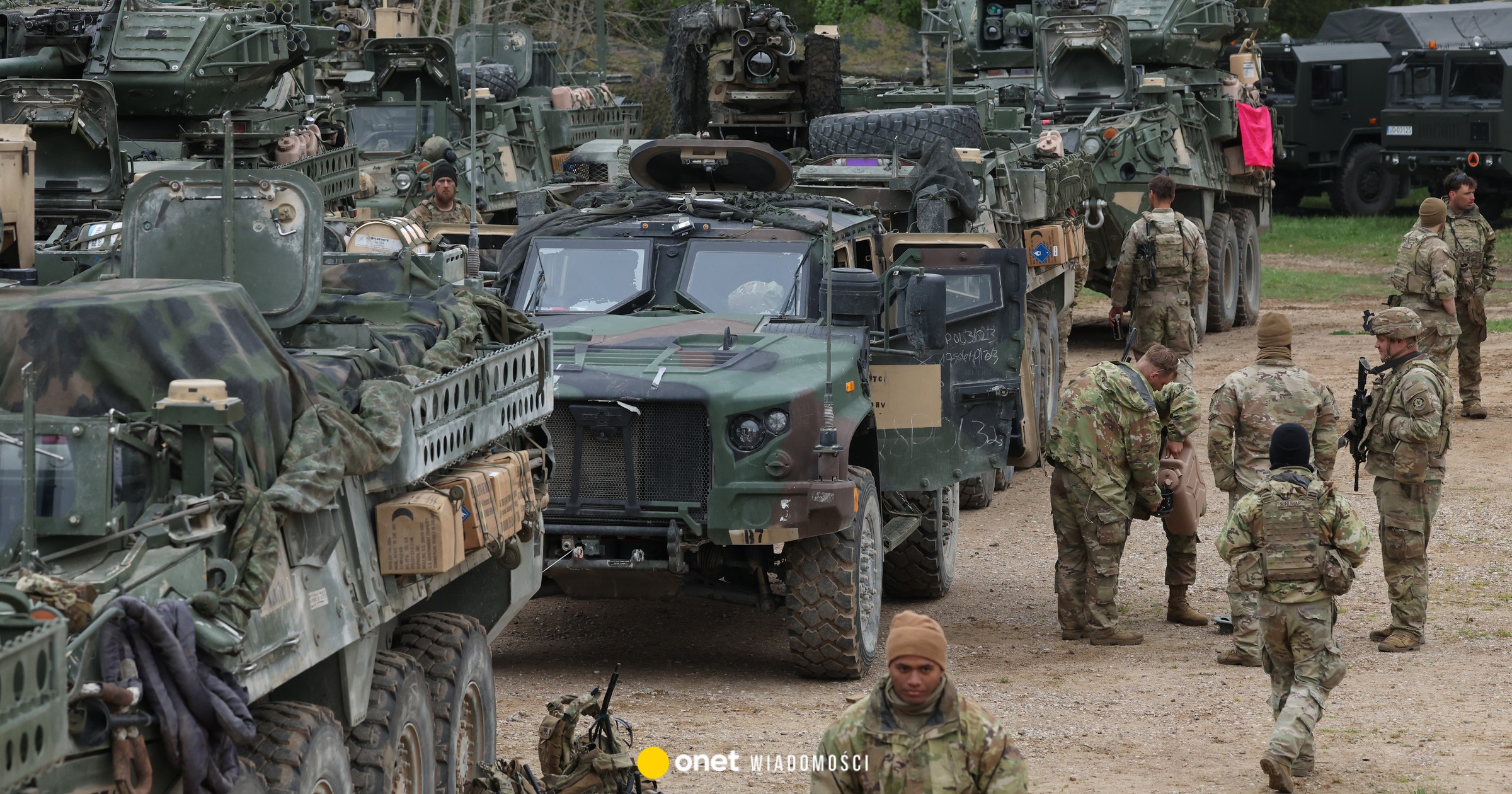
NATO is on the verge of partial American withdrawal from the common defense of Europe. In the coming weeks, the Pentagon will present it at the NATO headquarters in Brussels specific plans to limit Washington's military capabilities. — These changes will be included in our offer of forces and capabilities at the next NATO conference on armed forces resources, a senior representative of the US Department of Defense confirmed in an interview with Welt am Sonntag.
The next conference of this type will be in June. At these regular meetings, national military planners determine what capabilities they can make available to the Alliance. — We want to provide Allies with the necessary information and clarity to accelerate the transition to a European defense as much and as effectively as possible, in which Allies take primary responsibility for Europe's conventional defense – added the Pentagon representative.
This announcement is consistent with the demands towards European NATO member states that US President Donald Trump made during his first term. After the Republican returned to the White House in January 2025, this policy was formulated in black and white in the National Security Strategy and the National Defense Strategy several months later.
The main message is that the United States is no longer able to fight on several fronts simultaneously as the only major military power. As Washington's attention shifts to China and the Indo-Pacific region, In the near future, Europe must shoulder much of its own defense and deterrence against a war-seeking Russia. The current war with Iran has only sharpened this U.S. view.
Germany and other European NATO allies have long known that the U.S. wants to withdraw from its role as a protective power. However, in German government circles it is assumed that this step will be gradual and coordinated. By now confirming the introduction of specific reductions, Washington is not giving Europeans too long transition periods.
President Trump always reserves the right to “deal with any situation as he sees fit,” added a representative of the US Department of Defense. The Pentagon's mandate is to “plan ahead, consistent with the National Defense Strategy, in the event that the United States faces several conflicts at once. If we ultimately find ourselves in a less tense situation, it will give us additional room for action.”
The article continues below the video
“NATO force model” in the spotlight
At a NATO meeting in Brussels last week, the top U.S. defense policy adviser told allies that Donald Trump's government intends to partially withdraw from one of the pillars of common deterrence and defense. According to Spiegel magazine, Alexander Velez-Green, for example, announced that the number of American combat aircraft would be reduced by one third.
Specifically, the reductions pushed by Washington concern primarily the “NATO Force Model” (NFM), the Alliance's rapid reaction system. It specifies how many soldiers are to reach the front as reinforcements within 10 days, how many within a period of 10 to 30 days, and how many soldiers within a maximum of six months – up to 800,000. These capabilities include strategic bombers, long-range precision strike capabilities, maritime capabilities, and refueling aircraft.
The partial US withdrawal means a weakening of the military basis of the NATO defense promise, according to which an attack on one member of the Alliance is treated as an attack on all and entails a collective response. This may cause concern not only there, but especially in the Baltic countries.
NATO already has its forces stationed in this region, including a German brigade in Lithuania, but in the event of a war, even with local national armies, they would not be enough to repel enemy troops. They are not intended to repel the attack on their own, but to gain time, organize the first resistance and enable the arrival of alliance reinforcements.
However, the credibility of this defense depends in the next stage on how quickly NATO will be able to gain air superiority over Russia, bring in reinforcements and hit targets on Russian territory. How the alliance intends to achieve this is outlined in top-secret regional defense plans.
According to information from Welt am Sonntag in the American army [stacjonującej] Europe is already questioning whether NATO has sufficient forces and capabilities to fully implement its regional defense plans. Russia could therefore challenge the Alliance primarily where it has a geographical advantage and more quickly available forces. If Washington withdraws additional capabilities from NATO plans now, this problem is likely to worsen.
I’m Ashley Davis as an editor, I’m committed to upholding the highest standards of integrity and accuracy in every piece we publish. My work is driven by curiosity, a passion for truth, and a belief that journalism plays a crucial role in shaping public discourse. I strive to tell stories that not only inform but also inspire action and conversation.