Europe at the mercy of Putin? These numbers tell the whole truth [WYKRESY]


At the same time, he rejected alternative scenarios, such as strengthening the presence of US troops in Greenland. In a recent interview with the New York Times, he went even further, suggesting that Washington may have to make a strategic “choice” between keeping Greenland and continuing its involvement in NATO.
At the end of December, Reuters reported that the Pentagon was to tell European diplomats that Europe would take over most of NATO's conventional defense capabilities by 2027. In European capitals, this is interpreted as another signal that Washington wants to limit its own burden in the Alliance and pass on the political costs of such a change to its partners.
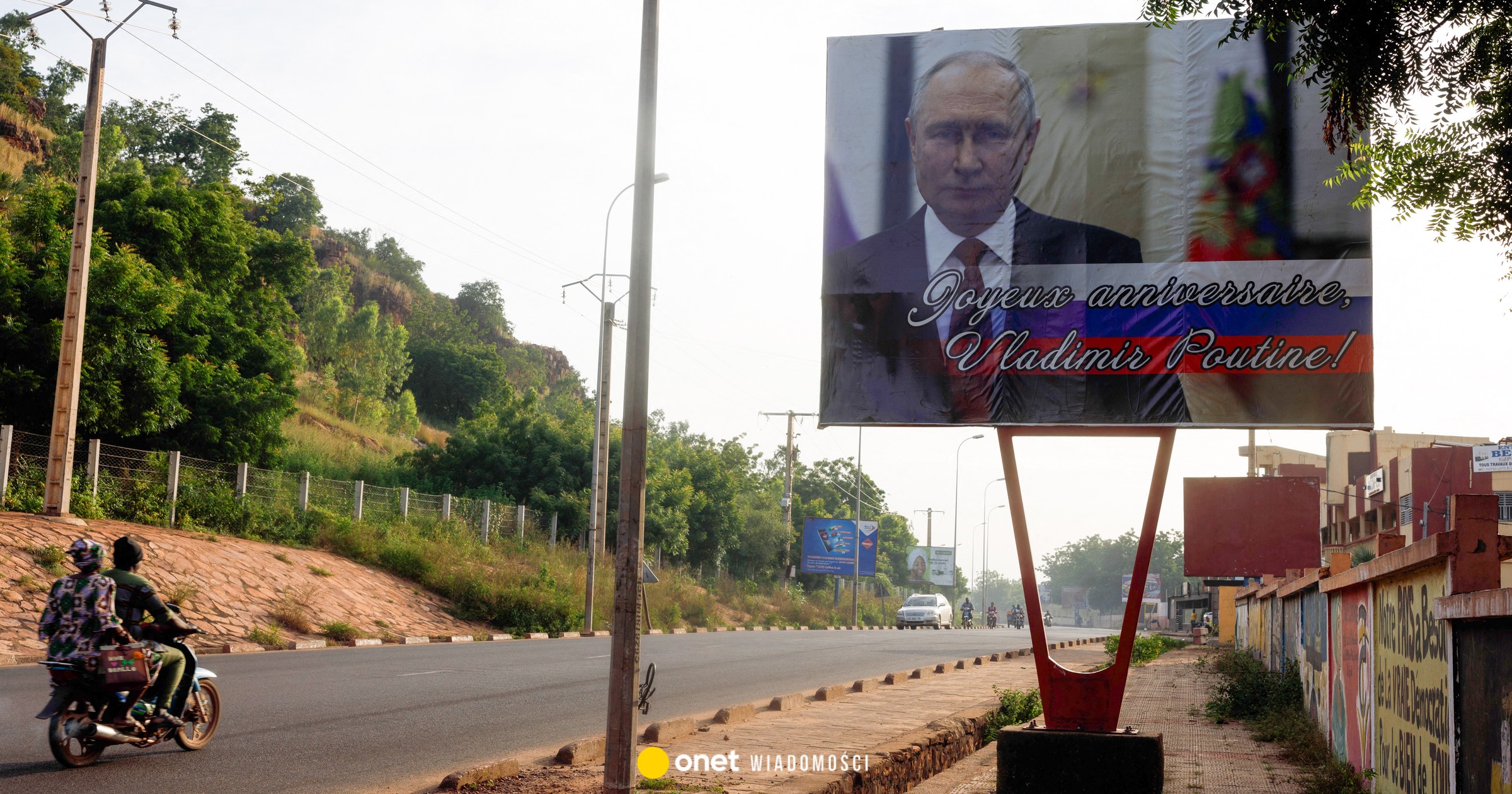
Meanwhile, the Kremlin is closely watching Europe and supporting Ukraine. — Russia does not intend to fight with European countries, but if Europe starts a war, Russia is ready now — Vladimir Putin threatened at the beginning of December at an economic forum in Russia.
But are the European countries of the Alliance ready for a potential clash with Russia? Let's start with the problems that European countries face.
“In the current environment, the Alliance relies heavily on the United States for key capabilities such as operational intelligence, air-to-air refueling, missile defense and many others. The absence of these American assets would expose gaps in NATO's defense architecture, questioning his ability to sustain the fight in the long term” – argued in September 2024 George Allison, a journalist and military analyst associated with The Telegraph daily.
“Dozens of weapons”
The fragmentation of the European defense industry is one of the key problems highlighted by analysts of the London-based think tank Center for European Reform (CER). The January 2025 report highlights that despite the unprecedented increase in military spending following the Russian invasion of Ukraine, Europe still cannot translate money into a real, coherent combat capability. The reason is that purchasing and production decisions remain largely the domain of nation states rather than a common European strategy.
Each European Union country plans to modernize its armed forces separately, according to its own standards and schedules. In practice, this means a proliferation of similar projects, lack of equipment compatibility and loss of economies of scale that could significantly reduce costs. CER points out that European armies use dozens of different types of weapon systems in the same categories, making joint operations, logistics and servicing equipment in crisis conditions difficult.
The report points out that the European defense industry still operates mainly within national “ecosystems”. Large corporations are strongly linked to their governments, and contracts often serve not only military purposes, but also political and economic ones. As a result, cross-border cooperation remains limited, and joint programs – such as new tanks and combat aircraft – face delays, cost increases and disputes between partners.
CER also emphasizes that industrial fragmentation weakens Europe's ability to rapidly increase production in times of war. The war in Ukraine has shown how crucial ammunition stocks, production capacity and efficient supply chains are. Meanwhile, European factories often produce in short series, for specific national orders, without the guarantee of long-term contracts. This discourages industry investment and makes it difficult to quickly switch to war mode.
The authors of the report also note that fragmentation increases Europe's dependence on suppliers from outside the EU, especially from the United States. Purchasing American equipment can be quick and politically convenient, but in the long term they perpetuate the fragmentation of the European industrial base and limit the development of common technologies.
Nuclear power
Russia is certainly superior to European countries when it comes to about nuclear potential. Together Moscow has 5,000 459 nuclear warheads. Of these, 1 thousand 718 remains on constant combat readiness and is operationally deployed, which constitutes the real core of deterrence. Another 2 thousand 591 warheads are in storage and may be returned to use if a political and military decision is made. In addition, there is 1 thousand. 150 warheads formally withdrawn from the arsenal, waiting for dismantling.
For comparison, the nuclear potential of European countries is incomparably smaller. Great Britain has an arsenal of approximately 225 nuclear warheadsbased solely on Trident II intercontinental ballistic missiles launched from submarines. France has about 290 warheadsdeployed both on submarines and in strategic aviation.
Europe's strengths
Let us now turn to the strengths of the European part of NATO. First, the number of soldiers. Russia has 1.32 million soldiers in active servicemaking it the largest single army in Europe. However, compare this potential with the total number of soldiers from NATO countries without the participation of the United States it doesn't work out well for Moscow.
The European members of the Alliance hold together approximately 2.11 million soldiersso clearly more than Russia. The core of this potential is formed by the largest armies of the Alliance: Turkey (355,000), Poland (over 202,000), France (200,000), Great Britain (nearly 185,000), Germany (over 181,000) and Italy (165,000).
However, it must be emphasized here that European NATO's numerical advantage does not automatically translate into an advantage in combat experience. The Russian armed forces have been at war with Ukraine for almost four years, which means that a significant part of their personnel – especially in ground troops, artillery and drone units – have frontline experience gained in real combat conditions. For most European armies, such experience remains limited to training.
Military spending
Another issue is military spending. According to data from the Stockholm International Peace Research Institute (SIPRI), Russia increased military spending as the war escalated. IN In 2021, the military budget amounted to approximately USD 66 billion. (approx. PLN 237 billion). After the full-scale invasion began in 2022, spending increased even more – in 2024 they reached approximately USD 149 billion. (approx. PLN 535 billion). According to the latest budget plans for 2025 Russia may spend up to approximately $198 billion on the military. (approx. PLN 712 billion).
The European part of NATO and Canada also significantly increased defense spending, although this process was more gradual than in Russia. At the beginning of the last decade, the total expenditure amounted to approx. USD 289 billion (approx. PLN 1.04 trillion) and remained in the range for several years USD 250–300 billion (approx. 900 billion – PLN 1.08 trillion).
After 2022, the growth rate accelerated significantly. Expenditures have increased from USD 301.7 billion (approx. PLN 1.09 trillion) to USD 358.7 billion (approx. PLN 1.29 trillion) and then to USD 418.6 billion (approx. PLN 1.51 trillion). The latest data shows a further jump – USD 516.5 billion (approx. PLN 1.86 trillion) and $608 billioni.e. approx PLN 2.19 trillion.
The power of Europe
As for military equipment, it was described in detail in the report The Military Balance 2025 prepared by the British think-tank International Institute for Strategic Studies.
“While Russia has one clearly obsolete aircraft carrier, Great Britain alone maintains two modern ships of this class, capable of operating fifth-generation F-35B fighters. France, Italy and Spain also have aircraft carriers or landing craft and helicopter carriers adapted to carry combat aircraft,” we read in the report quoted by CNN.
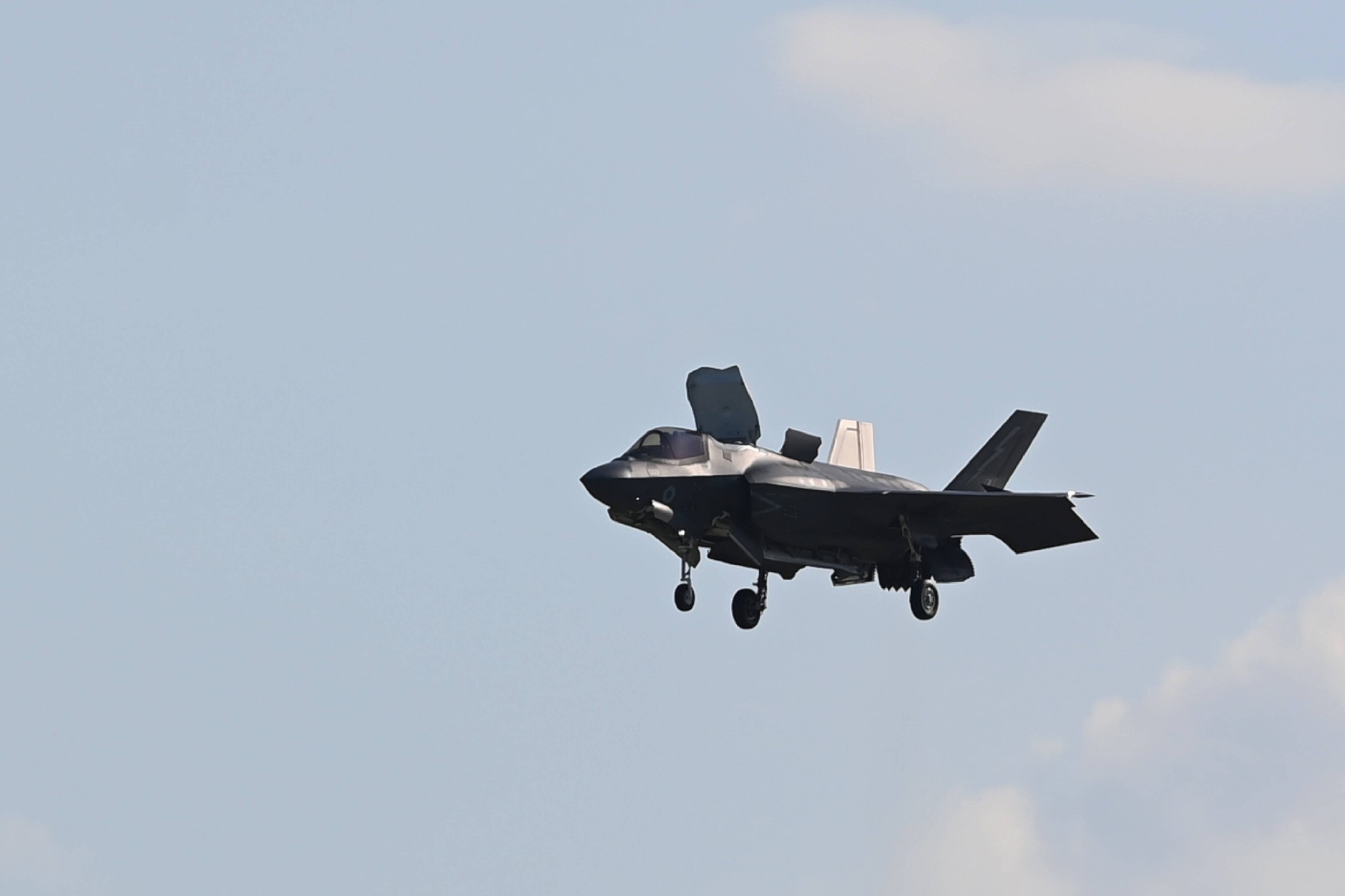
F-35B planeJaroslav Ozana / PAP
Aviation potential is equally important. In total, NATO countries in Europe – excluding the participation of the US – have approximately two thousand fighters and attack aircraft. The fifth generation F-35 machines, which are being introduced into service, include, among others, an increasing share in this number. through Great Britain, Italy, Norway, the Netherlands, Denmark and Poland. The Military Balance 2025 indicates that the process of aviation modernization in Europe has accelerated significantly after 2022, and interoperability within NATO has become one of the main priorities.
On land, Europe is also not without real strength. The troops of NATO countries have modern tanks, such as Leopard 2 or Challenger 2, which have already been tested in combat conditions in Ukraine.
They also remain an important advantage precise long-range means of destruction. European NATO countries have at their disposal advanced cruise missiles, such as the French-British SCALP/Storm Shadow, whose effectiveness has been confirmed in real war conditions. The report indicates that the experience from Ukraine has restored these systems to a central place in the operational planning of European armies.