It is a great relief that in the Czech Republic we will not have to be ashamed of our president standing somewhere on Red Square in Moscow and in a strange company paying tribute to the most dangerous army of the world.
This is exactly what the previous head of state did five and ten years ago, in the 75th and 70th anniversary of the end of World War II. This year, the Czech delegation, unlike Slovak, will not fly to Russia. However, we should think about how to commemorate the 80th anniversary of the end of the global conflict – the key event of our time. Today, the conclusions flowing from it are more current than ever before.
From what I remember, we never did it too well. The celebration of the ending of the Nazi occupation during the communist rule had an unbearable lounge of tribute to other occupiers, who came here in 1968. During these celebrations, the streets were full of their red flags and slogans, in which they claimed that they would remain here “forever and never differently”. This eternity turned out to be shorter than they planned. But the concerns associated with the celebration of the end of World War II remained.
Nazism as an attempt
World War II was the greatest armed clash in human history. According to estimates, 60 million people were killed. The first organized extermination of the nation by the methods of modern industrial society also occurred. At the same time, the war created a new world order that survived 40 years.
Behind the outbreak of war, Germany, Japan, Italy and Russia and a lesser extent. While the former fully understood and recognized the crimes they committed, similarly Italians and Japanese, although a little later, the Russian authorities did not do it. They recognized Russia as the greatest victim of Nazism, claiming that in five years she lost up to 26 million inhabitants. However, they forgot that It stood at the beginning of all this tragedy and is also responsible for it.
The history of World War II is different than the one we were told in schools until 1989. We were hidden from us that in August 1939 the Germans and the Soviet Union concluded a non -aggression pact and shared Eastern Europe among themselves. Under this agreement, the leader of the Soviet Union Józef Stalin took Eastern Poland, and then the Baltic States, part of Romania and Eastern Finland.
In post -communist Europe, which we were part and which, due to the common history of imprisonment in the Soviet empire, gave the impression of some coherence, there is no uniform narrative about the war. In the case of Poland in the narrative about World War II, the subject of the assault from two sides by two totalitarian regimes dominates. She managed to get rid of this communist only after over 40 years. The Czechoslovak narrative was dominated by the German occupation.
It must be said that the Czechs did not always pass the exam. It is true that they did not publish their Jewish fellow citizens in an organized manner, as the Slovaks did, but before the war they enthusiastically excluded them from state organizations.
The peak of European culture
Today we know that Russia's inability to recognize the mistakes of its past was an important and unfortunately ignored signal of what the state is being ruled by a hard hand by the KGB officer Vladimir Putin. It was also not caused by the fact that Putin openly defended the Ribbentrop-Molotov pact, under which the Nazis and Communists shared Poland. Thus, he also justified Russia's later attack on Poland and the Baltic States.
So we are facing a dilemma again – how to thank for the “liberation” of Russia, which was an aggressor like the Nazis.
Yes, the Red Army freed us from Nazism. In a broader perspective, however, the concept of “liberation by the Soviet Union in May 1945” He stands on clay legs. In fact, Stalin took us from the Nazis, but replaced them with obedient people with Moscow. There was no “freedom forever”.
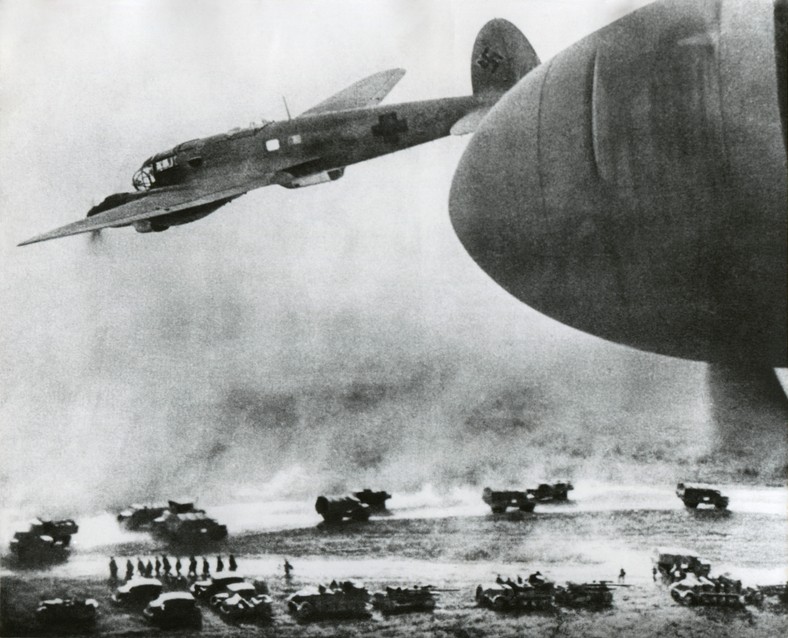
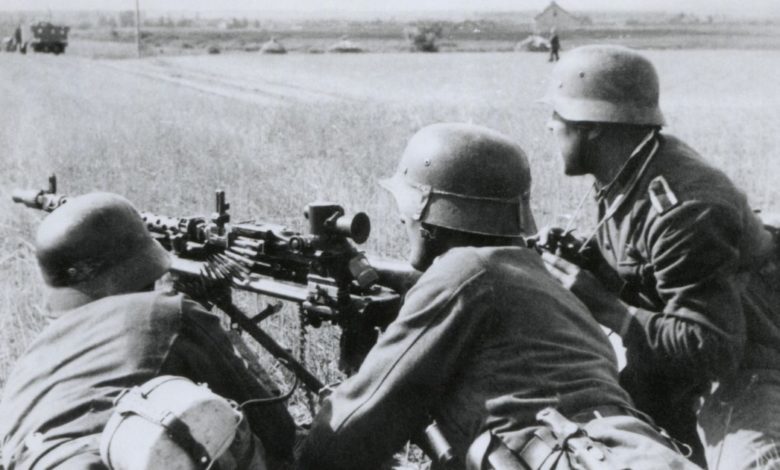
German bombers during the invasion of the Soviet Union, summer 1941.
However, this is not the only conclusion from World War II. Remember to its most tragic part, which was intentional and thoughtful extermination of 6 million Jews, historians emphasize that the world should make much greater efforts to avoid the outbreak of another war. To do this, Democratic states must be armed to be able to oppose potential armed aggression. Hitler's war also teaches us that the appetite increases as we eat, and the aggression, which is initially victims of small countries, sooner or later spreads to larger ones.
Hitler's war also shows how great sizes hatred and demagogy can achieve in difficult times. While the roots of the First World War die in the backstage policy of contemporary powers, the Second World War showed the strength of a motivated individual who, with the help of a blinded society, can head the totalitarian war machine ready to conquer Europe. This shows us that no political manipulator, even from the most marginal assembly, is funny enough that we do not take his repetitive threats seriously.
According to Michael Howard, a British war hero and military historian, World War II showed that achieving a safe peace while maintaining freedom is “the task to work on every day of our lives.”
Also on the Czech streets
So if the wars generally teach us what the price of peace is, then the Second World War taught us what the price of long -term peace is. After 1945, Europe experienced the longest peace period in its contemporary history. However, it was secured with nuclear heads and a fenced cold war front line.
Russian actions aimed at destroying Ukraine ended this period of peace. The Minister of Foreign Affairs of Ukraine Dmytro Kułyba recently warned that we would not make the same mistake as the Ukrainians, when they thought that war is something distant, that armed conflicts break somewhere in Africa or the Middle East, but “never on our streets”. Ukrainians have already found out that this was wrong thinking. It is worth that other Europeans also draw similar conclusions.
People who survived the war and remember that war may appear even on the “Czech street” are over 85 years old. The younger ones dominate the feeling that their experience will not meet. And this is what increases the likelihood that this can happen. This is evidenced by various political gestures – for example, the fact that people around Donald Trump's surroundings openly add courage to German neo -Nazis, convincing them not to be afraid of their confidence. As if they had no idea what happened in Germany 80 years ago.