The “communist spa” near Slobozia and what is happening to it today. “There are people who have been coming for decades and asking for the same room”

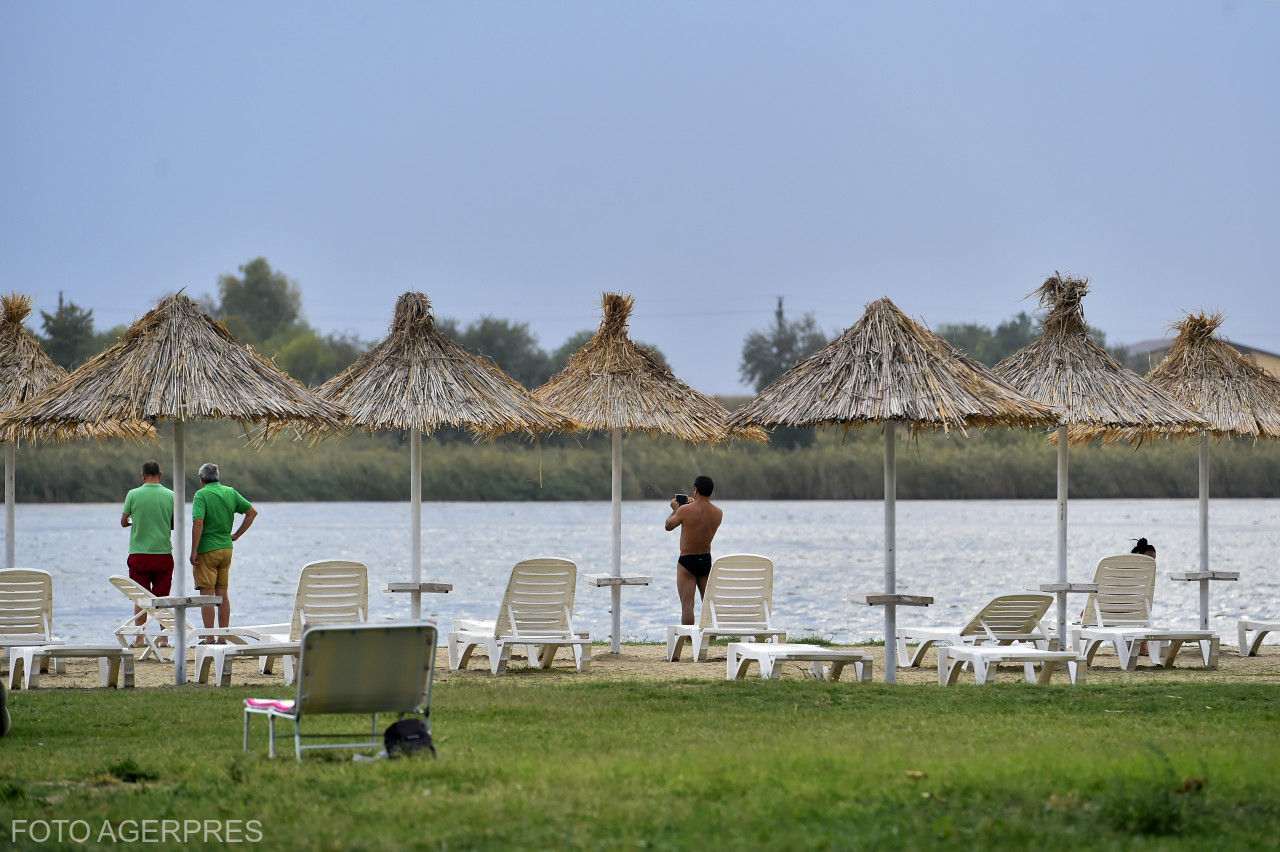
During the communist era, Amara was an important destination for common people opting for medical tourism. The beginnings of the resort were not during communism, but before the First World War. HotNews spoke with Ileana Szasz, the editor of the volume “Greetings from Amara! Fragments of architecture and collective memory”, which reconstructs the story of the place.
- The volume was created by the authors Romelia Călin, Iuliana Dumitru, Adelina Ștefan and Ștefania Tîrcă and was published by the Studio Zona publishing house, in collaboration with the VIRA Association.
The resort of Amara is located 135 kilometers from Bucharest, near Slobozia, and was heavily developed by the communist regime for the common people.
“We had trade unionists, cooperativists and those who called on the ONT (National Tourist Office – n. ed.). People from several social categories called on the ONT. In the case of the trade unionists and those who worked in cooperatives, in principle, they often went to preventive treatment. This was for ideological reasons, namely that the regime wanted working people who were fit and strong. It was not intended that the treatments at Amara would have a role only intervention, that is, when it is already too late. That was the idea with which the hotels of the resort were promoted”, says Ileana Szasz, in the discussion with HotNews. It was like a kind of spa, accessible to everyone during the communist period.
The union hotel, the largest in the country
The resort's most famous treatments were developed with the advent of hotels. Up until that point, the mud was being scooped out of the lake by the locals.
“The important investments were at the end of the 60s and 70s when three large hotels appeared. The trade union hotel, the UGSR (General Union of Trade Unions in Romania – n. ed.), which is now the “Lebăda” hotel. Next to it appeared the cooperativist hotel and the county ONT hotel. This hotel, belonging to the trade unionists, also appears in the magazine “Architectura” as being, at the time, through '69, the largest hotel that offered a treatment base, accommodation, restaurant and cultural program in the country. There were about 1,500 places to stay and it could be open all year round. This was a very unusual matter. You could also send people for treatment in the winter,” explains Ileana Szasz.
The “treatment” and the little girls who administered it
The ailments for which people turned to the Amara resort were diverse, the editor of the volume explains, but mainly related to rheumatology and gynecology. The treatment technique focused on the use of mud.
“It was a bed, like a kind of bed. You put a bucket of mud in there in that hot bed up to 38 degrees. The man would strip completely, sit in the bed, and the little girls, as they called the ones who worked there, would smear people with mud all over. Underneath was nylon, then a blanket, and you were swaddled like a baby. You lay there for a quarter of an hour, you would go out, take a shower and it was the best treatment”, said a former employee of the trade unionists' hotel in the study edited by Ileana Szasz.
With the tent on the beach
Not all who went to Amara resorted to state accommodation, such as the trade unionists' hotel. There is also the option of staying with a local. The alternative was not an illegal one, but a regulated one.
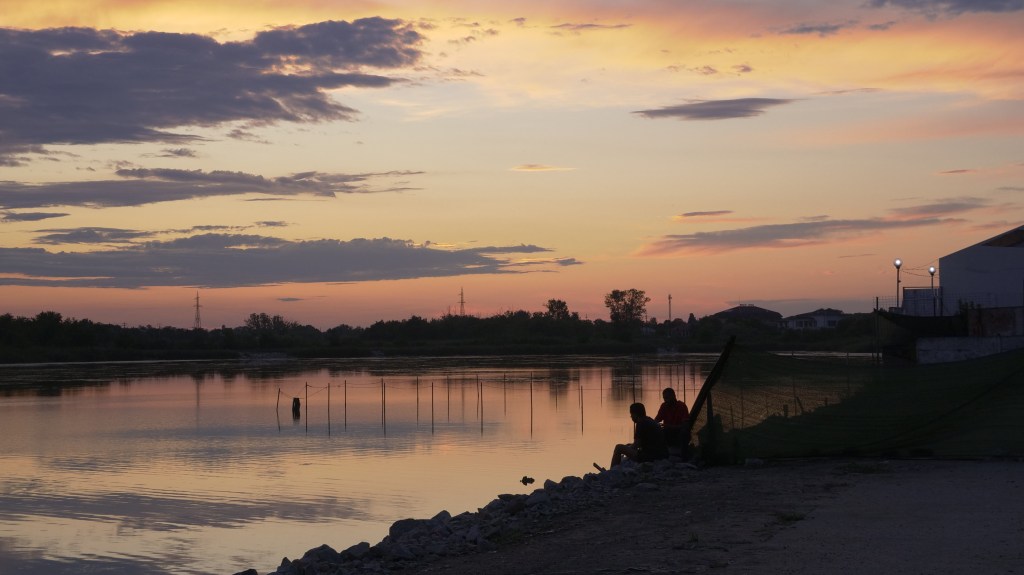
“A lot of people from the village hosted people. This was known, it was regulated. Some of those who hosted tourists worked at the hotels in the resort. I found all kinds of sources that provided quotes, prices for what it means to go to someone's host. There was a noticeable difference in price compared to hotels. Another difference from the rest of the resorts is that you could have a tent on the beach, something you couldn't have at Speak,” says Ileana Szasz.
The boyar who made the first baths at Amara
Although the resort developed significantly during the communist regime, its beginnings date back to before the First World War. That period was marked by private investments, the most famous of them being that of Dumitru Seceleanu, a landowner with agricultural business.
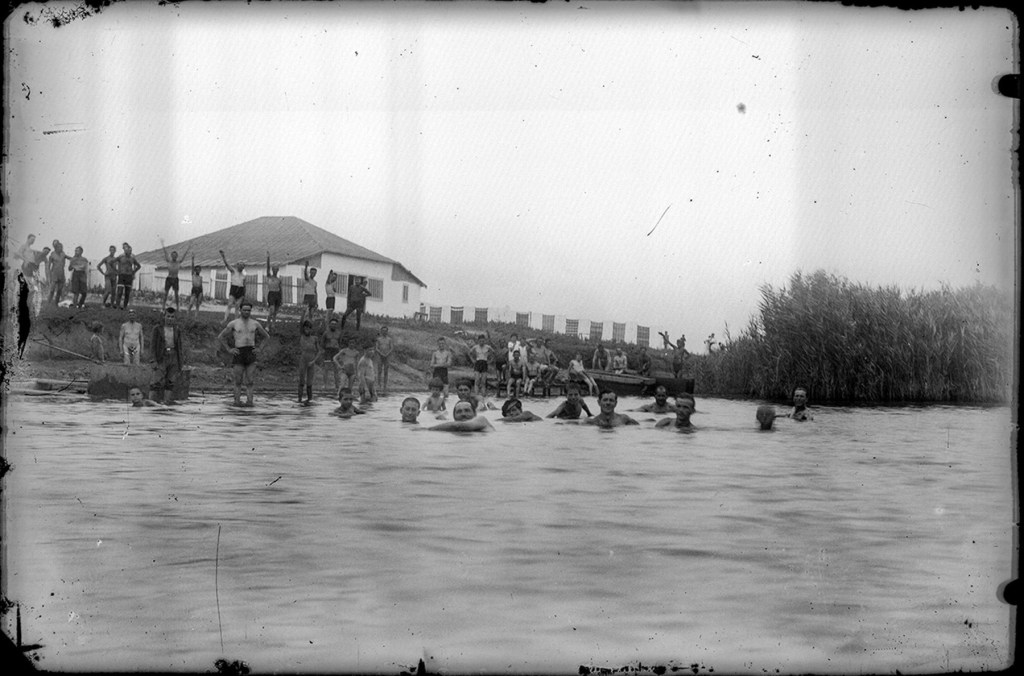
“There was a boyar from southern Romania who believed that his wife was cured of an illness thanks to the mud from Amara. He made the first baths. Later, in the interwar period, there were investments by some small entrepreneurs of the time, but there was no large-scale development. Amara always remained a resort for the common man. There are stories in the press of the time, in the newspapers that we found, even between the two world wars, about how to get there with the cart from Slobozia”, explains Ileana Szasz.
In the interwar period, there were concessionaires who took over plots of land and beach, where they built reed shacks, and the mud was brought in buckets from the lake and heated in a steam boiler. In 1937, the “Sănătatea” Baths Administration was established, an important step in the development of the resort. Also in 1937, the National Tourist Office declared Amara as an official spa resort. In parallel, in order to encourage tourism, the CFR decided to subsidize the tickets for Slobozia by 50%. In this way, Amara has developed as an affordable resort for those with modest incomes.
“In the last year, a lot of investments have been made”
The resort's decline began after 1990, when state investment stopped. However, despite this, Amara still has visitors and investment has recently resurfaced.
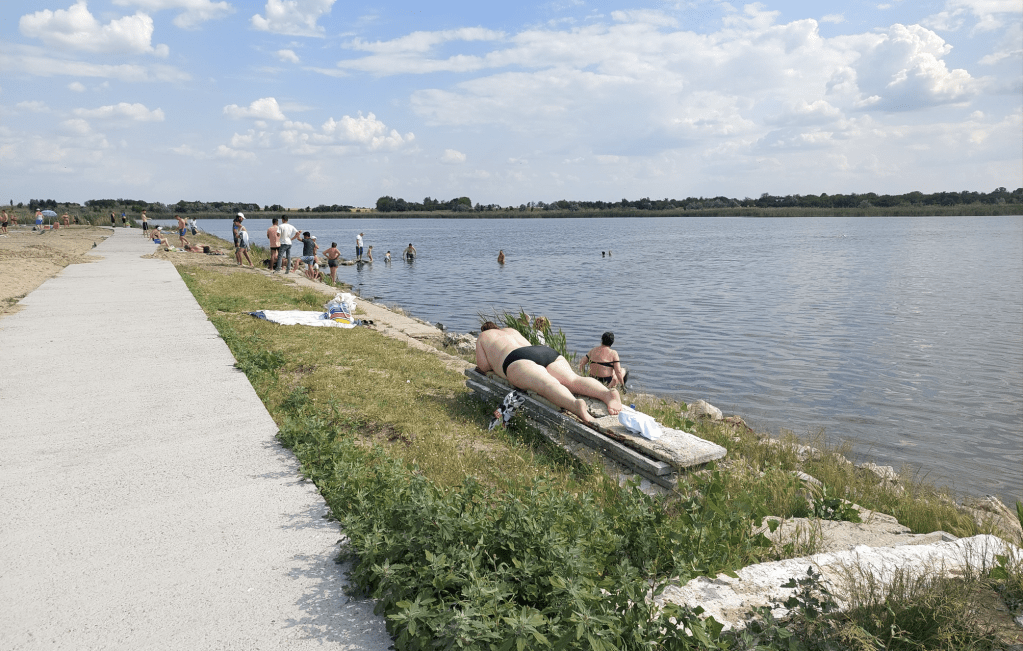
“It is a resort that is still active and where extremely many people go. On the one hand, there are also tourists from the country, but Amara is also frequented by people from Slobozia who spend their time there. In the last year, a lot of investments were made. The beach around the lake was a wild, undeveloped one. You could find on the beach the mud extracted by someone from the lake and everyone used it as they thought. Now it has been developed. They are investments of the town hall”, says Ileana Szasz
The infrastructure can be used, the publisher believes. “The idea is that at the present time you have this infrastructure that is still functional. It is still a socializing space. There are people who get a treatment ticket through the retirement home, are allocated a room and go to Amara. There they meet people from other parts of the country that they know every year,” she said.
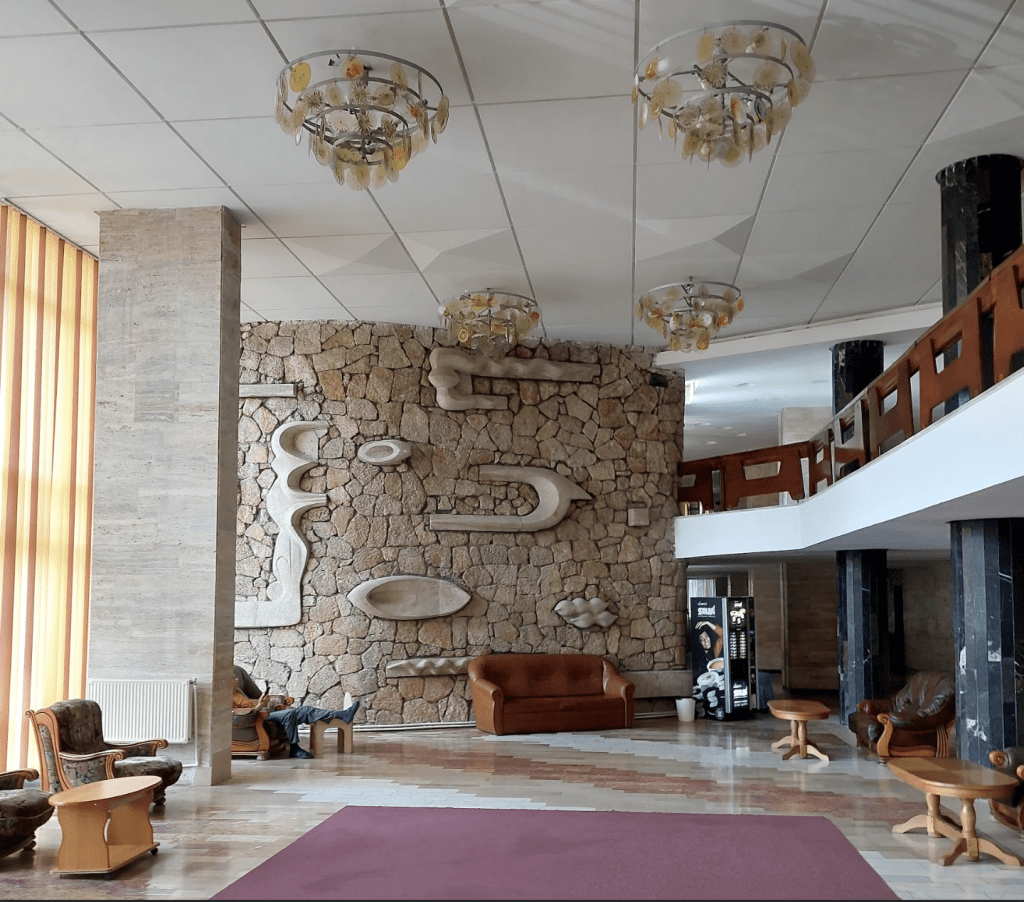
After 1990, the treatment capacity was reduced, as an employee of a hotel in Amara explained in the volume “Greetings from Amara!”
“The procedures have remained the same. We no longer pack with sludge, because before we had the possibility to remove sludge freely from the lake. Each hotel removed as much as it needed, now we pay it to Apele Romaniane and it only allows us to remove from certain areas, certain quantities. That it was removed mercilessly and the fresh water springs were plugged and they sweetened the lake. And automatically we were forbidden to remove any more sludge and no more sludge at your discretion…”, says the employee quoted in the book.
Tourists who have been asking for the same room for decades
Ileana Szasz sees an increased interest in spas and what she calls “alternative” tourism. “But that depends a lot on whether the infrastructure is maintained and you can capitalize on that interest.”
Among the testimonies collected by the team that made the volume “Greetings from Amara!” it also includes those of some employees, former employees or administrators of hotels in the area. “There are people who have been coming for decades and asking for the same room,” says one of them. According to him, a lady who has been coming to Amara for over 50 years always asks for room 103 at the “Lebăda” Hotel, where her son is currently staying.