Wealthy expats are fleeing Dubai. “We're seeing an outflow of people.” New directions are becoming popular

“We are seeing an increase in the flow of people leaving Dubai,” confirms Roberto Bonomi, a Milan-based tax lawyer at Withers, a British law firm serving wealthy clients.
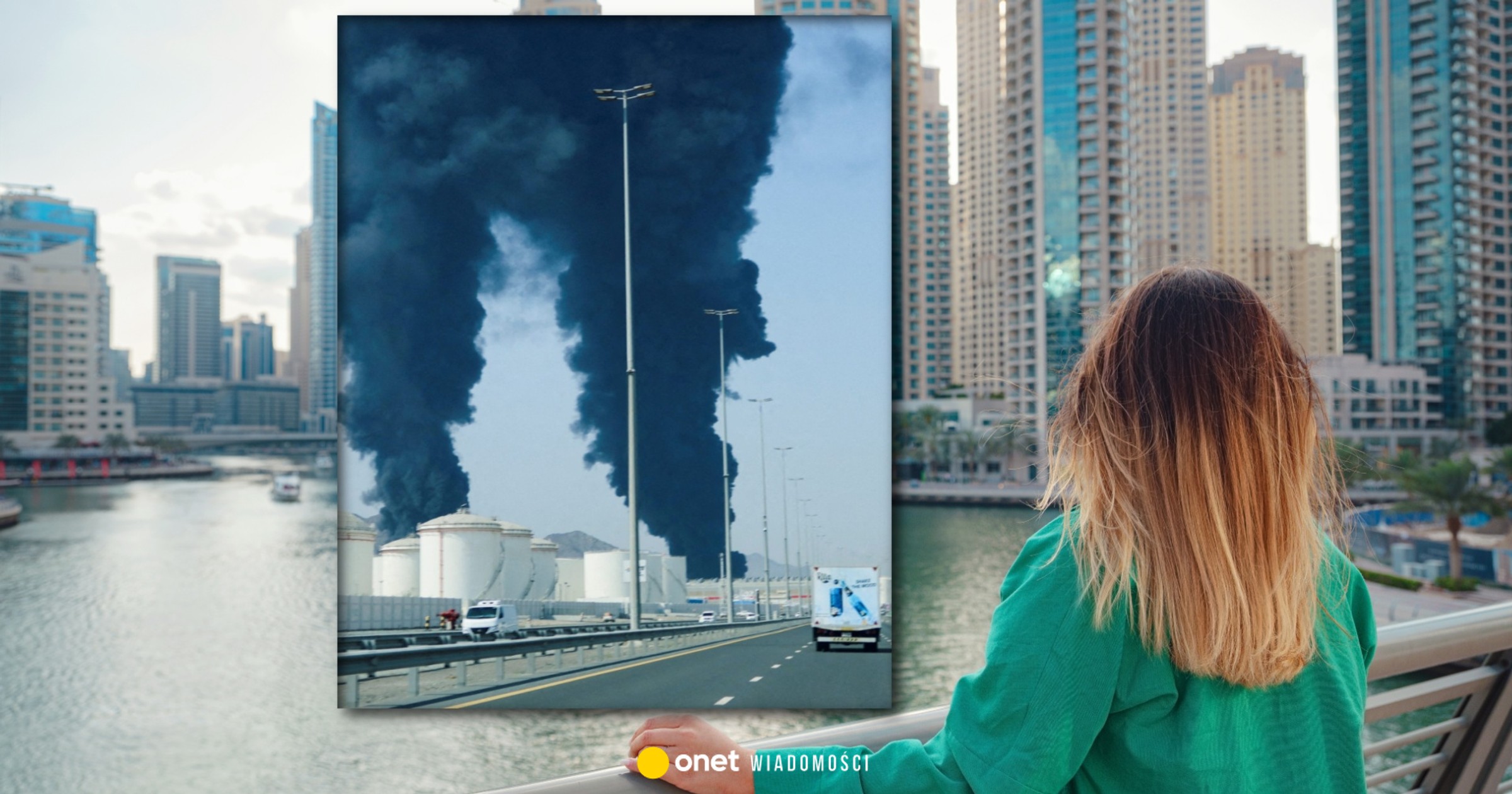
Although most of Iran's missiles and drones are destroyed before they can cause any real damage to Dubai and other parts of the United Arab Emirates (UAE), many foreign residents dispersed rather than wait for further attacks to bypass the country's defense systems.
Several of them managed to get seats on the last flights to America or Europe. Others left for Muscat in neighboring Oman, seeking alternative escape routes. Many hoped to return after the end of hostilities. However, as the conflict drags on, many are looking for a new, quieter hideout. Where are they going? And will they ever come back?
Private schools are good, the beaches are beautiful, flights are plentiful, and alcohol is legal (as long as you are not a UAE citizen or Muslim).
Emigrants do not pay income tax, so there are no burdensome controls on their finances. There is no ostracism, so Chinese cryptocurrency millionaires and Russian oligarchs live next to Western bankers, Arab real estate tycoons and Israeli entrepreneurs. There's no rain, so the only thing they have to worry about is the SPF in their sunscreen.
The UAE does not disclose detailed statistics on foreigners, but estimates suggest that before the war with Iran, approximately 3-4 million of the country's 12 million inhabitants were wealthy newcomers and their families. Over 240 thousand of them are millionaires. The lion's share of these newcomers lived in Dubai. Currently, they probably constitute the majority of people leaving the United Arab Emirates.
Dominic Volek from Henley & Partners, which advises wealthy people on a relaxed lifestyle, reports that in recent weeks the number of inquiries regarding possible other emigrations from residents of the United Arab Emirates has increased by over 40%.
“More than 35 countries are currently competing for wealthy and entrepreneurial people,” says Jean-Francois Harvey of Harvey Law Group, a global law firm specializing in immigration law.
“We are seeing an increase in the flow of people leaving Dubai.”
On April 24, Türkiye proposed a 20-year tax exemption on foreign income and capital gains for certain foreigners. Harvey says that since the war began, more than a dozen clients have acquired Turkish citizenship by purchasing a home in the country.
According to many advisors, Milan is becoming a particularly popular place for expats from Dubai. “We are seeing an increase in the flow of people leaving Dubai,” confirms Roberto Bonomi, a Milan-based tax lawyer at Withers, a British law firm serving wealthy clients. Diletta Giorgolo of Sotheby's International Realty, an exclusive real estate agency, says that interest in Italy from the Persian Gulf countries has increased dramatically in recent months compared to the previous year.
As he explains, inquiries that initially concerned mainly short-term rentals are increasingly related “not only to short-term considerations, but also to long-term lifestyle and investment planning.”
Unlike sleepy competing destinations, the capital of Italy's fashion and finance offers glamor and business networks for those who still want to multiply their fortunes, not just spend them.
In recent years, US hedge funds such as Millennium Management have opened branches in the city to allow their wealthy traders and portfolio managers to take advantage of Italy's tax breaks for high-income earners who pay a relatively modest annual lump sum of $300,000. euro (approx. PLN 1,275,000) on all foreign income. Parents can now choose between American, British, Canadian, French and German international schools. The weather is also bearable.
Problems with transferring property
An attractive alternative, especially for Asians, is Singapore. In recent years, the city-state has lost out to Dubai in the battle for influential investors from India and mainland China, who were attracted by the emirate's uncompromising glamor, liberal regulations and business opportunities in the real estate sector. Singapore's stricter social standards and government obsession with a pristine image made the city seem dull compared to Dubai.
Singapore's conservative image, combined with an efficient government, predictable legal system and established wealth management infrastructure, currently appears to be an asset. Large Singaporean banks such as OCBC are seeing an increase in net capital inflows from Dubai. Singapore's gold imports from the United Arab Emirates have quadrupled since January as wealthy customers shift their stockpiles of the bullion.
Ryan Lin of Bayfront Law, a Singapore law firm, says the number of inquiries from new clients has increased by a third in the last two months. His existing clients, mainly the nouveau riche from mainland China, are increasingly interested in leaving the Middle East. Wealthy Indians, 3,500 of whom leave the country each year with at least $1 million in their bank accounts, are taking another look at Singapore. Mukesh Ambani, the richest man in India, opened an office there in 2022.
Places like Milan and Singapore, for all their advantages, are not a perfect substitute for Dubai. Russian plutocrats are poorly perceived in Italy (as in the rest of Europe) because of Putin's invasion of Ukraine. Other wealthy foreigners may fear that next year's elections could lead to a government that will abolish the flat tax system. Even the current, wealthy-friendly government felt forced to increase the tax on foreign income from the initial PLN 200,000. euro (less than PLN 850,000) this year.
Singapore imposes a standard income tax of 24%. and charges foreigners an exorbitant additional fee on the sale of real estate. He also tightened regulations in the wake of a $3 billion money laundering scandal. (approx. PLN 11 billion) in 2023 and may be afraid of letting in a wave of suspicious money from Dubai without thorough verification. A law passed in 2024 allows police to view tax and customs data.
According to the Financial Action Task Force, an international agency supervising the fight against money laundering, in recent years 80 percent license applications submitted by cryptocurrency companies in Singapore have been rejected or withdrawn. “Some investors liked the Emirates because they didn't ask too many questions,” a private banker from Singapore told The Economist. Transferring assets to an Asian metropolis may resemble, as the interlocutor claims, a “proctological examination.”
“I think cryptocurrency wealth will remain in the Middle East,” Lin says. Other experts also have a similar opinion. Foreigners managing large assets, themselves a wealthy group, need to be close to their clients, says one of them, who expects that his company with its legion of employees in suits will soon return to Dubai.
Many foreign companies that allowed similarly wealthy employees to work from home in the first months of the war – even if, as one bank boss put it, for some “home” meant Milan or London – expect them to return to their offices in Dubai.
“Time heals all wounds,” another financial advisor sums up in an interview with The Economist. Maybe. However, the longer the war lasts, the more likely it is that emigrants will have concerns. Many of them will choose a place where it is quieter.
© The Economist Newspaper Limited, 18 May 2026