On Saturday, the Belarusian authorities announced the release of 123 political prisoners. This group included, among others: Polish citizen Roman Gałuza, oppositionist Maryja Kalesnikava, would-be candidate for the president of Belarus Viktar Babaryka, activist of the Human Rights Defense Center “Vyasna” Uladź Łabkowicz and Nobel Peace Prize winner Ales Byaliatsky. However, Andrzej Poczobut, an activist of the Union of Poles in Belarus, has still not been released.
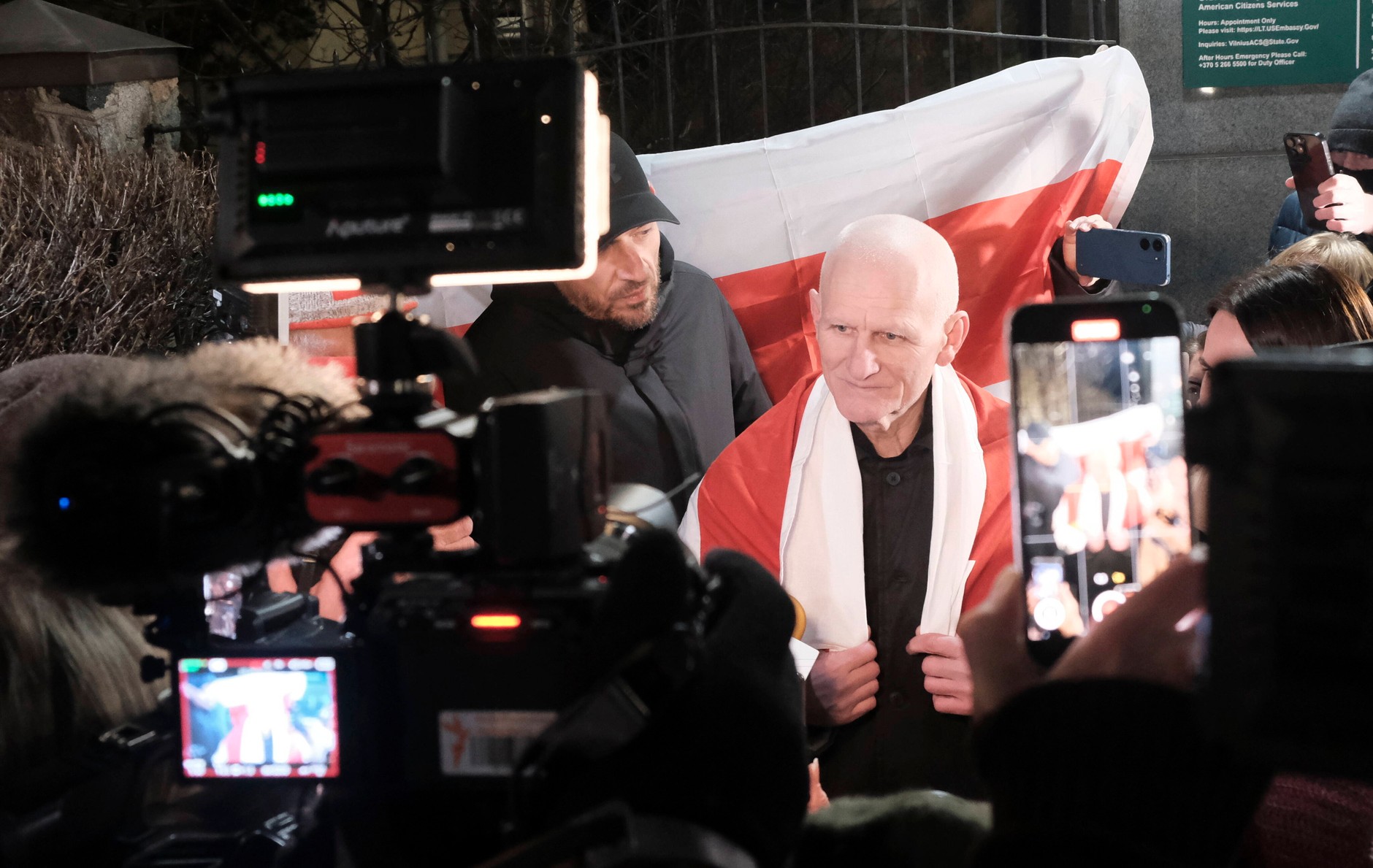
Ales Byalatsky (center) speaks to the media and his supporters in front of the U.S. Embassy in Vilnius, Lithuania (December 13, 2025)VALDA KALNINA / PAP
Minsk's decision to release political prisoners from various countries is the result of an agreement concluded with the United States. On Friday, in the Belarusian capital, Alexander Lukashenko met a delegation led by John Coale, special envoy of US President Donald Trump.
I ask Prof. about strengthening relations between Washington and Minsk. Dariusz Kozerawski, colonel of the reserve, researcher at the Jagiellonian University.
— Americans are aware that such actions warm the image of Lukashenko – let me remind you, the image of a dictator who made the territory of his own country available to a superpower like Russia to invade sovereign and independent Ukraine. This is an indisputable fact – says Onet's interlocutor.
Prof. Kozerawski emphasizes that “today we see that the American administration has chosen a different strategy and is trying to establish dialogue and even cooperation with the Russian Federation.” — At the same time, we are fully aware that Belarus's foreign policy remains largely dependent on the Kremlin and Minsk does not pursue an independent foreign policy. Of course, I do not claim that the issue of releasing these 123 people was fully agreed with Moscow, but I am convinced that Vladimir Putin was informed in advance about the planned actions – he emphasizes.
The article continues below the video
The expert emphasizes that such gestures improve the image of both Belarus itself and the entire bloc led by the Kremlin. — After all, Minsk pursues a policy consistent with Putin's, as evidenced by the large international Zapad exercises and many other projects. To sum up, we are dealing with an attempt to improve the image in the eyes of public opinion, especially European opinion, he adds.
The second aspect my interlocutor mentions is strictly political and economic issues. — Minsk simply wants the sanctions to be eased or abolishedwhich hit the Belarusian economy particularly hard. The situation there, especially in the area of exports, is far from the one desired by the state authorities, he emphasizes.
— The third, extremely important political element is this Lukashenko is simply getting rid of people he finds inconvenient. Most of those detained and later released were people who, to a greater or lesser extent, actively opposed his authoritarian regime. Now that they have been forced to leave the country, their influence on the internal situation in Belarus will be significantly limited, notes Prof. Kozerawski.
“We cannot afford to be naive”
The Jagiellonian University lecturer mentions one more matter. It's about the emotional aspect of Saturday's events. — It's really good that another group of activists is being released. From a human point of view, we can be happy about it. However, despite positive emotions, we cannot afford to be naive. Such actions are part of the new security strategy of the United States, which is intended to show that both Belarus and the Russian Federation are open countries and ready for dialogue. This is an element of consciously warming up their image, he argues.
Prof. Kozerawski warns that we, the countries of the eastern flank and the entire Western Europe should not give in to this. — Of course, we should strive for the release of political prisoners, because it is in our interest, but at the same time we cannot be deceived by the narrative presented by American or, above all, Belarusian diplomacy. The mere fact of releasing prisoners does not mean that Belarus is becoming more democratic, open or pluralistic. It does not indicate that the Russian Federation is changing its policy towards NATO, Poland or the entire eastern flank of the Alliance, the expert notes.
“There's not much more we can do at this stage.”
I ask my interlocutor whether our country should change the way it conducts its policy towards Minsk. — In my opinion, Poland pursues a very sensible and consistent policy in this matter. We support the democratic and pro-independence Belarusian opposition – and we do it in a permanent and visible way. Sviatlana Tsikhanouskaya plans to move from Vilnius to Warsaw; there are such press reports, we will see if it will actually happen. The very fact that she is considering such a step, however, proves her positive attitude towards the actions that Poland is taking on behalf of the Belarusian opposition, both political and diplomatic – explains the expert.
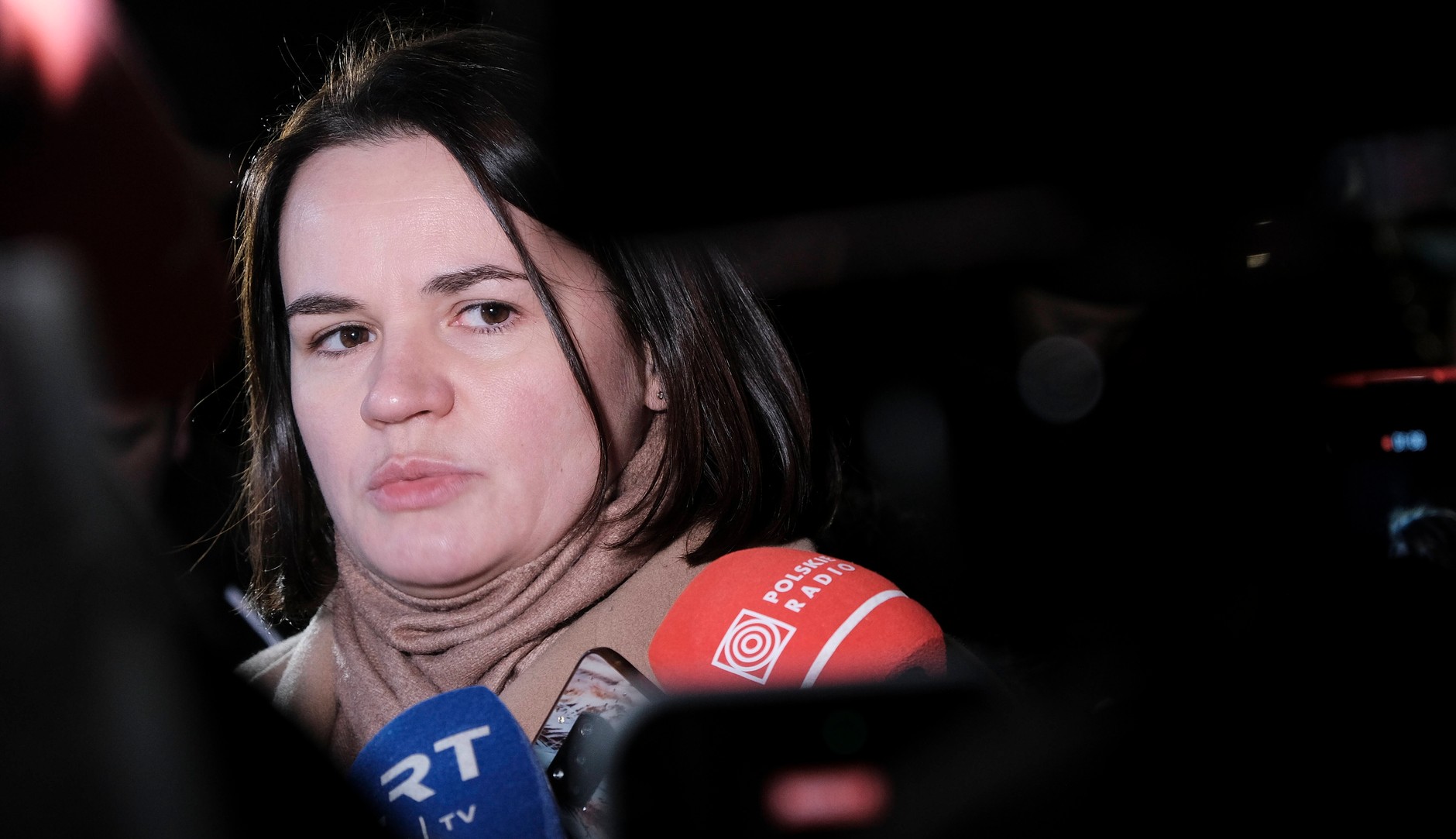
Sviatlana Tsikhanouskaya speaks to the media in front of the US Embassy in Vilnius, Lithuania (December 13, 2025)VALDA KALNINA / PAP
The former military officer emphasizes that Poland should not change anything in its policy. — I don't think there's much more we can do at this stage. However, we can continue to support the opposition, take care of the families of dissidents, accept – if they want – people released from Belarusian prisons and provide them with the help they need, he says.
— It is in our interest that Belarus becomes a democratic, European and independent state in the future. Such a prospect seems distant today, but we will see how the situation will develop – concludes prof. Dariusz Kozerawski.
***
*Col. reserve prof. conv. Ph.D. Dariusz Kozerawski — employee of the Department of National Security of the Jagiellonian University. Colonel of the Polish Army reserve, former rector-commandant of the National Defense University, head of the Department of Strategy and Geostrategy, member of the Brotherhood of Veterans in Poland and the Association of Veterans of UN Peacekeeping Missions. He conducted seminars and lectures on strategy and security at the European Parliament, the EU Military Staff, the NATO Defense College in Rome and the Baltic Defense College in Tartu.
I’m Ashley Davis as an editor, I’m committed to upholding the highest standards of integrity and accuracy in every piece we publish. My work is driven by curiosity, a passion for truth, and a belief that journalism plays a crucial role in shaping public discourse. I strive to tell stories that not only inform but also inspire action and conversation.