“Many people will suffer.” Dispute in the USA over applications for predicting the future

When Reddit was hit by a buying frenzy a few years ago for shares of GameStop (a company that trades in computer games and gaming hardware), some lawmakers feared that an approach to finance based on cheap emotions was the antithesis of what markets were supposed to serve.
Worse still, it posed a risk to people who didn't realize the full risks of playing with real money.
— The idea that you will be a responsible investor by trading on your phone is simply wrong. A lot of people are going to get hurt because of this,” Republican Congressman Jim Himes, a senior member of the House Financial Services Committee, told me in 2021.
Just a few years later, the use of mobile devices to place random bets became commonplace.
This time, the US Congress may be forced to write the answer into law.
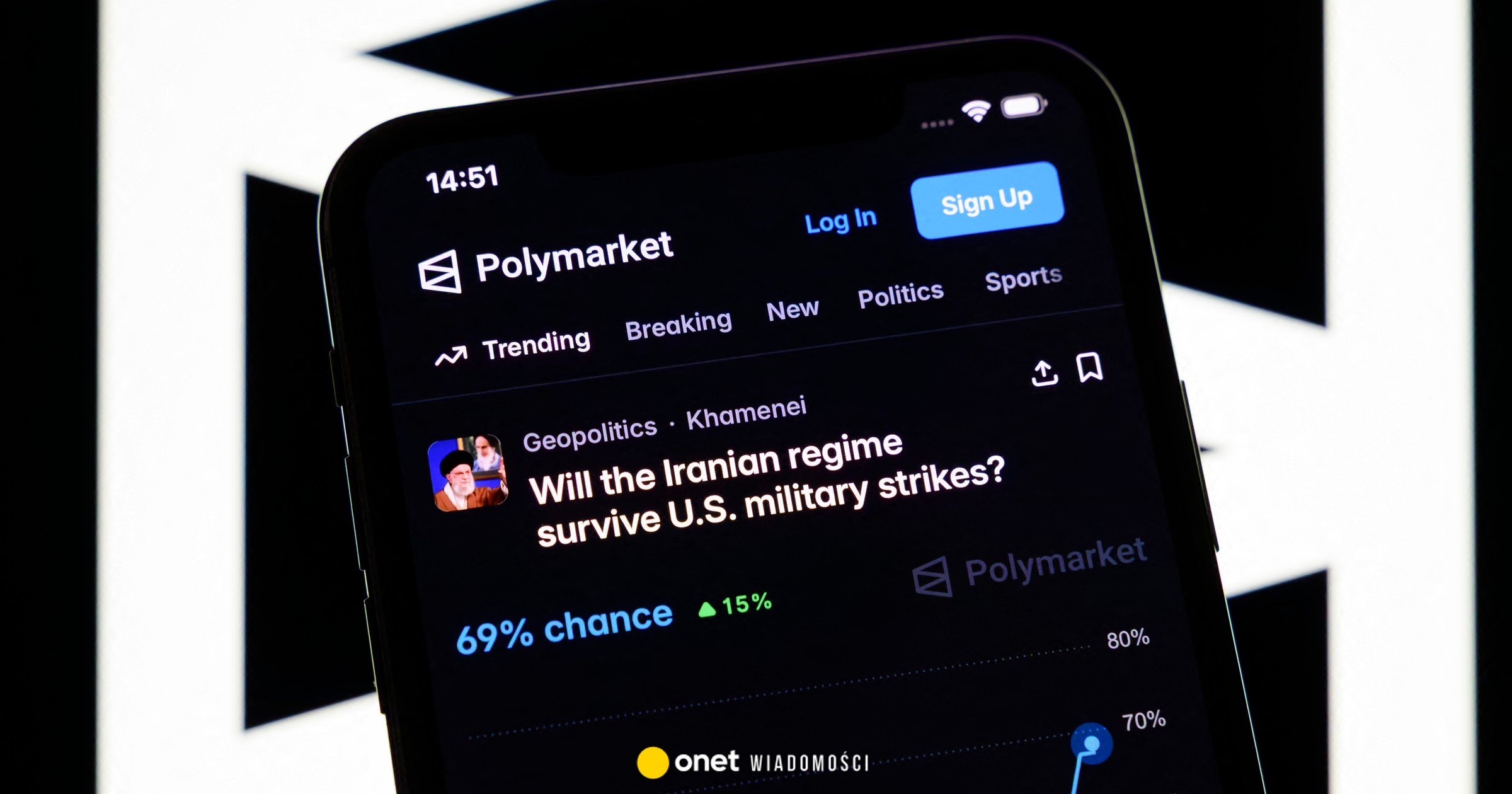
This issue took on new importance last year with forecasting platforms [nazywane w Polsce również rynkami predykcynymi] have been allowed to [oferowania] sports betting, which has further blurred the distinction between transactions made for financial reasons and those made for entertainment.
The traditional financial sector has noticed this. Some executives are already starting to sound the alarm about this trend.
“We now live in a world where people consider betting on the coin toss before [finałowym meczem futbolu amerykańskiego] Super Bowl as a form of investing where prediction markets process tens of billions of dollars a year, and gambling and investing are no longer even [oferowane w] separate applications,” wrote Ronald Kruszewski, Stifel's CEO, in his annual letter to shareholders last month.
Kruszewski suggested that consumers draw inspiration from technology: “When the interface doesn't differentiate between placing a bet and investing, you stop making that distinction, too.”
Regulatory boundaries are also blurring. And this is where things get more complicated.
Oversight of forecast markets has been assumed primarily by the Commodity Futures Trading Commission (CFTC), a small agency created to regulate the buying and selling of financial products tied to commodities such as oil, corn and wheat. However, the CFTC is in legal disputes with multiple states over who has jurisdiction over these betting platforms.
Currently, federal regulators believe that trading on prediction markets is different from state-regulated gambling because there is no “casino” or central authority that sets bet lines and odds. Instead, the CFTC treats it as a type of derivative contract – a swap – where the payout depends on an event that could have financial, economic or commercial consequences.
There is ongoing debate as to whether every “event” that appears on these pages fits this description.
The idea is that these platforms serve a similar purpose to marketplaces, which allow companies, such as airlines, to place bets to limit losses when jet fuel prices spike.
This is a creative argument, but it has its limitations.
Congressman Frank Lucas of Oklahoma, another senior member of the Financial Services Committee, told me that his constituents fear “that the situation could get out of control.”
“Not everything in life should be a gamble,” said Lucas, who is also a former chairman of the House Agriculture Committee, which has jurisdiction over the CFTC.
So where is the line between gambling and investing? There are several ways to think about this.
Theoretically, financial markets are supposed to help finance business activities. For example, a stock represents an interest in a company. Bond investors lend money to companies and governments. Both asset classes give real people real money with the expectation that they will make financially responsible decisions.
This is not the situation in prediction markets.
The argument that these platforms serve productive economic purposes is more abstract. In addition to hedging risk, it relies on what regulators might call “pricing.” This means that every financial bet is an assessment of what you think will happenwhere you put your money behind it, and markets aggregate those scores in a way that helps companies and others figure out how they should allocate their resources for the future.
Thomas Peterffy, the billionaire founder and CEO of Interactive Brokers, argued that prediction markets can provide useful information and that their mechanism should not be limited because of its more “frivolous” uses (his investment platform has prediction markets but does not offer contracts for sporting events).
Whether they're valuable or not depends on what you're betting on, he told me.
— Will such-and-such team win in the next two minutes? Yes, it's a gamble. [Jednak] what the temperature increase will be in the next 10 years is no longer a gamble, he explained. — I would be interested in questions about serious events, not about the Kardashians [najsłynniejsze celebrytki w USA i na świecie] whether they will get married or not, he added.
But there is also another side to this equation. What does your bet mean to you?
CEO Stifel offered one way to think about this question in his letter to shareholders: Are you doing this to build wealth over time, or do you treat it as fun and a get-rich-quick way?
“Gambling is consumption,” Kruszewski wrote. “Gambling gives you instant gratification because it gives you a dopamine rush, but it doesn't build anything.”
The companies behind prediction markets say this is the case [platformy prognostyczne] both a useful information tool and a safer place to put your money than sports betting apps.
Elisabeth Diana, communications director at Kalshi, said the company should be seen as more responsible than a regular betting site because it makes money from trading activities rather than results. The company's profits depend on whether people use the platform, not on whether they lose.
“Our earnings don't equal the losses of other people's winnings,” she told me. – We don't snort [w hazard] losers and we don't throw out winners.
What about the investors or players themselves? Policymakers should consider that to a person with a position in these markets, their products look almost identical to gambling.
Even if you tend to view these platforms as selling derivative contracts, their newness and near-universal availability may make them a new regulatory challenge.
CFTC Chairman Mike Selig recently admitted to my colleague Declan Harty that prediction markets provoke “different considerations” than other products regulated by the agency. And that could impact how these products are ultimately regulated, he said.
— Should there be age restrictions in our futures markets? Selig asked. “We've never had this before, but maybe it's something the public will ask for.”
This would be a step towards treating these markets a bit more like gambling. Betting platforms are typically unavailable to anyone under 21 years of age, while Kalshi is open to anyone over 18 years of age.
But there are broader legal issues that Congress could consider.
In the wake of the 2008 financial crisis, federal lawmakers explicitly banned trades related to “gambling” — a vague term that, until President Donald Trump's inauguration, according to the CFTC included everything from election betting to sports betting.
The CFTC now uses a much narrower understanding of the term, opening the door to these categories of bets. Congress could define the term more precisely if it disagreed with the agency.
Lawmakers could take even stronger steps. Mick Mulvaney, a former congressman who also served as White House chief of staff during Trump's first term, said Congress should simply ban sports betting on prediction platforms.
Mulvaney told me he loves gambling, but now, as head of a group called Gambling Is Not Investing, he fights against the intrusion of prediction markets into the sports betting industry. He says he began contacting “key people” on Capitol Hill and holding briefings for staff.
The policy discussion is still in its infancy, but so far Mulvaney said he is “pushing open the door.” He is optimistic that Congress is ready to tackle the dilemma that gives his group its name. “Every now and then you get lucky with some things and strike at the right time,” he said. “It's at the forefront now.