Vladimir Putin's version of empire is proving unviable, fast approaching its denouement as the Russian Federation settles for the effects of a major strategic error: the invasion of Ukraine. Behind the scenes, the new Kremlin czar is forced to navigate increasingly acute factional disputes in an environment where oligarchic and security service elites are vying for influence, watching for signs of his weakness, analysts Andrei Piontkovski and Anton Eremin write in the Kyiv Post.
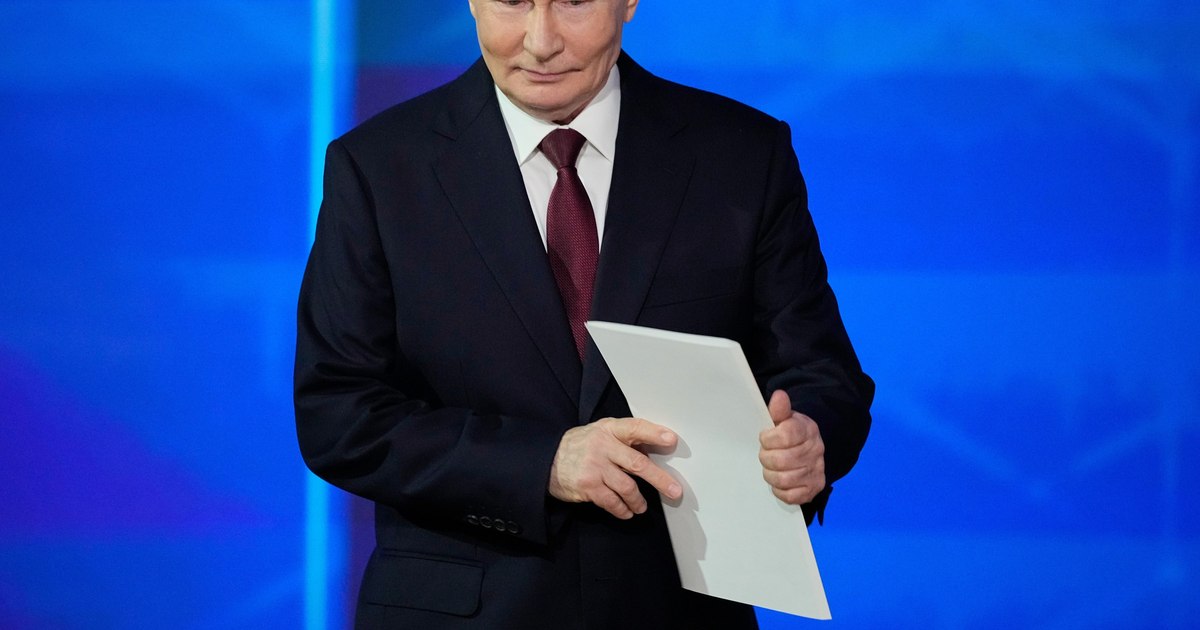
Vladimir Putin risks losing his throne/PHOTO: Profimedia
A subtle but highly valuable indicator of these internal tensions is the “Big Game” show on Russian television's First Channel, a controlled but revealing space for the behind-the-scenes movements of power in Moscow. Moderated by Dmitri Simes, a legendary figure associated with Soviet intelligence interests and practiced in the conservative-realist analytical environment in the USA, the show brings together loyalists of the regime such as Dmitri Trenin, Karen Shahnazarov, Mikhail Hodarenok or Evgheni Bujinsky. Although their loyalty to the leader in the Kremlin is beyond doubt, these influencers cannot remain blind to the reality on the front and in the economy, trying to suggest – with the utmost caution – course corrections to save the imperial idea they share.
The rhetoric of escalation and decision paralysis
The dynamics of recent months betray a fault between the aggressive rhetoric of the propaganda and the caution of the leader in the Kremlin. In mid-April, after the Ministry of Defense in Moscow published a list of potential targets on the territory of some NATO member states – arms factories that support Ukraine -, the voices on the set of the “Great Game” openly demanded the transition from threats to action. “The limit of verbal warnings has been exhausted,” the station shouted.
However, the answer of the tsar from the Kremlin was one of glacial sobriety, transmitted even through the moderator of the show:
“Launching blows without thinking of the consequences is not, to put it mildly, a sign of state wisdom.”
This reaction indicates that Vladimir Putin is unwilling to take major risks that could endanger his own survival or personal stability, despite his bellicose rhetoric. On the other hand, the Russian leader flatly refuses to end the conflict, and this paralysis of political will is beginning to take its toll on his public behavior, creating an impression of deep unease among keen Kremlin watchers.
The historical parallels of the collapse: From Nicholas II to Putin
Historically speaking, Vladimir Putin's current behavior places him in the position of being the third “last czar” of a Russian imperial formula. Modern Russian history has seen two more moments of passive drift towards catastrophe, in which leaders were unable to make clear decisions to save the systems they ruled:
Putin goes to China for talks with Xi Jinping. The Kremlin announced the agenda for the talks
Nicholas II Romanov: The first and last tsar, under whose reign the centuries-old Russian Empire collapsed.
Mikhail Gorbachev: The second last tsar, whose departure marked the demise of the Soviet experiment. The Soviet Union was essentially an ideological extension of Russian imperial ambitions, an attempt to extend the life of the empire through communism.
The regime established by Vladimir Putin in the last quarter of a century risks becoming the most fragile and grotesque construction of all. Today, that system is reeling under the weight of flawed strategic decisions and a conflict that even Stalin's Soviet Union did not manage with such geopolitical imprudence. Time pressure and international isolation are turning the current rule from Moscow into an end-of-age scenario, where the costs of imperial ambitions are directly settled by the stability of the state.
Russian politics expert Jenny Mathers believes that if Putin's regime falls, it will most likely not be a popular uprising or a classic military intervention, but an internal movement of the Russian political elite.
“The most likely scenario would be a palace coup, organized by the political elites who come to the conclusion that Putin no longer serves their interests. It is similar to how Nikita Khrushchev was ousted in the 1960s”explained the analyst.
In recent months, more and more reports have emerged about the extreme security measures taken by the Russian leader. Western media say Putin avoids public travel and spends much of his time in underground compounds or secure residences, including the controversial Gelendzhik Palace, valued at around £1 billion.
Access to the Kremlin involves full body checks
According to the same sources, access to the Kremlin requires full body checks, and even close employees of the Russian leader — cooks, photographers or bodyguards — would be permanently monitored to prevent any possible plot.
But experts say such measures do not guarantee the political survival of an authoritarian leader when elite support begins to erode.
“In authoritarian regimes, things are hard to predict. The leader seems completely in control until suddenly he is not.”says Jenny Mathers.
However, discontent in Russia would grow amid inflation, human losses from the war in Ukraine and the lack of a clear prospect of an end to the conflict.
Even in the event of an attempt to remove Putin, experts believe there is a major problem: the lack of a credible successor.
“This is one of the biggest difficulties. Putin has eliminated or compromised almost all figures who could have become real power alternatives”warns Mathers.