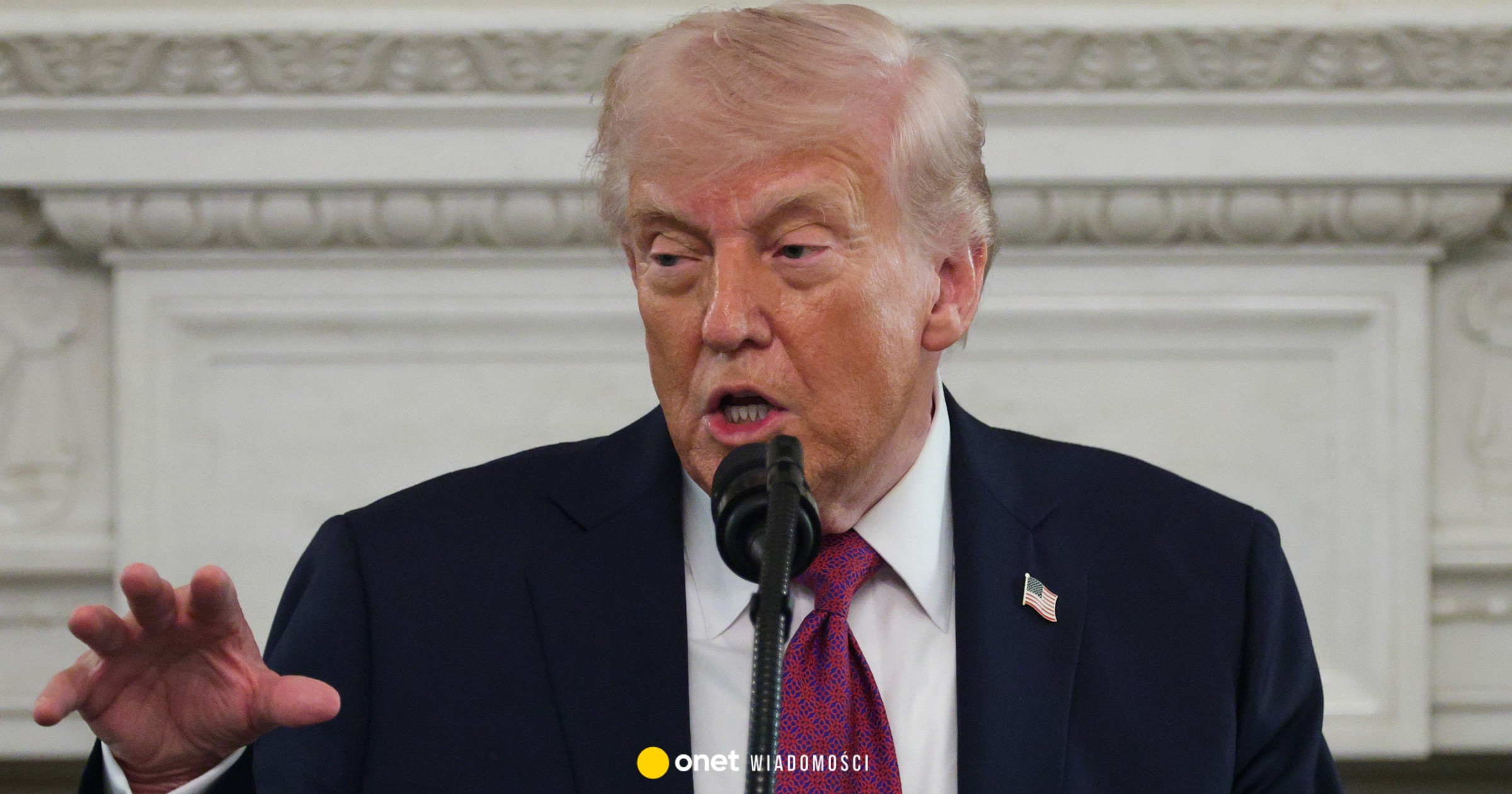
The White House is using every means at its disposal to try to lower gas prices — but veteran GOP activists tell POLITICO that time is running out. If Trump's party wants to avoid a disaster at the ballot box in November, it must find a solution.
However, this turns out to be quite a challenge for the White House. Donald Trump and his administration continue to send mixed signals regarding the war with Iran and the resulting surge in U.S. gasoline prices.
Meanwhile, prices at gas stations have increased by more than a third since the United States and Israel launched attacks on Iran. Oil prices, which underpin gasoline costs, remain extremely volatile and could rise again in the coming weeks — just as U.S. drivers hit the road for summer vacation. Experts have no doubt that Trump is approaching his worst-case scenario at his own request.
— I'd say gas prices need to come down significantly before Memorial Day weekend [Dnia Pamięci, sobota 25 maja] says Ron Bonjean, a Republican strategist and co-founder of ROKK Solutions, a political consulting firm. “This is a political massacre that will inevitably come.”
The article continues below the video
The American public is increasingly dissatisfied with the war with Iran — largely because Tehran has retaliated by closing the Strait of Hormuz. Blocking this bottleneck through which approximately 20% of global oil supplies, has triggered a wave of unprecedented volatility in oil prices, while Trump promises peace and threatens more bombings.
Memorial Day weekend is considered the start of the summer driving season, when fuel demand reaches its peak. That's when many Americans hit the road for their annual vacation — and that's when they'll be especially sensitive to high gas prices.
Meanwhile, the Trump administration appears to be at odds with itself over when prices will fall. Energy Secretary Chris Wright said over the weekend that gas prices may not fall below $3. per gallon until 2027. This statement was denied on Monday, April 20, by the US President.
“No, I think he's wrong about that. He's completely wrong,” Trump told The Hill.
Wright also backed away from his forecast during Tuesday's Senate hearing, saying, “I don't know the future of energy prices” and pointing out that gas station prices are still lower than the peak reached during the Biden administration.
On Tuesday, April 21, oil prices in the US were $93. per barrel, i.e. almost $30. more than when the war with Iran began, but less than the recent peak of $120. The average price of a gallon of regular gasoline has dropped slightly over the past week and is now around $4.02. per gallon, but still remains more than a dollar higher than it was at the end of February. Data from Brown University show that the war has already cost American consumers over $24 billion. (over PLN 87 billion) in the form of higher fuel costs.
The White House said it had made clear that the price increases “are short-term, temporary disruptions.”
A driver fills up at a gas station in Brooklyn, New York, April 21, 2026 (illustrative photo)Spencer Platt/Getty Images/Staff/Getty Images
“President Trump is the undisputed leader of the Republican Party and remains focused on keeping Americans safe, lowering costs for working families and making our country greater than ever before,” White House spokesman Taylor Rogers said in a statement. “The president has brought oil and gas prices down to multi-year lows at a record pace, and as traffic normalizes in the Strait of Hormuz, energy prices will plummet again.”
“Voters will blame the ruling party”
Zack Roday, a partner at Ascent and former communications director for the House Energy and Commerce Committee, noted that gas prices are one of the most visible economic indicators — one that voters see every morning on their way to work. A 2016 study found that a 10-cent increase in the price of gasoline has historically correlated with a 0.6 percentage point decline in presidential support.
Roday said the Trump administration must acknowledge how painful high gas prices are for voters, while reminding them that its policies led to lower energy prices during its first term and in the first year of its second term.
“The voters who remember this — … obviously Republican voters, but I think also a lot of impressionable independent voters — understand the context,” Roday says. “That doesn't detract from the fact that prices have gone up because of the conflict… but there is evidence of success in this area.”
Kiersten Pels, spokeswoman for the Republican National Committee [głównego komitetu wyborczego Partii Republikańskiej Stanów Zjednoczonych]said in a statement that Trump “has already taken action to free U.S. fuel prices and reverse the disastrous Biden-era policies that drove gas prices to a record high of $5.”
“He made it clear [Trump]that decisive action under Operation Epic Fury could result in short-term price volatility,” Pels said. “Looking ahead to the midterm elections, costs are expected to decline as supply stabilizes.”
GOP campaign consultants said they weren't panicking yet, but the Trump administration's first step must be to get gasoline prices under control, and quickly — a difficult task when negotiating partner Iran maintains de facto control over the Strait of Hormuz.
“On a political level, if oil prices remain prohibitively high, voters will blame the ruling party, and from a communications perspective, there's not much you can do about it,” says Alex Conant, a partner at the Washington-based strategic communications firm Firehouse Strategies and former communications director for Secretary of State Marco Rubio's 2016 presidential campaign.
But Conant notes that the war could end quickly and gas prices could fade from voters' minds before they head to the polls. “The election is still a long way away and we don't know what gas prices will be like in six months, let alone six weeks,” Conant says.
The administration has so far used almost all of the same measures as previous administrations — including the Biden administration — in an attempt to tamp down price increases in the short term, with limited success.
Trump administration officials, like their Biden administration counterparts, have tried to pressure oil companies to increase oil production, but Trump's insistence that the war will end soon has dampened calls to put oil rigs online.
Trump's Energy Department also released oil from the U.S. Strategic Petroleum Reserve, though the relatively small amount of 10 million barrels that have hit the market so far has had less impact on prices than the hundreds of millions of barrels released by the Biden administration. Both administrations also warned gas station owners against inflating prices amid wartime price volatility.
I’m Ashley Davis as an editor, I’m committed to upholding the highest standards of integrity and accuracy in every piece we publish. My work is driven by curiosity, a passion for truth, and a belief that journalism plays a crucial role in shaping public discourse. I strive to tell stories that not only inform but also inspire action and conversation.