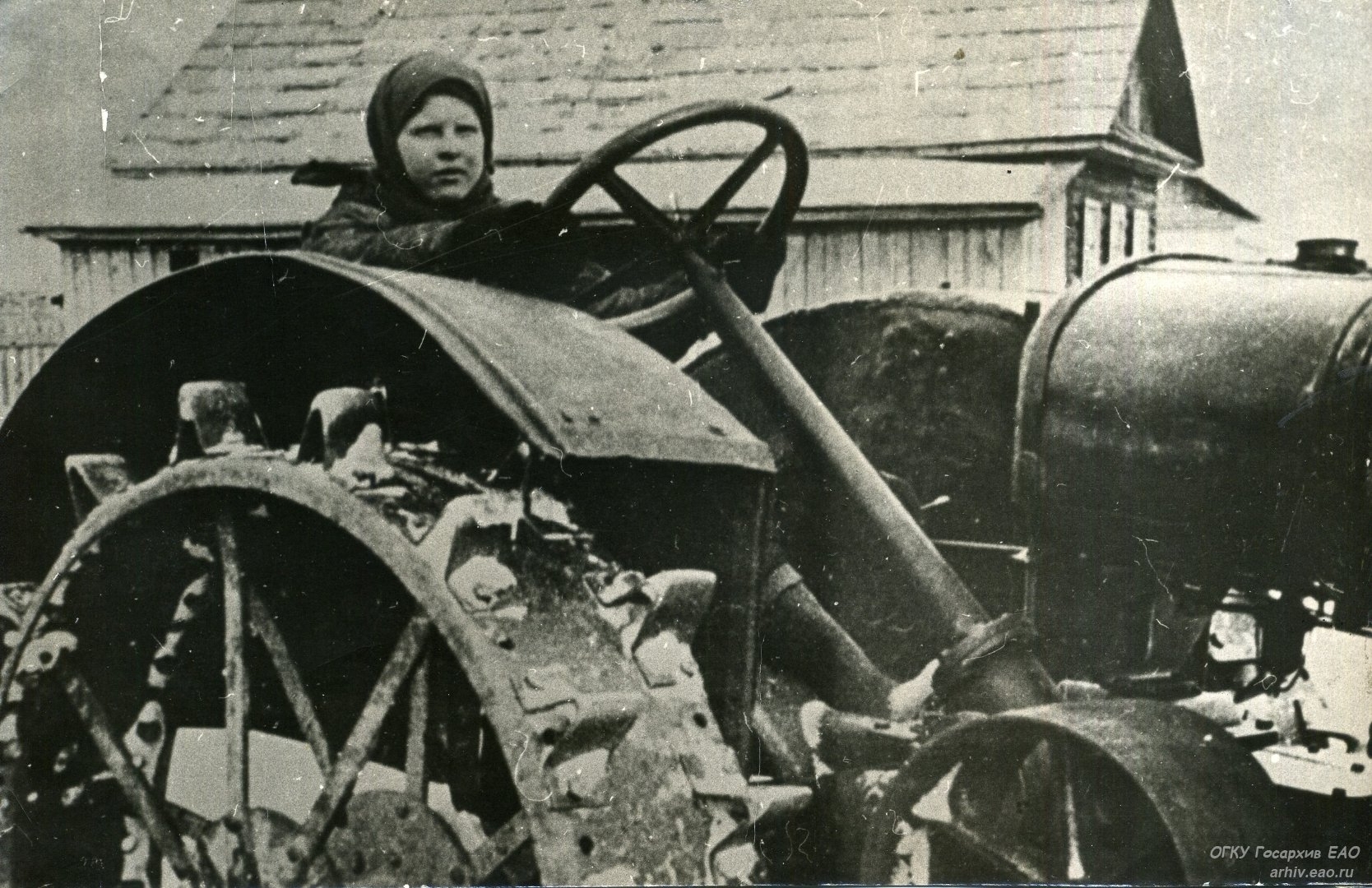
Tractor driver of the Waldgeim collective farm Maria Demchenko. 1943
Photo: State Archive of the Jewish Autonomous Region
May 18, 1939
The newspaper “Birobidzhan Star” (12+) on May 18, 1939 wrote on its pages that the Birobidzhan MTS began to prepare for training collective farmers to drive a tractor.
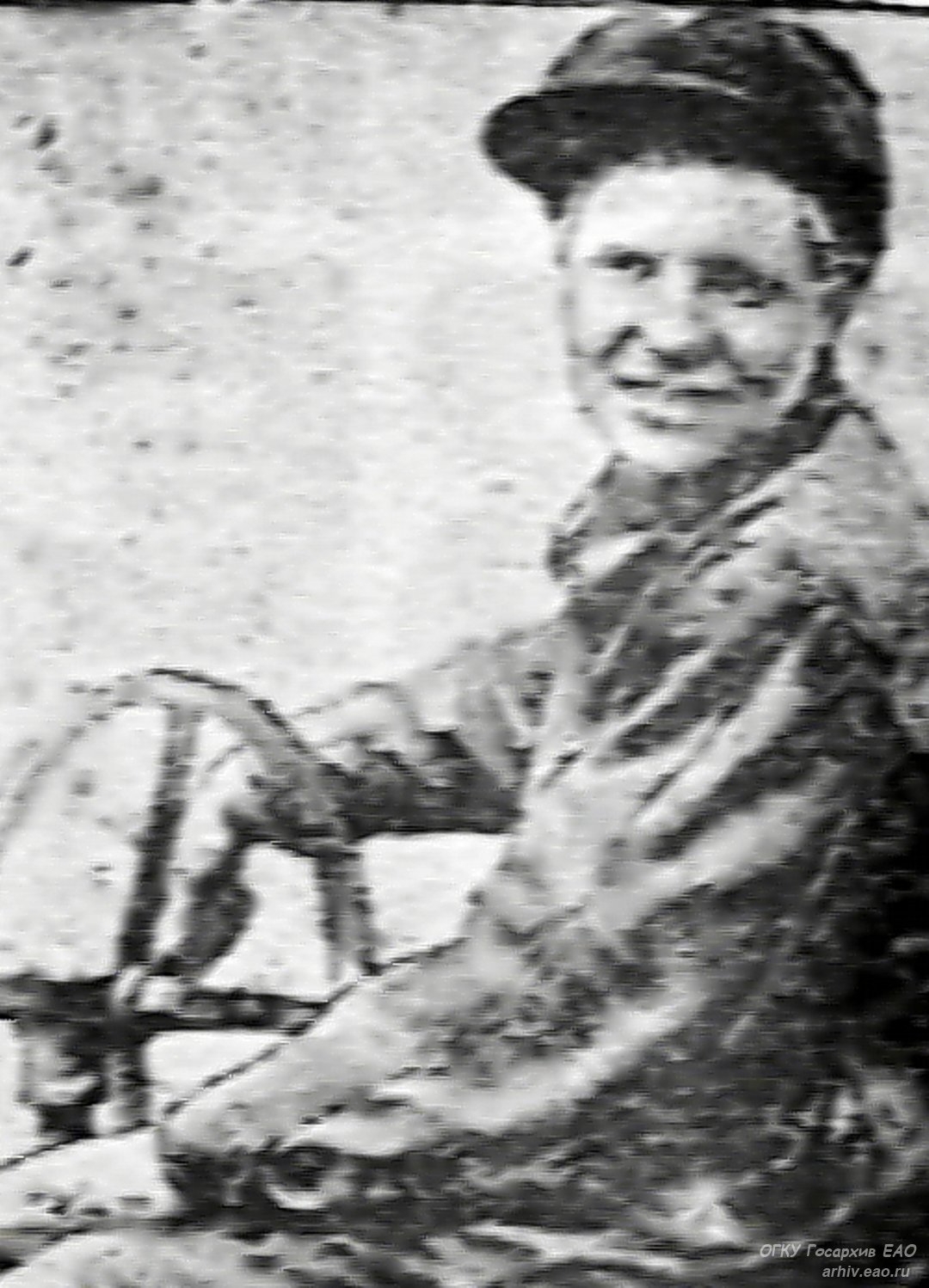
“The Directorate of the Birobidzhan MTS calls for a discussion of the appeal of patriots and the resolution of the Central Committee of the Komsomol, the People's Commissariat of Land and the People's Commissariat of State Farms among all women collective farmers, tractor drivers, combine operators and mechanics of our MTS. We must achieve the creation of women's tractor brigades in all collective farms. This will help reap a bountiful harvest, strengthen the power of our homeland. And if in a terrible hour tractor drivers have to change their tractors to a tank, women will strengthen their homeland and work on the socialist fields. And if necessary, they, Soviet women, who infinitely love their homeland, the Bolshevik party and the great Stalin, will confidently lead combat vehicles into battle and destroy the enemy on his own territory.”
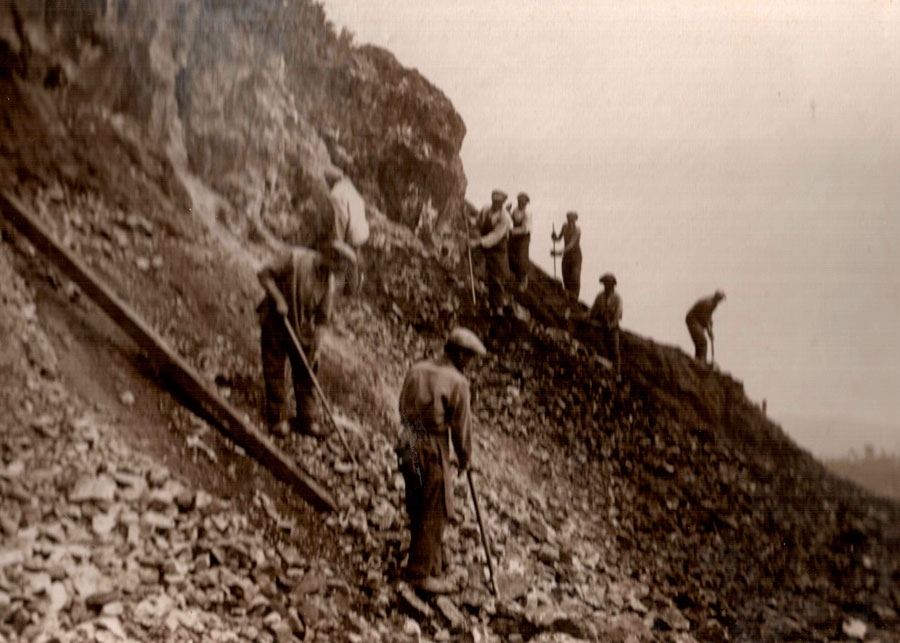
Stone quarry in Londoko. Photo: Photo: Heritage EAO
The newspaper informed its readers that a working geological exploration station in the Sutara River valley had identified four new graphite deposits, two of which are of industrial importance. In the vicinity of the village of Sutary there is limestone. Individual specimens of precious stones were found in the gold-bearing rock: garnet and jasper.
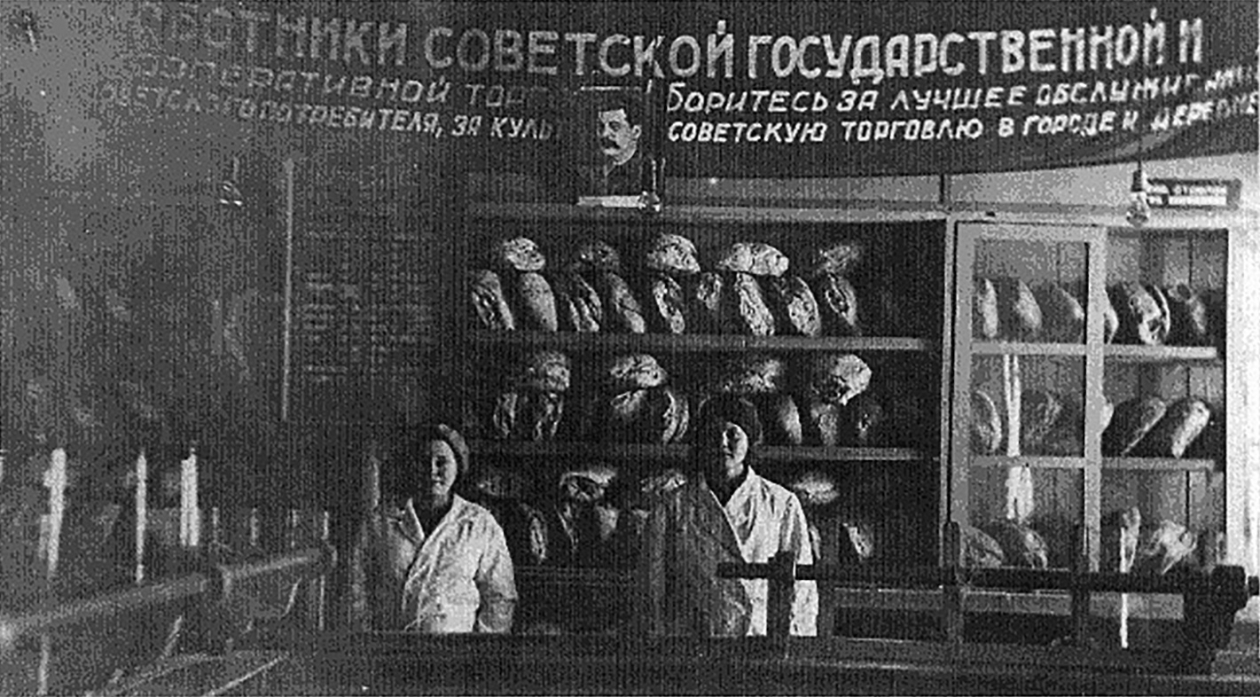
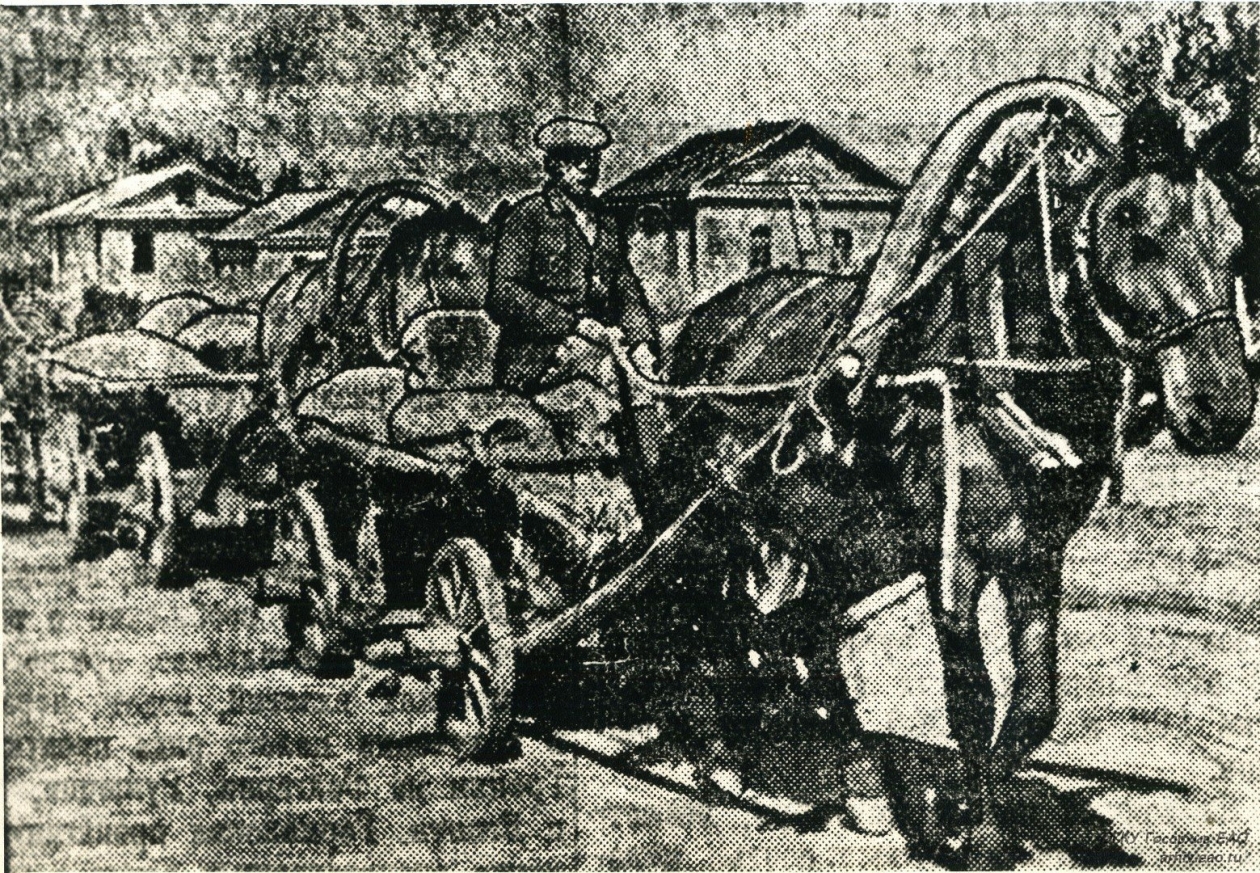
The newspaper contains information that the walls of the main building are being laid during the construction of a bakery in Birobidzhan. Finishing work in the power plant building is nearing completion.
May 18, 1951
Having discussed the report on the work of the primary party organization of the collective farm “Far Eastern Collective Farmer” of the Smidovichi district, the bureau of the district committee of the All-Union Communist Party of Bolsheviks noted the improvement in organizational and political work among collective farmers, positive changes in the economic activities of the collective farm, which fulfilled the 1950 plan ahead of schedule for supplying the state with agricultural and livestock products. The bureau's resolution defines measures to further improve the activities of the party organization.
May 18, 1984
A scientific and practical conference “The Triumph of the Leninist National Policy of the CPSU” was held in Birobidzhan, dedicated to the 50th anniversary of the formation of the Jewish Autonomous Region.
Presentations at the conference were made by: first secretary of the regional committee of the CPSU L.B. Shapiro, secretaries of the regional party committee Ya.G. Pokutsa, I.I. Strelkova, head of the department of ideological work of the Khabarovsk Higher Party School, Doctor of Historical Sciences P. V. Kondrashov, head of the department of history of the CPSU of the Khabarovsk Higher Party School, Doctor of Historical Sciences N. I. Dubinina and others. At the conference, breakout sessions were held to share work experience.
May 18, 1971
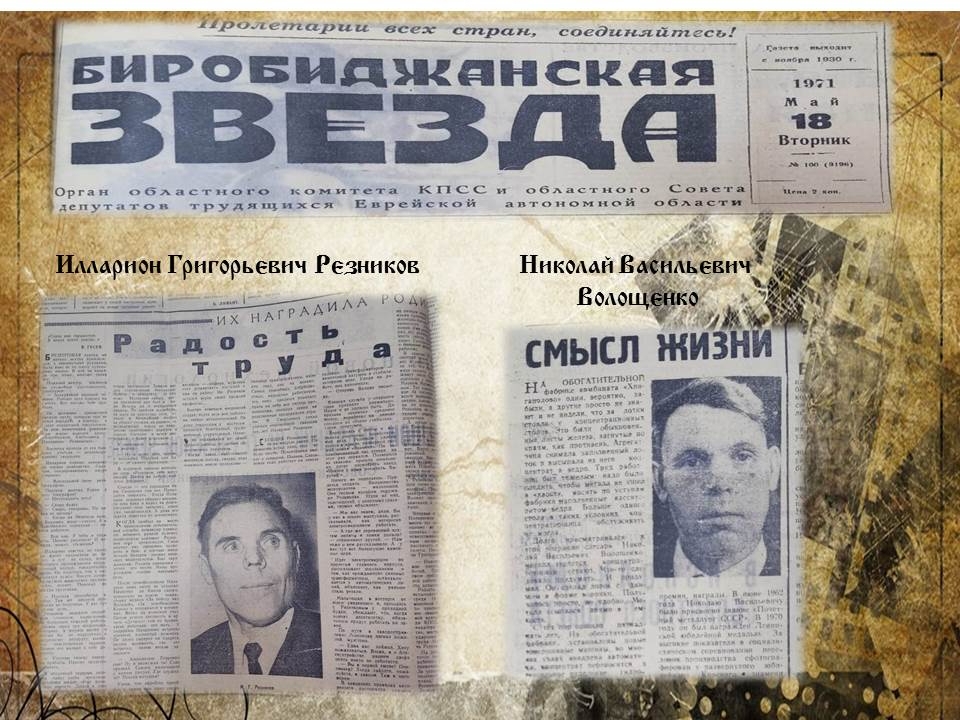
Clippings from the newspaper “Birobidzhan Star”. Photo: Photo: Regional Library
The newspaper “Birobidzhan Star” on May 18, 1971 wrote about a worker at a power transformer plant, a drummer of the labor watch named after the XXIV Congress of the CPSU, a holder of the Order of the Badge of Honor, the Order of Lenin, a drummer of communist labor Illarion Grigorievich Reznikov.
Illarion began his work biography at the Birobidzhan bakery, as a territory cleaner. Then he came to work at a metal products plant, later renamed the power transformers plant, first working as an apprentice, then as a welder.
During the Second World War, he smashed Japanese militarists, served as part of a mortar battery, and was a loader. He has awards “For the Victory over Japan” and “For the Liberation of Korea”. After demobilization, Illarion Grigorievich returned to Birobidzhan to the metal products plant.
Illarion Grigorievich is respected at the plant and constantly conducts tours of the plant for schoolchildren. Reznikov was one of the first at the plant to be entrusted with carrying out a responsible operation with a personal mark.
The same newspaper tells about the innovative mechanic of the Khinganolovo processing plant, Nikolai Vasilyevich Voloshchenko.
Nikolai Vasilyevich, in honor of the XXIV Congress of the CPSU, managed to introduce two rationalization proposals into production. Voloshchenko found an original and, at the same time, very simple way to restore units without dismantling them.
His work record book surprises with the abundance of records of incentives. 62 times the managers of the Khinganolovo plant noted in their orders the excellent work of the innovator: thanks, bonuses, awards. In June 1962, Nikolai Vasilyevich was awarded the title “Honorary Metallurgist of the USSR”, and in 1970 he was awarded the Lenin Jubilee Medal. For high performance in socialist competition, the production leader was photographed with the unfurled anniversary Red Banner of the regional committee of the CPSU and the regional executive committee, which was awarded to the plant.