Erik Kirschbaum is an American journalist. He lives in Germany.
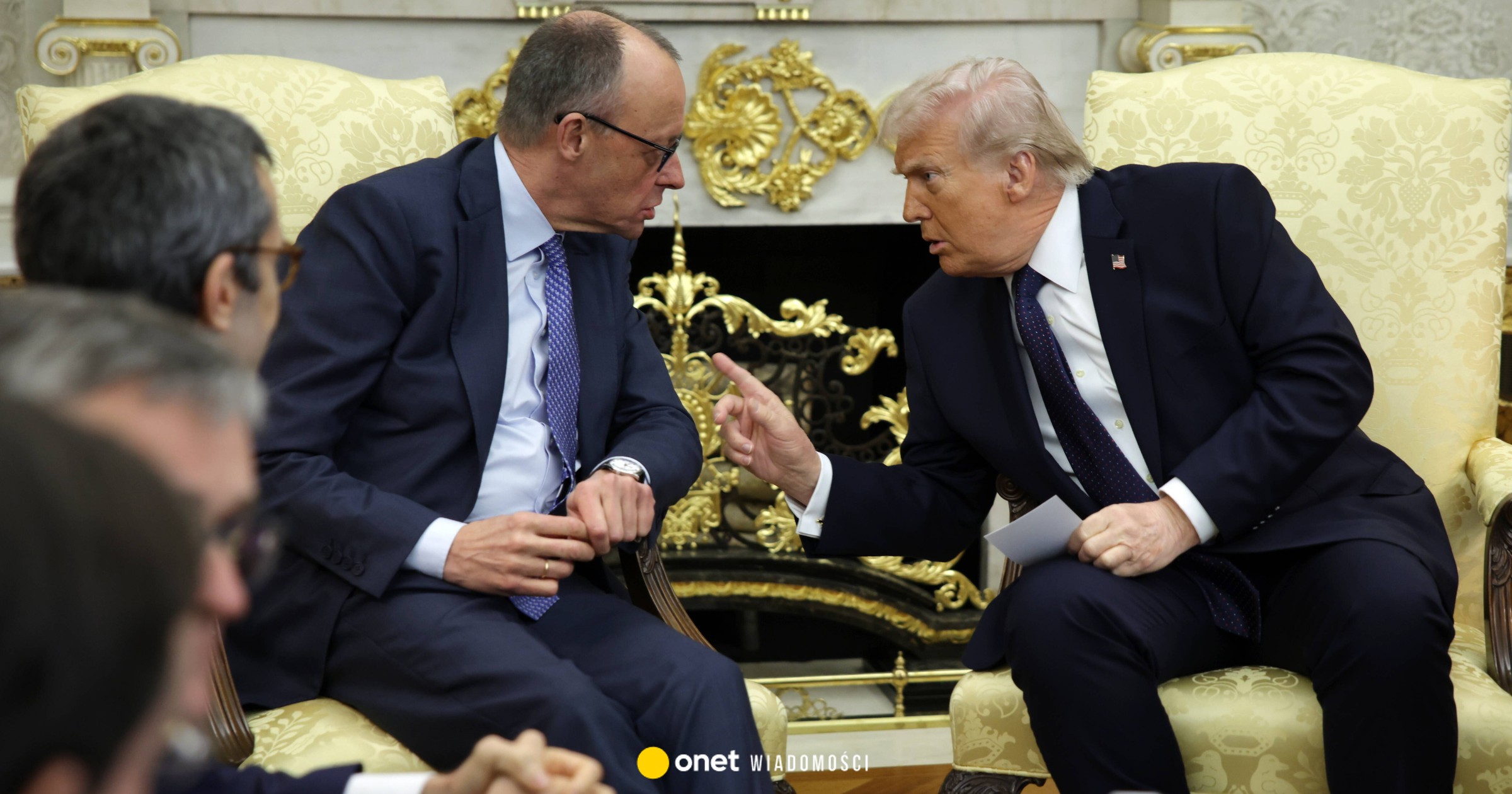
Perhaps Friedrich Merz thought that most Americans didn't care much about what was happening in Germany anyway and knew little about the country when he recently told a group of German students that America had been “humiliated” by Iran. He also added that Donald Trump started the war “apparently without any strategy.”
Merz spent the first months of his term trying to win the favor of the capricious American president. However, his unfortunate comments about the touchy-feely Trump proved to be a proverbial shot in the foot.
On Friday, Merz took his anti-American course a step further — during a talk with young people at Catholic Days in Wurzburg. Merz said he would advise his children not to go to the US. — Today, I would not recommend my children to go to the United States, get an education and work there, simply because a specific social climate has suddenly developed there, he said.
Trump reacted to his first statements in front of the students with fury. First, he publicly attacked the chancellor, suggesting that Merz had no idea what he was talking about. Then Trump announced the introduction of new tariffs of 25%. on European cars – which was a direct blow to Germany.
The article continues below the video
Shortly afterwards, information appeared that the Pentagon was also suspending the stationing of American Tomahawk missiles in Germany. Who knows what else will happen after the last statements on Catholic Day.
The Chancellor cannot bite his tongue
There was a sense that Trump felt betrayed by someone he considered an ally. Merz will probably not receive another invitation to the White House from Trump.
The whole situation shows one thing above all: Merz apparently counted on the fact that Americans would not hear what the German chancellor said in a joking mood about the president in front of a group of students somewhere in Germany. This is where the German mistake lies. Even though many Americans really don't know much about Germany, there are those who are very familiar with the situation.
In recent years, the perspective of the political and media elites on the Federal Republic has clearly changed. Instead of admiration, surprise appears more and more often. Germany is no longer a model European country in American debates, but is increasingly perceived as a country with a weakening economy, strategically uncertain and politically indecisive.
In April, Pierre Briancon, a columnist associated with the Reuters Agency, wrote that Germany, after six years of almost zero growth, seems unable to carry out the necessary reforms. “Without serious reforms, which Berlin is either unable or unwilling to undertake, Germany risks long-term stagnation,” Briancon warned.
Phyllis Berry from the Atlantic Council expressed herself even more clearly at the beginning of May. According to her, “Germany's weakening economy” and “lack of clear leadership” are serious burdens for the Merz government.
Friedrich Merz, Chancellor of Germany, during Catholic Day in Wurzburg, May 15, 2026.PAP/EPA/ANNA SZILAGYI / POOL
Germany's situation raises particular surprise in the United States, because from the American perspective, the collapse seems to be largely the fault of the Germans themselves. Many Americans believe that Germany's energy crisis is mainly due to the result of voluntary dependence on cheap Russian gas and the decision to shut down operational nuclear power plants. Delayed digitalization, damaged infrastructure and bloated bureaucracy are considered symptoms of a country that has rested on its laurels for too long.
It's not just about the faltering German economy
There is a growing sense in the United States that Germany has lost its strategic self-awareness as a European middle power. In the eyes of many Americans, Germany is still too cautious, slow and conflict-averse.
Liana Fix, a German-American security expert at the Council on Foreign Relations, describes Germany as a country caught between economic power and strategic uncertainty. For too long, Berlin has relied on the idea of ”change through trade” towards Russia and now it is difficult for him to accept a return to the geopolitics of power. There is a growing feeling in Washington that Germany wants to lead but is avoiding the “difficult consequences of real leadership.”
The political approach to the Alternative for Germany is also being increasingly criticized in parts of Washington. For American conservatives, creating a “cordon sanitaire” against this party is a sign a political system that wants to exclude undesirable opposition. US Vice President JD Vance has openly criticized Germany's handling of the AfD.
Among MAGA supporters, there is a mocking term “Eurostan” for Western European countries such as Germany. It means the belief that through migration, multiculturalism and liberal social policy Europe has lost its cultural identity.
Perhaps this is the real German breakthrough: not only the loss of economic security, but also loss of international reputationwhich the Federal Republic of Germany enjoyed almost automatically for decades.
I’m Ashley Davis as an editor, I’m committed to upholding the highest standards of integrity and accuracy in every piece we publish. My work is driven by curiosity, a passion for truth, and a belief that journalism plays a crucial role in shaping public discourse. I strive to tell stories that not only inform but also inspire action and conversation.