Spain closes airspace to US aircraft involved in Iran war. What is happening to the American bases

The Spanish government is in a delicate situation: it rejects involvement in a war it considers illegal, but continues to contribute to the defense of Turkey and Cyprus, in line with its commitments to NATO and the EU.
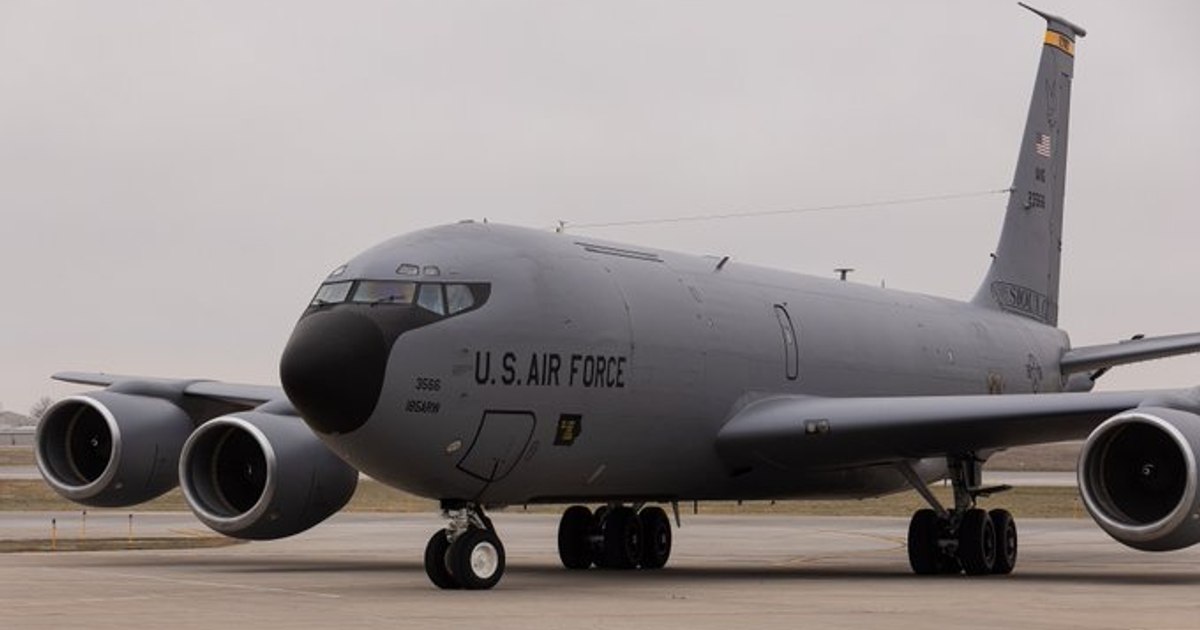
American refueling planes PHOTO: Shutterstock
Spain has closed its airspace to flights involved in the “Epic Fury” operation launched by the US and Israel against Iran. In addition to banning the use of the military bases in Rota (Cádiz) and Morón de la Frontera (Seville) by fighter jets or in-flight refueling planes participating in the attack, Spain also refuses access to the airspace of American planes stationed in third countries, such as the United Kingdom or France, according to military sources, writes El Pais.
“We have denied the United States the use of bases at Rota and Morón for this illegal war. All flight plans involving operations in Iran have been rejected. All, including those for refueling aircraft”Prime Minister Pedro Sánchez said last Wednesday in Congress.
Basically, overflights by bombers or tankers participating in this operation are not approved. The Spanish ban has one exception: in emergency situations, the aircraft in question will be authorized to transit or land.
However, this does not mean that the bases in Morón and Rota are not used by United States Air Force (USAF) aircraft, as all the missions provided for in the bilateral agreement with Washington remain in place, such as the logistical support given to the US troops deployed in Europe – approximately 80,000 troops in total – which are carried out routinely.
Also, the Seville Air Traffic Control Center, belonging to the public entity ENAIRE, provided navigation support for the B-2 Spirit bombers that take off from their base in Whiteman, Missouri, strike Iran and then return on a direct flight lasting more than 30 hours. However, these bombers do not enter Spanish airspace, but cross the Strait of Gibraltar in transit, which Spain cannot prevent.
Beyond the government's “No to war” slogan, Spain's stance on the conflict that began over a month ago has gradually taken on a more technical tone, to the point where it is now approaching neutrality.
In the weeks leading up to the February 28 attack, intense negotiations took place between Madrid and Washington over Spain's role in the US military deployment. The Pentagon has deployed at least 15 tanker aircraft, mainly KC-135 Stratotankers, to bases in Rota and Morón as logistical support for a military deployment whose goal, it said at the time, was to pressure Iran into yielding in negotiations held in Oman and Geneva and agreeing to dismantle its nuclear and missile programs without the need for military action.
In this political-military context, as various sources confirm, Washington polled the opinion of its counterparts regarding the possibility of deploying B-52H Stratofortress and B-1B Lancer bombers on Spanish bases. According to the American side, their mission would not be to attack Iran directly, but rather to serve as a reaction force in case the Iranians attack NATO or allied bases. In theory, they would limit themselves to destroying Tehran's missile silos and launchers in a second strike.
Both B-52s and B-1s have been deployed to Morón on several occasions for military exercises (most recently in March 2024 for B-1s and November 2025 for B-52s), so the Seville base has the necessary infrastructure to accommodate them. However, only once, during the 1991 Gulf War against Iraq, did Felipe González's government authorize its use as a platform to directly attack a third country. On that occasion, the Spanish side made it clear to the Americans that it could not collaborate on an operation that does not respect international law or that does not fall under the aegis of a multilateral organization (UN, NATO or EU), so the plan was withdrawn, and the request to deploy bombers on Spanish territory was never officially presented, according to government sources.
However, Spain's refusal to cooperate with a war that, from the outset, had no legal justification had other consequences: it prevented the tankers already deployed at Morón and Rota from refueling the bombers in flight, an essential condition for extending their range. Consequently, over the weekend of February 28 and March 1, approximately fifteen KC-135s departed Spain for France or Germany. These tanker planes, which constitute a fundamental pillar of air power, were deployed during the war in other European countries, such as Romania. One of them crashed in Iraq, killing all six crew members, and five others were damaged in an Iranian attack on a US base in Saudi Arabia.