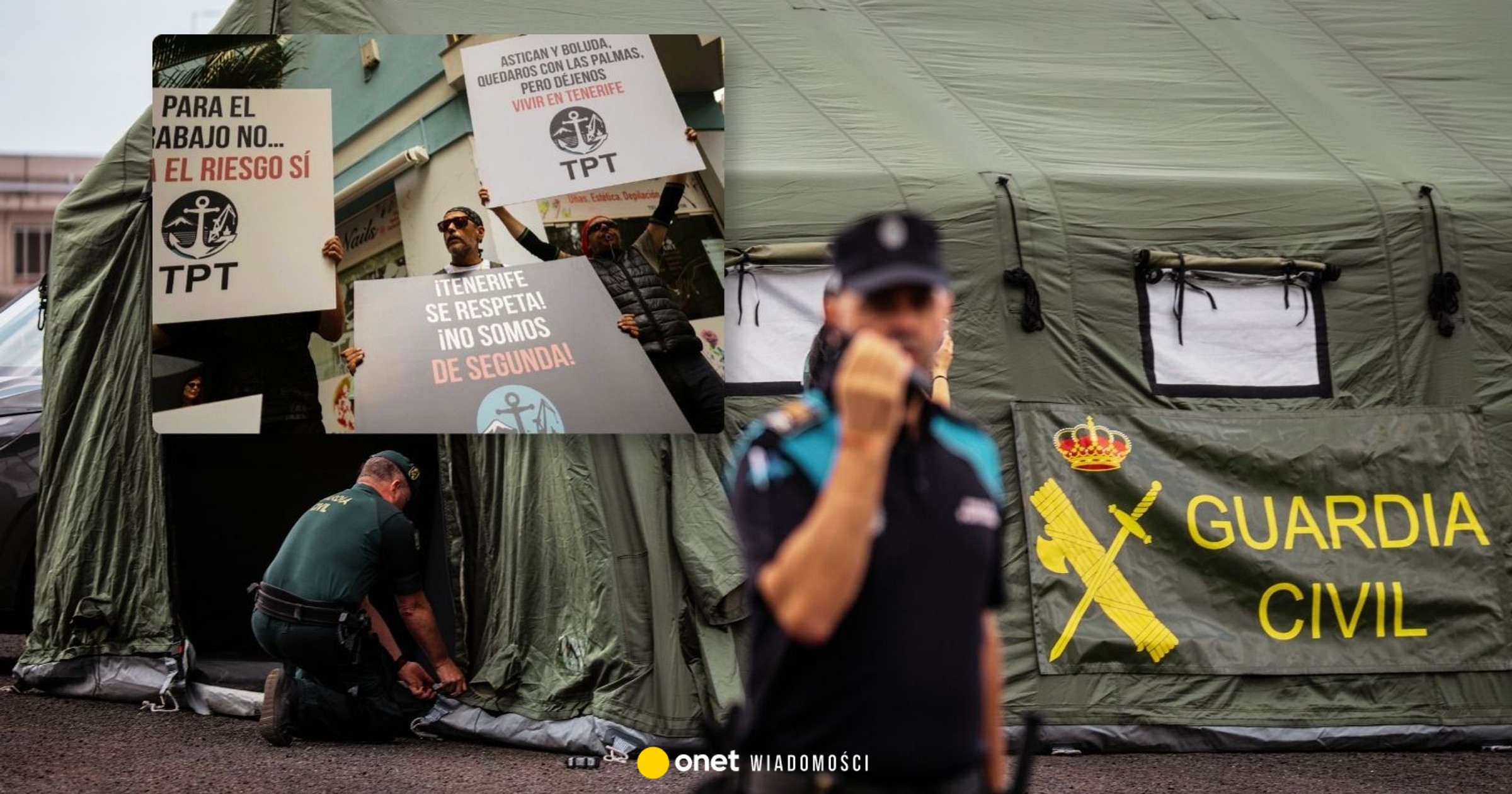
The arrival of the MV Hondius in Tenerife is scheduled for early morning on Sunday, May 10. The EU, as it claims in announcements, is working “tirelessly” to prepare for the reception of passengers from a ship affected by the hantavirus.
Three people on the cruise ship died. Thirty-two people (including two who died) abandoned the ship on April 24 on St. Helena Island in the South Atlantic. States and public health agencies are working to determine their whereabouts. On Friday, May 8, Spain reported a new suspected case in Alicante, as did the United Kingdom.
The MV Hondius will dock at the port of Granadilla, where passengers for whom their countries have arranged return flights will be transferred directly to the aircraft. As a spokesman for the European Commission (EC) emphasized in a letter to POLITICO, one of the key decisions that countries and disease experts are working on is “defining quarantine guidelines and protocols.”
“If you look at social media, they want to blow up this ship. They want to sink it,” a Spaniard, one of the ship's passengers, told The Associated Press in a telephone interview. He worries that he will be stigmatized as a potential carrier of the virus and should be avoided—or something worse will happen to him.
Two passengers told the AP news agency on Friday in a phone call from the ship that they had seen sensational media reports and memes on social media that stigmatized people aboard the MV Hondius.
“When you see what's going on there [w mediach społecznościowych]you realize that we are heading straight into the eye of the hurricane,” adds another passenger, a Spanish woman, in an interview with AP. “Many people forget that there are over 140 passengers on board.”
In Tenerife, passengers remaining on board are to disembark the ship, which has seen several fatal cases of hantavirus, and undergo tests. This strikes fear into some cruise passengers. They are afraid of the reaction of people on land.
— The European Commission is working around the clock with all relevant partners, including national authorities, the European Center for Disease Prevention and Control, the World Health Organization and the G7, an EC spokesman said in an email to POLITICO.
— The EC's goal is to ensure a scientifically based response, the spokesman added. “Protecting public health is our absolute priority.”
The article continues below the video
The EC spokesman added in a letter to POLITICO that support measures for EU countries and their citizens are currently being established. The European Commission is assessing transport and medical evacuation needs to help Spain and to ensure cooperation with international partners to protect citizens.
On Friday, the ship's operator, Oceanwide Expeditions, announced that there are currently approximately 150 people on board the ship, including passengers and staff. None of them allegedly show any symptoms.
“The virus has nothing to do with coronavirus”
Hantavirus is a disease usually transmitted by infected rats. So far, five cases of the Andean subtype have been confirmed, linked to the cruise ship MV Hondius. It is the only known variant that spreads among people, usually through close, prolonged contact.
Analysis of the first genetic sequence of the virus, from a Swiss patient with a confirmed Andean strain, suggests “a relatively typical, naturally circulating… lineage… and not a highly differentiated or newly emerging variant,” said Piet Maes, president-elect of the Hantavirus Society and a virologist at the Plotkin Institute at the University of Brussels, on Friday, May 8, quoted by POLITICO.
The Netherlands plays a major role in coordinating public health and evacuation efforts because the ship flies the Dutch flag. “Everyone involved, both in the Netherlands and abroad, is working hard to organize the arrival of this cruise ship in a safe manner,” Dutch Prime Minister Rob Jetten said on Friday during a press conference.
“Of course, the priority in this regard is the health of passengers, as well as ensuring that the virus does not have a chance to spread further,” he said. Jetten said work was ongoing to determine what measures were needed to bring Dutch passengers home “safely and as quickly as possible.”
Jetten also sought to emphasize that this situation is nothing like the COVID-19 pandemic.
The virus has nothing to do with the coronavirus. This is a really different situation, which is a known virus where we know what needs to be done to control it. At the same time, of course, we have also learned a lot from the COVID-19 pandemic. All these experiences are used.
WHO is trying to calm the situation
The outbreak on a cruise ship is stirring memories of the coronavirus pandemic for many people. For several days now, the World Health Organization (WHO) has been repeating like a mantra that such fears are groundless.
According to the WHO, Hantavirus poses a very low risk to the general public. “This is not the beginning of the Covid pandemic,” Maria Van Kerkhove, head of the division for the prevention of epidemics and pandemics at WHO, said on Thursday.
Hantavirus is typically transmitted by inhaling contaminated rodent feces and is not easily transmitted between people. However, the Andean virus detected as part of an outbreak on a cruise ship can, in rare cases, spread between people.
I’m Ashley Davis as an editor, I’m committed to upholding the highest standards of integrity and accuracy in every piece we publish. My work is driven by curiosity, a passion for truth, and a belief that journalism plays a crucial role in shaping public discourse. I strive to tell stories that not only inform but also inspire action and conversation.