Europe deserves credit for showing resilience at a time when few believed in its ability to mobilize. After the administration led by Donald Trump stopped the US military assistance to Ukraine, the European states managed to take over this strategic burden. Brussels and European capitals have accelerated the flow of funds and weaponry to the eastern front, while tightening the sanctions regime applied to the Russian aggressor, according to an analysis by The Economist.
Thanks in part to this coordinated European support, the Russian military's massive losses on the battlefield are putting increasing pressure on the Kremlin regime and Vladimir Putin. However, with Washington's diplomatic efforts to end the conflict seemingly deadlocked, voices have begun to appear in European chancelleries asking whether the time has not come for Europe to take the lead and initiate direct negotiations with the Russian leader.
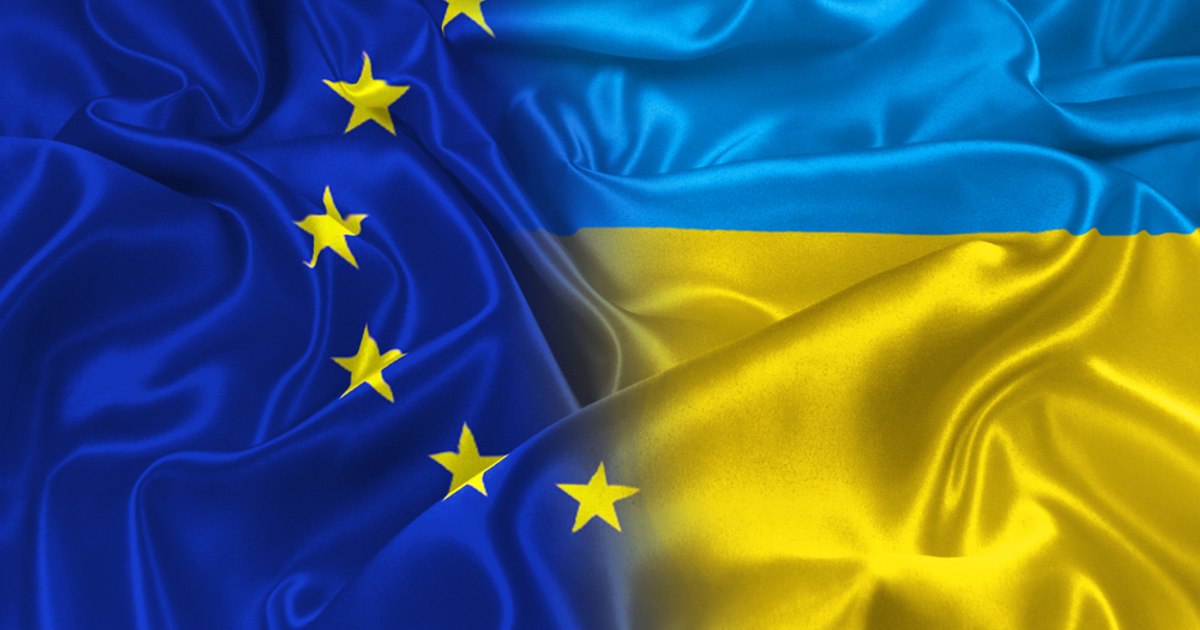
Such a time may come, but not now. Currently, the pressing question for Europe is to redefine its relationship with a country that has ceased to be just a “protege” of the West, becoming a key security partner. Ukraine's battle-hardened military is achieving tactical successes, while its defense industry is experiencing innovative technological growth. If Europe really wants to secure its borders and reduce its historical dependence on transatlantic support, it needs Ukraine as much as Ukraine needs Europe. The absolute priority of the EU bloc must be the rapid and full integration of Ukraine into its security and political architecture.
The dangerous gap between Kiev's expectations and reality in the EU
For Kiev, the strategic objective remained unchanged: full membership in the European Union, aimed at permanently anchoring the country in the Western space and counteracting the territorial losses caused by the Russian occupation. Four years after being granted candidate status, the EU is expected to officially open the first negotiating “cluster”, focused on justice, democracy and the rule of law.
While some officials in Kiev are optimistic that full membership could become a reality as early as next year, in Brussels even Ukraine's most ardent supporters warn that such a scenario is not feasible in less than a decade. This massive expectation gap between the two camps represents a major geopolitical risk.
Part of the responsibility lies squarely with President Volodymyr Zelensky. The leader in Kyiv must make further efforts to strengthen independent domestic institutions, especially in the fight against systemic corruption. Zelenskiy should also be more open to intermediate integration solutions. German Chancellor Friedrich Merz recently floated the idea of ”associate membership” with limited voting rights as a transitional step towards full membership – a proposal rejected all too quickly by the Ukrainian president.
Blow for the Russians. Kiev dismantled a strategic drone base right at Donetsk airport
From humanitarian aid to military innovation
The main task, however, rests with European leaders. Too many decision-makers in the West continue to view Ukraine through the prism of a simple charity project. In reality, Europe has a lot to learn from Ukraine, especially in the field of drone technology, their rapid production and tactical use on the modern front.
European militaries can strengthen their own security by investing directly in their eastern neighbor's defense industry. The Swedish Minister of Defense recently emphasized an indisputable truth: testing weapons systems directly on the front in Ukraine generates innovative results and technological adjustments within just a few weeks or months, while in peacetime, in the factories of the West, the same bureaucratic and testing processes take years or even decades.
EU enlargement as a geopolitical tool in the face of the Russian threat
There are, of course, justified fears among some member states about a too-rapid integration of a large, relatively poor country with war-weakened institutions. While these concerns have a real basis, they ignore the bigger picture: Europe needs to act quickly to develop the hard power it needs to survive in an increasingly hostile world.
Ukraine's integration into the European space is the most effective way to counter a direct regional threat: the Russian Federation. In the current global context, EU enlargement is no longer just a bureaucratic and technical process, but has become a vital geopolitical tool for a continent that risks becoming vulnerable to the aggression of the big authoritarian powers.
Other complementary initiatives, such as the creation of a European Security Council in which Britain is also involved, could contribute to the rapid formalization of a security partnership with Ukraine. However, the zero priority remains the acceleration of the EU accession process. The EU should start drafting the accession treaty now, a strong political signal both for the morale of war-weary Ukrainians and for international investors who will finance post-conflict reconstruction. On the other hand, Kiev must be prepared to accept the temporary postponement of some agricultural subsidies or the rights of free movement of labor, in order to facilitate the achievement of a political consensus within the EU bloc.
The alternative to this scenario is a bleak one. Recent opinion polls show that part of the younger generation of Ukrainians is beginning to lose enthusiasm for the European project. This should be a major wake-up call for Brussels. Basically, European leaders must answer a crucial question: what is more dangerous for the future of the continent — to welcome into the European club a poor Ukraine, but attached to Western values, or to leave on its borders a militarized, powerful state, but deeply disappointed by the West?