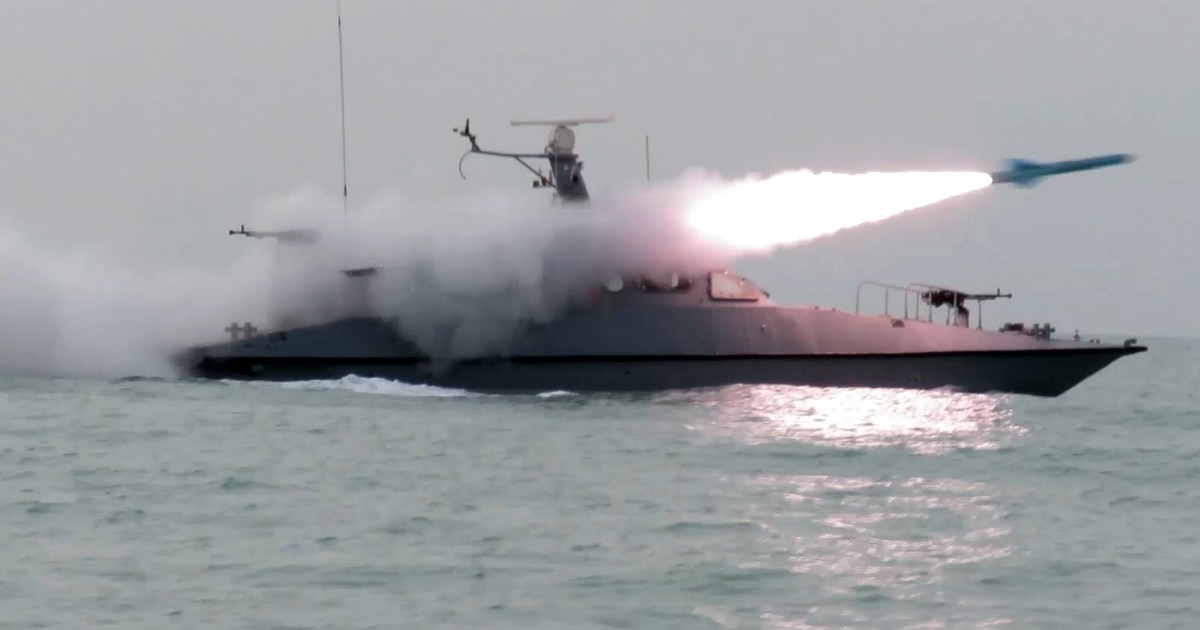
What constitutes Iran's real power in the context of blocking the Strait of Hormuz and resisting American forces is the huge number of small, cheap, unconventional weapons at the disposal of the Islamic Revolutionary Guard Corps (IRGC). These include drones, mines and small landing craft – difficult to detect, much less completely eliminate.
See also: Sneaky, cheap, invisible. This is how Iran turned the Persian Gulf into a death trap. Expert: After the war, the problem will remain
According to Nick Childs, senior associate for maritime security at the International Institute for Strategic Studies, “you can never be absolutely sure that something won't slip through.” The expert told CNN that such weapons “cause serious problems.”
“Mosquitoes” of Iran. Mobile and difficult to detect
Numerous small vessels, called the “mosquito fleet” by military analysts, are crucial in the effort to control large areas of water and places such as the Strait of Hormuz. In their opinion, geography also favors Iran in this case, because transport ships have no other alternative to Hormuz in this region. Sidharth Kaushal, senior research fellow on sea power at the Royal United Services Institute for Defense think tank, believes that a huge number of units would be needed to combat the “mosquito fleet”.
See also: Three Iranian tankers breached the US blockade. US forces fired shots
As CNN reminds, Iran has been using small vessels for decades. Especially since the US military proved in the 1988 Persian Gulf operation that it could decimate Tehran's traditional navy. Since then, the regular navy has served more as a “parade force” in Iran, as Sidharth Kaushal told CNN. A strategically more important resource is the “mosquito fleet”.
As analysts emphasize, small units are primarily mobile and difficult to detect or detected too late. Their advantage is that they are inexpensive and easy to replace during war, while circumventing sanctions.