A “symbolic” attack on Red Square would resonate across the world's media, but Ukraine will likely deal a “blow” where Russian air defenses are weakened, Browdy says in an interview with The Guardian.
“Why waste drones on a 'great wall'?” – he adds, referring to security measures around Moscow, which have been strengthened before Victory Day and the parade on Red Square, which for the first time in 19 years will be held without military equipment for fear of Ukrainian shelling. — The best strike is an attack on the energy sector or military facilities on the periphery. The weekend in Russia could be very explosive.
Russia is moving air defense assets to Moscow to protect the parade, experts from the Institute for War Studies (ISW) wrote over the weekend and confirmed a few days later. And this, they added, in a situation where “the Ukrainian campaign to destroy Russian air defense assets and strike blows in its deep rear has created a shortage of traditional air defense systems and forced Russia to make difficult decisions regarding their reallocation.”
The article continues below the video
An additional, multi-level defense system is being created around the capital, which is already better fortified than other regions and facilities, reports the German newspaper “Bild”. “Pantsir-S1” missile and gun complexes are transferred, among others, from other regions.
We have seen that air defense rings around Moscow have been further expanding in recent weeks thanks to the large-scale relocation of air defense forces from the regions. This shows that the Russian leadership is more worried about its parade in Moscow than about the rest of Russia. This opens up additional possibilities for our long-range missiles. Appropriate priorities will be identified
— notes the President of Ukraine Volodymyr Zelensky.
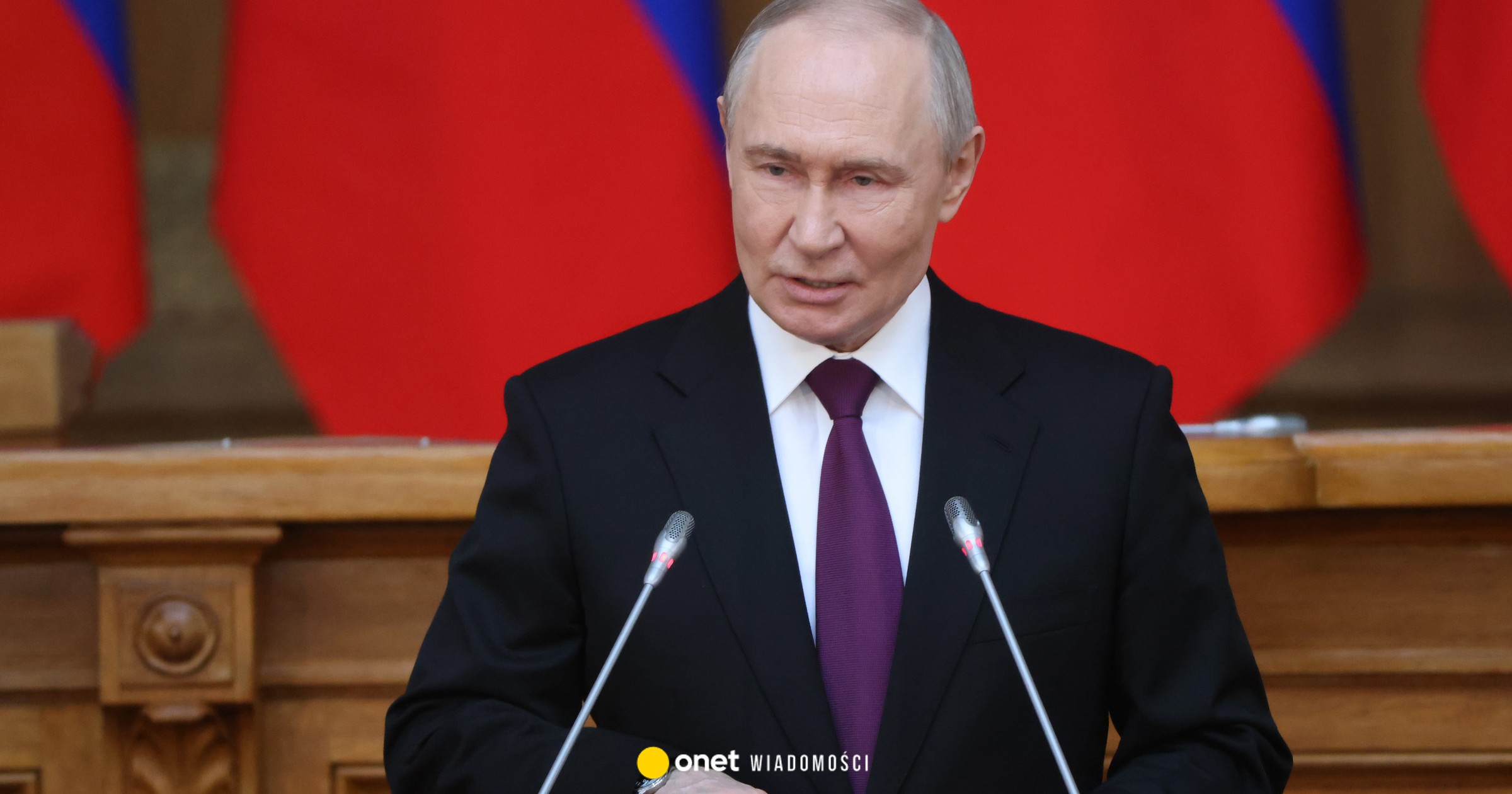
Putin clearly has a problem. And he puts a good face on a bad game
The devastating strikes of the elite 414th Browda brigade have become a serious challenge for Russia, writes “The Guardian”: the unit's long-range drones destroy enemy air defense systems faster than the enemy can produce them. And to the surprise of the Russians, any objects within a radius of 2,000 km from the Browdy bunker, incl Putin's palaces proved vulnerable to attack.
Already approx 70 percent Russia's population is within the range of Ukrainian drones and missiles.
Moreover, according to Browdy's estimates, this zone now includes ports from which exports are made each year 100 million tons of oil. In Tuapse, for example, where Ukrainian drones hit a refinery near the port four times in two weeks, “virtually everything burned down,” Browdy said.
On the front, as he claims, For the fifth month in a row, the Russian army is losing more soldiers (30-34 thousand people each) than it employs under contracts due to Ukrainian drones. “This affects the combat capability of the Russian army, reducing its offensive potential. That's a fact,” Browdy said.
Russian military bloggers continue to point out the lack of air defense missiles necessary to effectively counter Ukrainian drone attacks in the context of Kiev's increasingly successful airstrikes, notes ISW.
The scale of Russia's energy infrastructure and the dispersion of its facilities over a large area create a fundamental problem for air defense, points out Justin Bronk, a researcher at the Royal United Defense Research Institute (RUSI). “There are so many potential targets in Russia that need to be protected,” he emphasizes.
Unlike industrial or military facilities, even a small number of accurate hits on oil facilities can have huge consequences. Petroleum products ignite easily, and tanks and pipelines are typically not armored or reinforced, Bronk explains. In the case of a factory, a few drones with small warheads that penetrate the area could simply damage the roof, while in the case of a refinery, “there is a high probability that they will cause a serious fire or explosion.”
As a result, the mood in Russian regions is changingsays political scientist Abbas Galliamov to The Wall Street Journal. — Among people who were previously not interested in politics, it is now fashionable to express political views, experience the suffering of the nation and complain about the government. Historically, such fashionable trends usually precede revolutions.
I’m Ashley Davis as an editor, I’m committed to upholding the highest standards of integrity and accuracy in every piece we publish. My work is driven by curiosity, a passion for truth, and a belief that journalism plays a crucial role in shaping public discourse. I strive to tell stories that not only inform but also inspire action and conversation.