A day later, Russia issued messages to aviation recommending avoiding dangerous zones (NOTAM). They include:
Paweł Podwig, senior researcher at the UN Institute for Disarmament Research, drew attention to this.
According to Podwig and Etienne Marcus, an analyst at the French Foundation for Strategic Research (FRS), everything indicates preparations for the third test of “Sarmat”. Russia closed the same zones to flights during the previous attempt to launch the missile in November 2025. The missile stayed in the air for about a minute and then fell.
As Marcus points out, the launch window for “Sarmat” is from May 8 to May 11.
– says the expert.
According to Marcus, Russian authorities apparently want to “demonstrate strength by testing their most powerful intercontinental ballistic missile” in return.
The Kremlin wants to stage a nuclear show of force instead of a traditional parade, but the problem is that the Sarmat ends up in flames more often than in textbooks of military glory. So if Russia does launch a rocket on May 9, the world will watch not only with concern — but also with the question of whether it will even manage to fly further than a minute after liftoff this time.
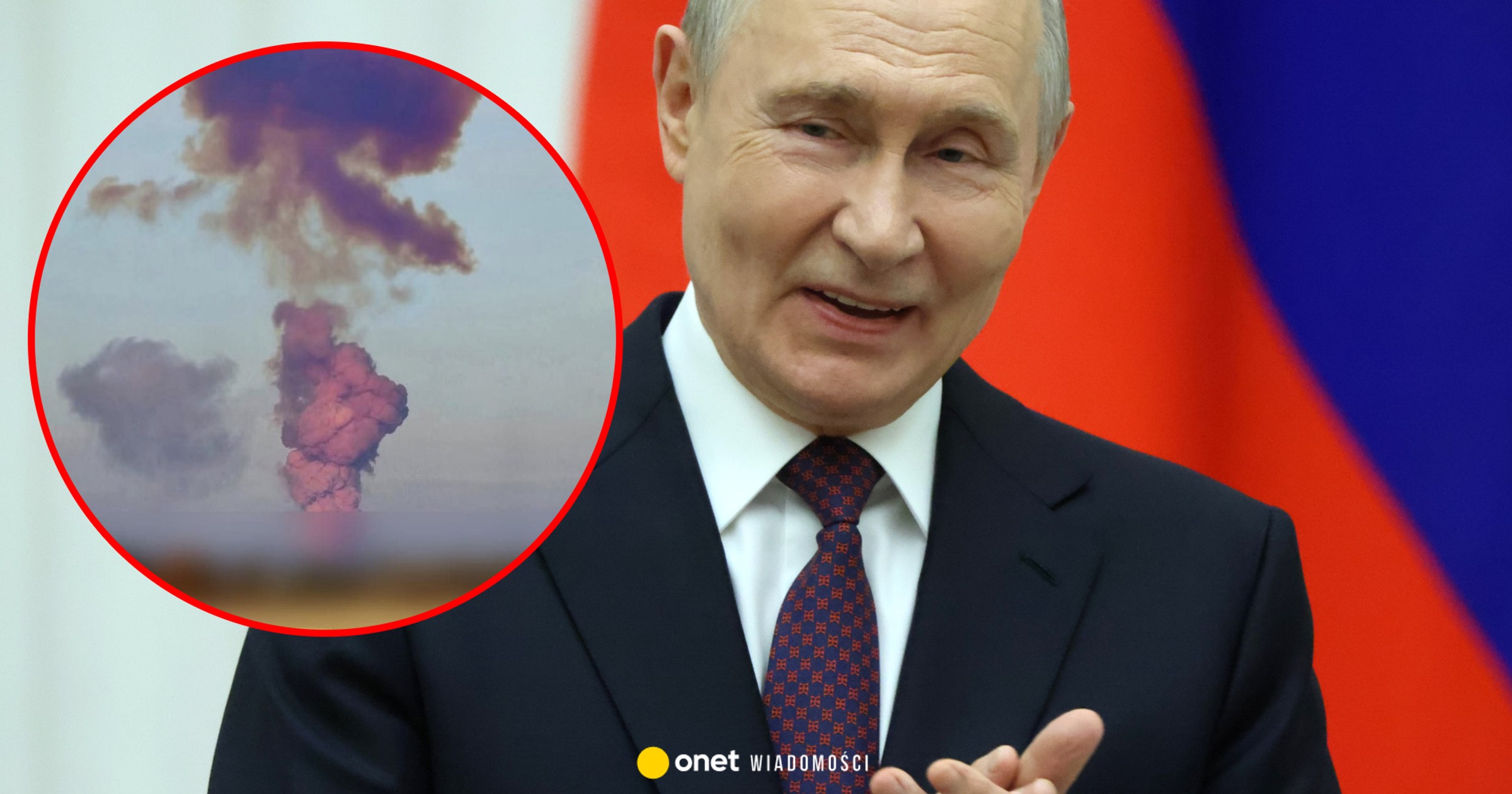
The problem is that the latest attempts of “Sarmat” ended in failure – and at a very early stage of the flight. The expert reminds that in July the rocket collapsed right after take-off, leaving behind a crater with a diameter of about 70 m and a gigantic purple cloud.
In turn, in September 2024, “Sarmat” exploded directly in the launch silo at the Plesetsk training ground.
Russia has been developing the “Sarmat” program since 2013 to replace the “Voevoda” (NATO code: “Satan”) missiles – the oldest nuclear missiles still in service with the Russian army, placed in silos since the 1980s.
According to SIPRI data, only 34 such missiles remain in the Russian Strategic Missile Forces, and the newest one was produced in 1988.
Vladimir Putin announced that “Sarmat” would enter service in 2020, and later repeated these promises many times. However, the missile has not been fully implemented to date.
On May 4, Alexander Gavrilov, general director of the “Krasmash” plant responsible for the production of “Sarmats”, was arrested and placed in pre-trial detention on charges of “misappropriation of funds”.
The first (and only successful) test of the Sarmat missile in April 2022.Russian Defense Ministry Press Service/Associated Press/East News/East News
According to Marcus, the failures of the Sarmat program mean a “serious weakening” of Russia's nuclear deterrent in the medium term.
The replacement of obsolete R-36M2 Voevoda missiles, on which a significant part of Russia's strategic nuclear warheads are based, is once again postponed. Additionally, their servicing – carried out by Ukraine until 2014 – remains a big question mark
– Marcus admits.
Russia still has something to scare
According to SIPRI data, Russian strategic nuclear forces have 333 land-based missiles.
The core of the arsenal are the “Jars” complexes – 206 units, including mobile launchers. Each of these missiles can carry four 250-kiloton warheads.
Russia also has:
78 “Topol” rockets with a single warhead of 800 kilotons,
12 “Awangard” complexes
and approximately three dozen “Wojevoda” missiles, equipped with 10 independently guided warheads.
In addition, the Russian Federation has 192 ballistic missiles launched from submarines – “Sineva” and “Bulava” – according to SIPRI data.
I’m Ashley Davis as an editor, I’m committed to upholding the highest standards of integrity and accuracy in every piece we publish. My work is driven by curiosity, a passion for truth, and a belief that journalism plays a crucial role in shaping public discourse. I strive to tell stories that not only inform but also inspire action and conversation.