Scanway has successfully completed the flight testing process of its Earth observation instrument

2025-10-30 15:58
publication
2025-10-30 15:58
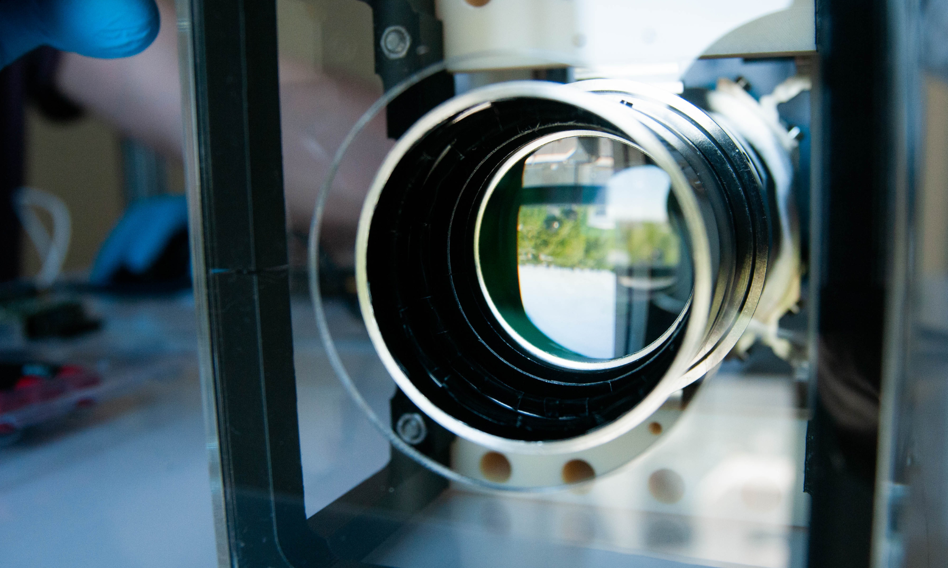
Scanway has successfully completed the process of flight tests and acceptance of the Earth observation instrument as part of the NarSha project implemented with Nara Space Technology – the company said in a press release.
As reported, a successful test result and completion of the data processing phase trigger the payment of the last tranche under the test campaign in the amount of approx. PLN 85.5 thousand. USD from the total amount of 285.1 thousand USD and an additional 141.5 thousand euros in connection with the achievement of the milestone of the second flight model contract between Nara Space and Scanway.
“The air tests carried out confirmed the functionality and parameters of the Scanway instrument in the conditions of imaging actual methane emissions from an altitude of approximately 2,000 to over 3,000 meters above sea level. The engineering model of the Scanway instrument enabled the observation of the Earth's surface and the registration of a point source of methane emissions,” the release said.
Hubble Telescope “Made in Poland”? Kowalewski, Scanway: We will be able to build such telescopes easily
The space industry has been treated with a pinch of salt for years. “Let's get down to earth” – this slogan dominated for a long time when someone mentioned Polish companies in the space-tech sector. Today it seems that Poland really “can go into space” and is pushing itself more and more boldly into the space field. As evidenced by the numerous startups that are growing on the Vistula River – for example Scanway, listed on NewConnect, which is preparing to debut on the main trading floor, and whose founder, Jędrzej Kowalewski, Aleksander Ogrodnik talked to in the latest episode of “GPW”.
It was added that the tests resulted in six sets of hyperspectral data – processed images that confirm the functionality of sensors, optics and processing in the engineering model of the Scanway instrument. The data set and test documentation were submitted to Nara Space and received approval.
The tests carried out constitute a key stage of work on the first observation instrument as part of the NarSha project – a constellation of microsatellites built by Nara Space.
Ultimately, the constellation will consist of at least 12 microsatellites and will become the first Korean satellite system dedicated to global monitoring of point sources of methane emissions in near real time, with spatial resolution at the local level.
The project is implemented by the consortium: Nara Space Technology (leader), Scanway (supplier of observation instruments), Climate Technology Center of Seoul National University and Korea Astronomy and Space Science Institute. (PAP Business)
mcb/ osz/