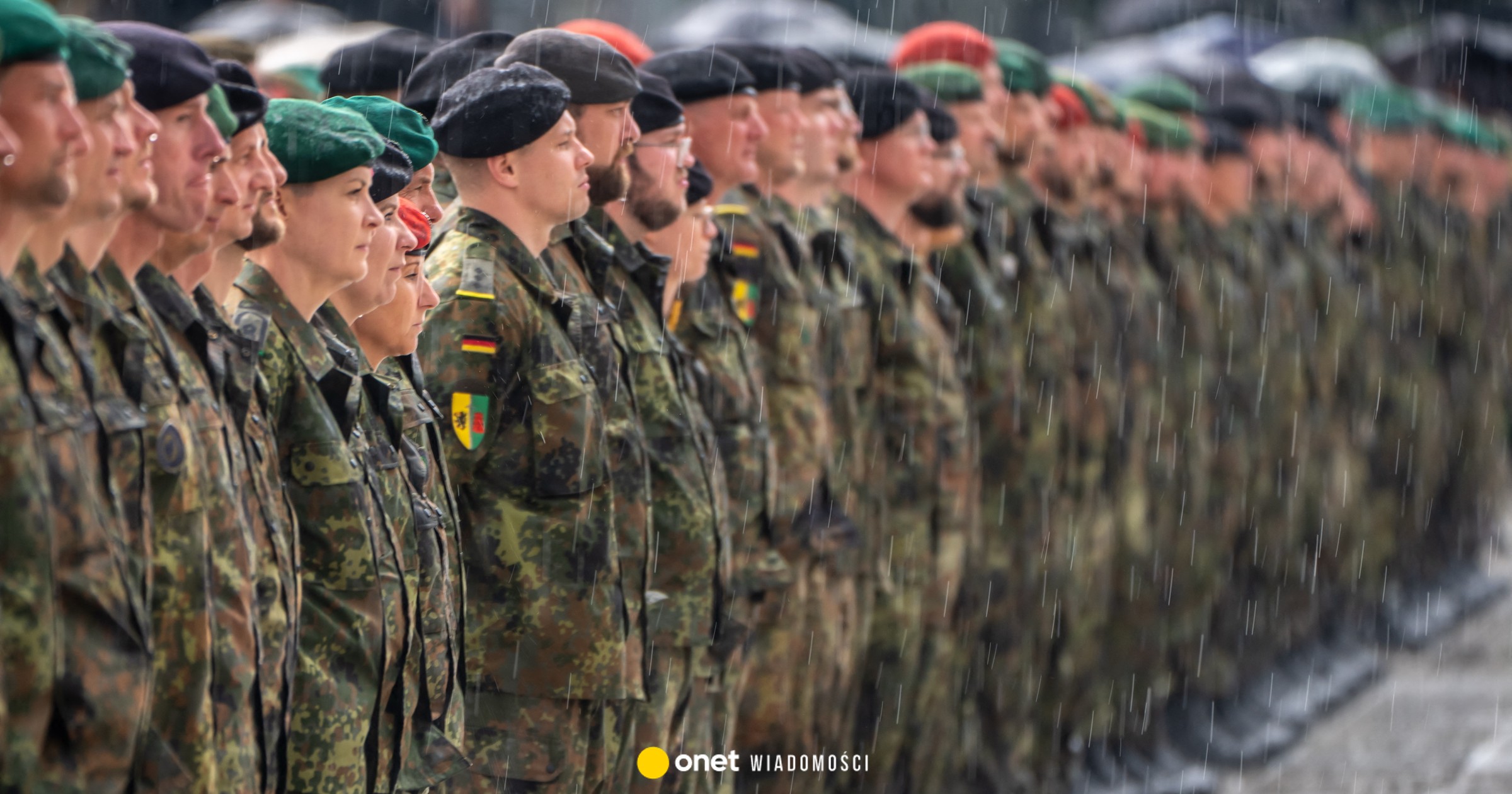
An inconspicuous office building in Vilnius. In the yard, in front of construction sites and Soviet-era ruins, a stream gurgles. Only the name on the sign near the bell reveals that it is planned here defense of the continent: “45th Armored Brigade”. Ever since German Defense Minister Boris Pistorius decided to quickly deploy 5,000 troops on the eastern wing, everything has revolved around Lithuania.
The command is held by Brigadier General Christoph Huber. A soldier of flesh and blood, you can feel the breath of groundbreaking times in every word he says. — I have full confidence in NATO and our capabilities. We will be ready to give our lives to bravely defend the freedom and rights of the German people on the eastern wing of NATO, he says.
It is Germany, the former occupying power, that is tasked with defending this small country in the Baltic region against another former occupying power: Russia. As early as 2027, Putin could attack Lithuania via his satellite, Belarus, to cut off the Baltic region from the rest of Europe.
– We will defend every inch – Huber leaves no doubt.
During the brigade's induction into service a year ago, hundreds of Lithuanians cheered at the sight of German tanks.
Everything in the Bundeswehr that is not permanently attached will be transferred to the new brigade. There are enough areas that need improvement. A delay in the delivery of the Skyranger air defense system leaves the brigade vulnerable to Russian drone attacks.
– I hope that our industry will deliver equipment faster than expected – admits Huber. Until then, “secret transition technologies” are expected to help. According to information from “Bild”, troops in Lithuania, for example, use shotguns to defend themselves against drones.
Practice fighting against Russia
A promise to Lithuanians that it will be established by the end of 2027 brigade ready to fightis to be kept – at all costs.
60 km further north, German wheeled transporters traverse the forest in Rukla. Soldiers with camouflage-colored faces and assault rifles at the ready jump out of the back of the vehicles. They take cover behind a sand dune – and shots ring out over the training ground. – The boys cover quite a distance, they will sleep well tonight – smiles Sebastian Hagen. He's in charge multinational battle groupwhich has been stationed in Lithuania under German command since 2017.
Every six months, combat units rotate on the eastern wing, learning and practicing fighting against Russia. NATO simulates combat focused on Russian tactics and Russian equipment. Every day – in scorching heat and icy cold. — We would also defend ourselves in this area in a real situation. It makes a lot of sense for my soldiers here, because the mission is not an issue at all, says Hagen, an Afghanistan veteran. – We are not here to build wells, we are here to defend the alliance – he adds.
Nevertheless, the expansion of the force still faces difficulties.
The article continues below the video
Danger zone
Especially in the case of lower military ranks, this process is slower than planned. So, among those who will fight on the front in case of danger. — Of course, there are those for whom it simply doesn't fit their life situation: my partner has just found a new job and so on, says Huber. Moving with the family from the comfort zone to the danger zone is not attractive to many people. Politicians are already bringing the issue of duty into play.
Bundeswehr exercises in LithuaniaFREDRIK VON ERICHSEN / BILD
— From a purely legal point of view, it would be possible. However, we are not at that stage yet. We are very optimistic that we will be able to achieve these numbers on a principled basis voluntariness says Hagen. Generous bonuses and tax-free purchases are intended to sweeten the move for soldiers. The host, Lithuania, is doing everything in its power to please the German defenders.
Just a stone's throw from the border with Belarus, trucks, excavators and concrete mixers are rushing to the Rundinkai military base. In 20 months, thousands of German soldiers will form here front of the front against Putin. The schedule in Lithuania cannot disappoint. The huge complex is being built so quickly that the rest of the country is running out of concrete.
Where once Soviet partisans hid in the bushes, forest roads are now marked for German tanks.
Russian propaganda
For the mayor of the neighboring Biała Waka commune, Genadij Baranovic, the stationing of the Bundeswehr is a historic coincidence. – Look at our village! Roads, sidewalks, bicycle paths, gas pipelines – everything new. Every other commune dreams of this, says Litwin.
However, unrest is growing in the town. Many older residents have been indoctrinated in the Soviet army and watch only Russian propaganda television. – They are furious and ask: how can you serve the Germans to us on a silver platter? says Baranovic.
Near the base, the Wehrmacht burned down an entire village and its inhabitants, so there is little enthusiasm there. Baranovic himself speaks Russian, but he sees Putin as a threat to his country and wants to make the Bundeswehr friends with the commune. — We are planning sports festivals and are looking for a partner city in Germany, please write it! – says.
Soon after, the streets of the capital resound anti-aircraft sirens. Several times a year, the government triggers a test alert. They know: Putin is lurking just outside the door—and the defense force is there to make sure he stays out. Will it be ready in 2027? It doesn't matter to Commander Hagen. — We already sleep in combat suits next to the bed. We will defend the alliance, no matter what we have or don't have – sums up.
I’m Ashley Davis as an editor, I’m committed to upholding the highest standards of integrity and accuracy in every piece we publish. My work is driven by curiosity, a passion for truth, and a belief that journalism plays a crucial role in shaping public discourse. I strive to tell stories that not only inform but also inspire action and conversation.