September 19 this year Alexander Tyunin, president of the Russian company Umatex belonging to the Rosatom concern, shot himself near the Kokoshkino estate in Moscow. Officially because of depression, less officially – Tyunin came under the attention of law enforcement agencies because of his venality.
On September 23, agents of the Federal Security Service (FSB) detained businessman and billionaire Alexander Bobrov. He was charged with large-scale economic and corruption crimes, transferring funds abroad and money laundering.
On September 25, Vitaly Kapustin, a deputy from the United Russia party, hanged himself in the Tikhoretsk Forest in Krasnodar Krai. Officially because of depression.
On September 27, Alexander Fedotov, a high-ranking Russian manager and businessman, jumped out of a Moscow hotel window. Of course, because of depression.
The article continues below the video
What caused the purge in Moscow?
Who was arrested during the purge?
What charges were brought against Aleksander Bobrov?
What punishments did Major General Timur Ivanov receive?
On September 29, Oleg Chemizov, the deputy governor of the Sverdlovsk region, was put behind bars on charges of corruption. He allegedly took bribes in connection with the implementation of public contracts and siphoned money to private entities.
On the same day, Major General Valery Golota, head of the Rosgvardiya Directorate in North Ossetia, was arrested. He was accused of accepting bribes in exchange for granting contracts for the supply of equipment and services to the formation he commanded. Several of his associates were also arrested.
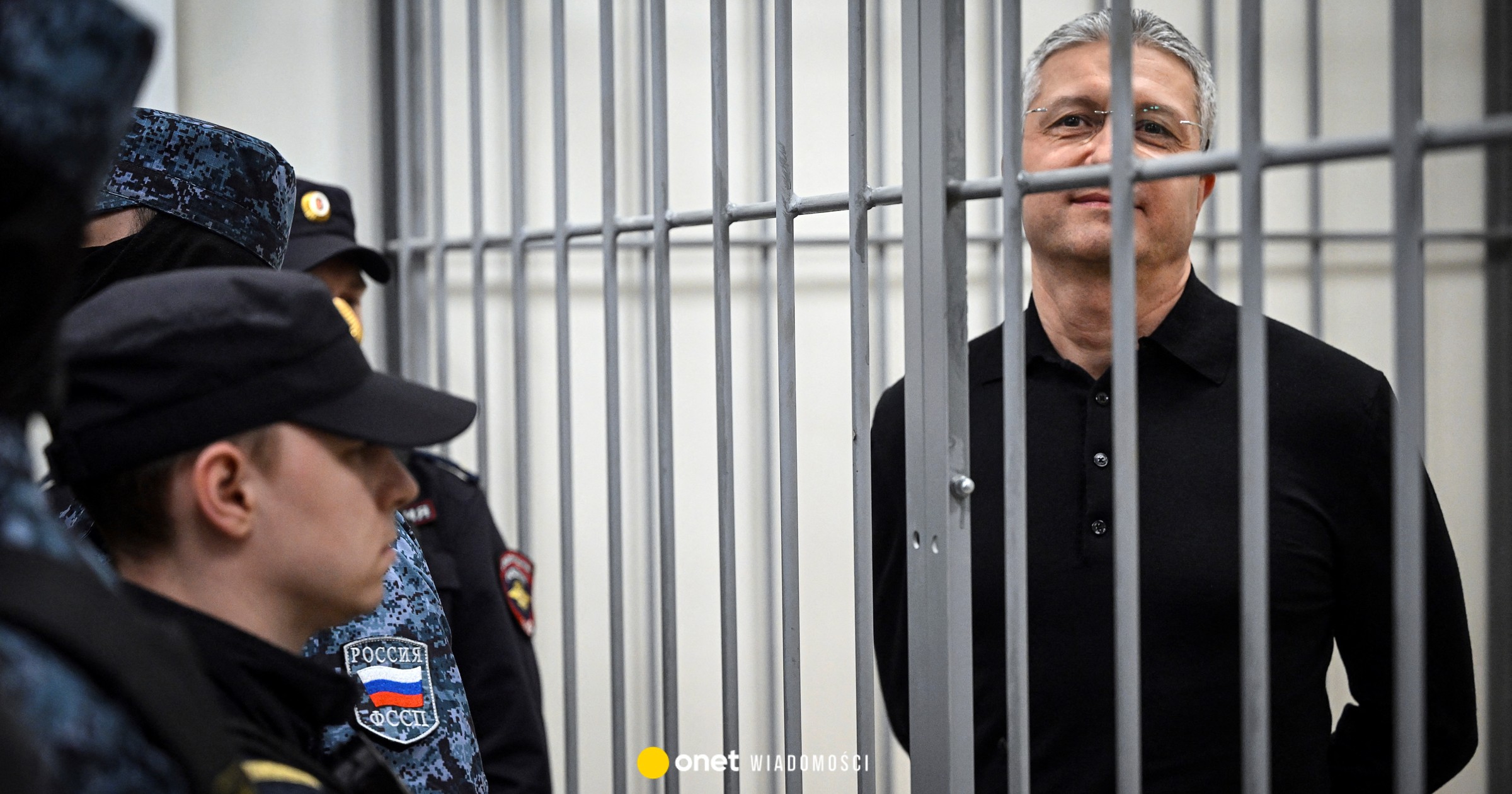
The purge in the ranks of the administration and among Russian generals began in May 2024, after the resignation of Defense Minister Sergei Shoiguwidely criticized for the disastrous military operations in Ukraine and corruption scandals in the ministry he headed. His deputy, Major General Timur Ivanov, known for years for his luxurious lifestyle, was put behind bars. In 2019, Forbes magazine placed him among the top hundred richest representatives of the Russian security services.
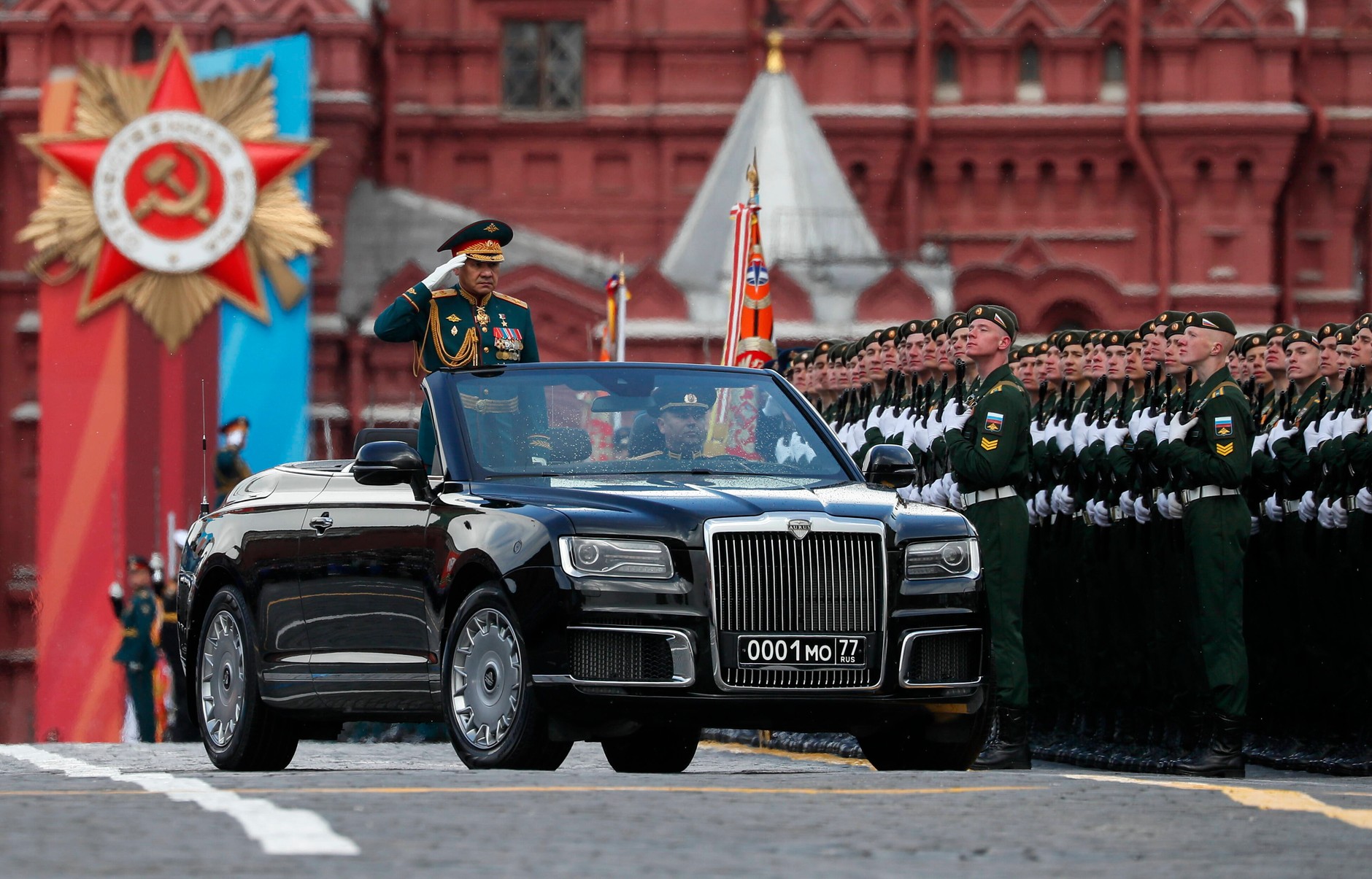
Then-Russian Defense Minister Sergei Shoigu at the Victory Day military parade on Red Square in Moscow (May 9, 2024)YURI KOCHETKOV / PAP
No one was surprised that together with his second wife, Svetlana, Maniovich rented a 300-square-meter apartment in the center of Moscow, and in 2012 he bought a 19th-century noble manor house in the capital. He also had an estate of over 10,000 square meters. m with a house with an area of 1.6 thousand. sq m in the elite village of Uspenskoye near Moscow. His trial in a court in Moscow started in January 2025. Anton Filatov, the former director of the state arms corporation Oboronlogistika, sat on the stand with him.
In July this year Ivanov was sentenced to 13 years in prison in a maximum security penal colony, a fine of 100 million rubles (approx. PLN 4.6 million) and forfeiture of property – land, apartments, money in bank accounts, as well as a fleet of vehicles – with a total value of 2.5 billion rubles (approx. PLN 115 million). His colleague Anton Filatov was sentenced to 12.5 years in prison.
Generals are also waiting for their turn in detention. Dmitry Bulgakov, Deputy Minister of Defense for Logistics in 2008-2022, honored with the title of Hero of the Russian Federation, was detained by the FSB on July 25, 2024 on charges of corruption. He was to build a system of supplying troops with low-quality food at inflated prices and accept bribes from commercial companies in exchange for contracts with the Ministry of Defense.
Yuri Kuznetsov, head of the Main Personnel Directorate of the Ministry of Defense, was arrested on May 13, 2024 on charges of accepting bribes in 2021-2023. During the search at his house, over 100 million rubles in cash, gold coins and luxury watches were confiscated.
Vadim Shamarin, general, deputy chief of the General Staff of the Russian Armed Forces and head of the Main Communications Directorate, arrested on May 22, 2024, was charged with receiving a financial benefit of particularly high value. He faces up to 15 years in prison.
Gen. Valery Mumindzhanov, deputy commander of the Leningrad Military District, was arrested in September 2024 on charges of accepting bribes worth over 20 million rubles. Previously serving as head of the material security department at the Ministry of Defense, he supported companies supplying uniforms to participants in the war in Ukraine – contracts were worth 1.5 billion rubles. Mumindzhanov and his family own real estate in Moscow and Voronezh worth more than 120 million rubles
Vladimir Shesterov, former deputy head of the Main Directorate for Innovative Development of the Russian Ministry of Defense, is already in office. He was arrested in August 2024 in connection with embezzlement committed during the construction of the Patriotic Park. In July this year He was sentenced to six years in a maximum-security penal colony, stripped of his rank of major general and medals, and fined 24 million rubles.
It turned out that the people of Alexander Bortnikov, head of the Federal Security Service of the Russian Federation, and Alexander Bastrykin, chairman of the Investigative Committee of the Russian Federation they were well informed about corruption practices at the top of power and were only waiting for a signal “from above” to take action. Part of the public is waiting for a continuation.
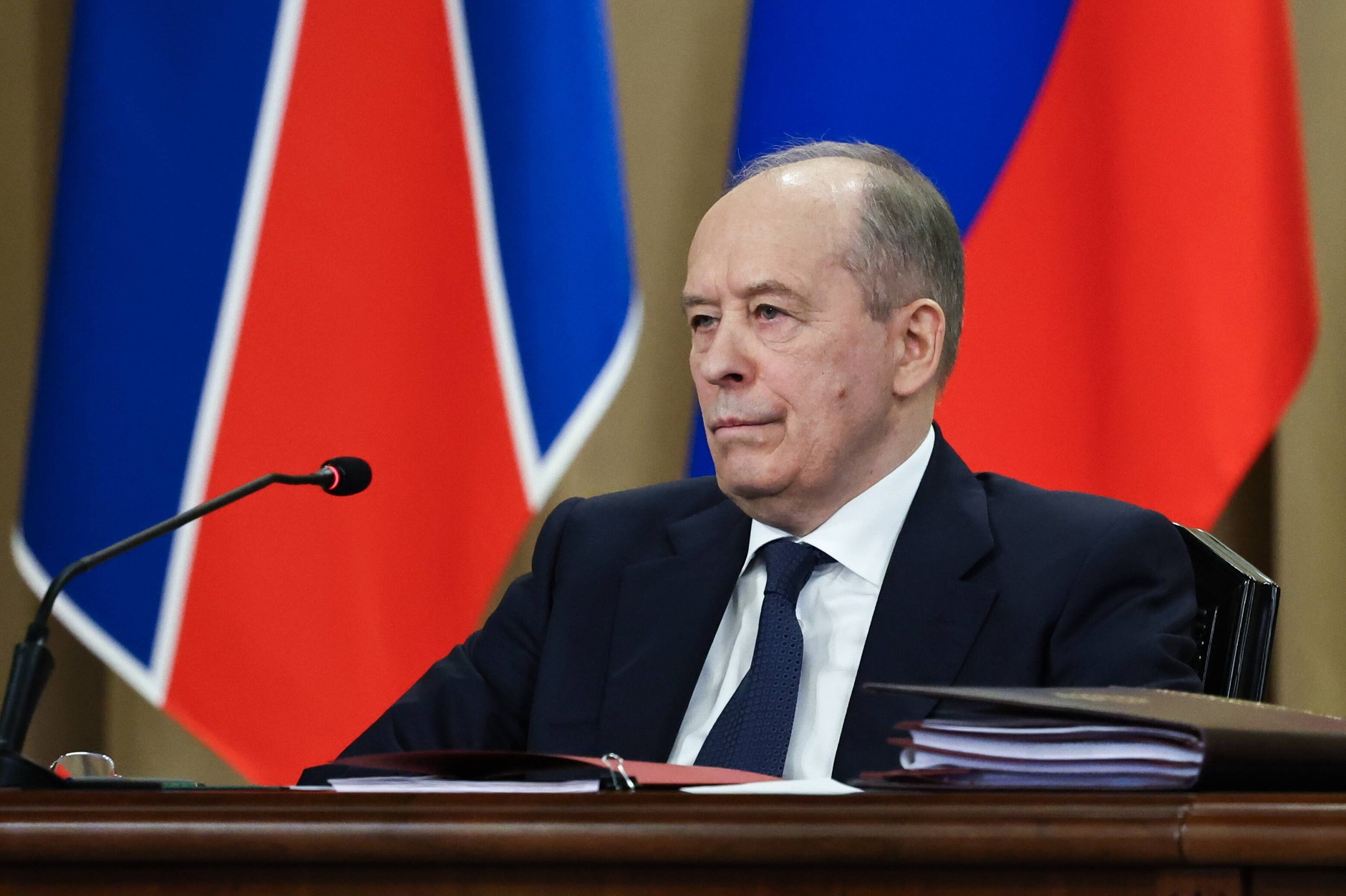
Aleksandr BortnikovALEXANDER KAZAKOV / SPUTNIK / KREMLIN POOL / PAP
The first person to take a serious stand against bribery in Russia was Tsar Peter I, who reigned from 1682 to 1725. He issued over 390 decrees (ukases) against venal officials.
One of them, with the “Order on Fiscals and Their Duties and Activities” of 1714, established the first Russian special service – the Fiscal Institute, headed by Alexei Nesterov. The Institute's task was to ruthlessly fight against officials stealing from the state. Penalties for bribery were draconian. The guilty were sentenced to death, torture, flogging, imprisonment and the galleys.
The most famous scandal of the era of Peter the Great was the case of the first governor of Siberia (1711-1719), Prince Matvei Gagarin, an aristocrat and outstanding state official, as well as a briber and plunderer of state property. The tsar's attention was caught by rumors about the unimaginable luxury in which Prince Gagarin lives. Peter I ordered an investigation to be initiated. The documents showed that the prince had created a real corruption empire in Siberia: established his own monopolies on the trade in vodka, beer and tobacco, took control of trade with China, took bribes from merchants and underestimated the actual income of the governorate, which should go to St. Petersburg. Prince Matvei Gagarin was hanged. The execution was watched by Tsar Peter I, the prince's wife and members of his family. The corpse hung on the gallows for a month. It was supposed to be a warning to others.
However, Peter I the Great never punished the greatest bribery in the history of Russia, his friend and closest collaborator, Prince Alexander Menshikov. His fortune was estimated at 13 million rubles, with the then annual budget of the Russian state amounting to 6.5 million rubles.
The prince owned 90,000. serfs, six cities, 99 villages, hundreds of kilograms of gold and silver, precious stones, works of art and all other attributes of wealth. The tsar knew that Menshikov was “taking”, but as long as it did not interfere with state affairs, he tolerated him. The prince was an outstanding organizer and military commander – he had the title of generalissimo, who de facto built St. Petersburg.
Peter I once said: “I only have one right hand, and it steals.” The prince's career ended when the young Tsar Peter II, the son of Tsarevich Alexy who was murdered by Peter the Great, took away all his property and exiled him and his family to the village of Beryozowo. There, at the edge of the then world, the once richest man in Europe died.
Weekly Review
However, Tsar Peter I failed to eradicate corruption. He understood this when he found out that his beloved wife Katarzyna also “used”. He ordered General Prosecutor Jagużyński to write another order against bribers: “Any thief who steals as much as the cost of a rope is to be hanged immediately with that rope.” Jagużyński reached for the pen, but hesitated and said: “Merciful Lord! Do you really want to become emperor alone, without servants or subjects? We all steal, only one more and more visibly than the other.”
In this respect, nothing has changed in Russia to this day.
To understand the depth of the problem of corruption in Russia, one must go back to its medieval roots, and especially to the institution of kormleniya (literally: feeding). This system consisted of: officials sent from Moscow to administer distant territories did not receive a fixed salary from the central treasury. Instead, they had the right to live on goods and tributes collected from the local population. And they took advantage of it eagerly.
In the 19th century, Tsars Nicholas I, Alexander II and Alexander III tried unsuccessfully to fight corruption. Stalin managed to significantly limit it, but under Leonid Brezhnev it developed with incredible momentum. The biggest scandal of those times was the so-called Uzbek affair. It turned out that under Sharof Rashidov, the First Secretary of the Communist Party of Uzbekistan, the local authorities were stealing from the central budget of the USSR, by falsifying data on the volume of cotton production. Huge bribes ended up in the hands of Moscow officials. The scandal broke out after Rashidov's death in 1983, resulting in a wave of resignations and arrests, as well as the political disgrace of the Uzbek elite.
Before the outbreak of the war in Ukraine, the construction of a new spaceport in Siberia called Vostochny became a symbol of corruption in Russia. Construction began in 2007 and has not been completed yet. As a result, over 200 corruption proceedings were initiated. One of the accused, Ivan Chopozov, the owner of a company that operated on the construction site, stole so much that he had the body of his Mercedes S-class covered with Swarovski crystals!
But Russia's bribery record belongs to two FSB colonels – Kirill Cherkalin, with whom $185 million found in cashand Dimitry Zakharchenko, who collected “only” $120 million.
For centuries, the social consciousness of Russians has perpetuated the belief that the acceptance of gifts, presents and fees by officials, policemen and military officers is an inherent element of exercising power. That's why they don't protest, and admire figures like the late Alexei Navalny in silence. Well… Russia is a very rich country.