Macron's controversial statement: Trump compared to Vladimir Putin and Xi Jinping. Analysis from Cambridge University

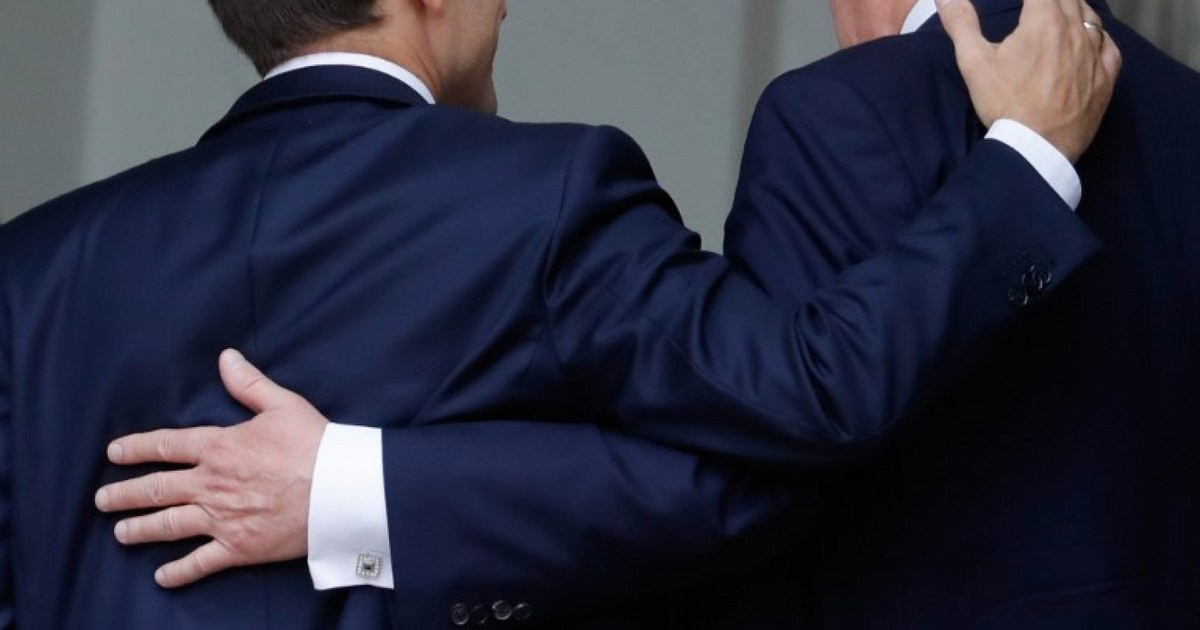
French President Emmanuel Macron compared Trump to Putin and Xi Jinping and insisted on Europe's strategic autonomy. Researcher at the University, Andra Martinescu analyzes, for “Adevărul”, the situation created and the increasingly complicated relationship between Brussels and Washington.
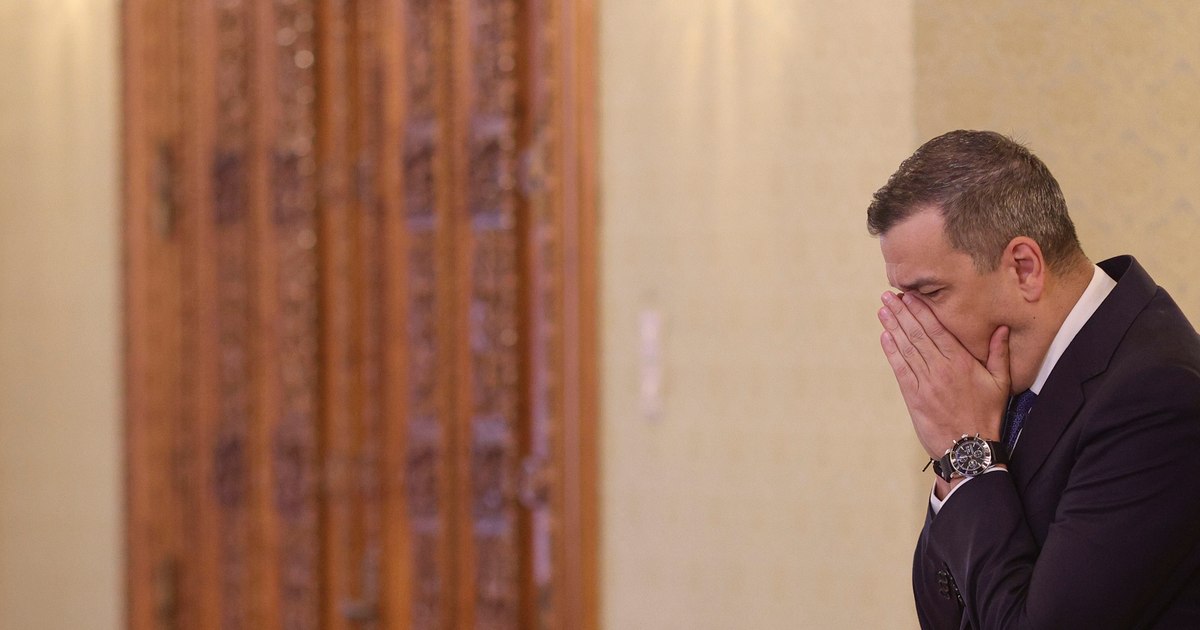
Gone are the days when Trump and Macron talked to each other like two friends. PHOTO: AFP
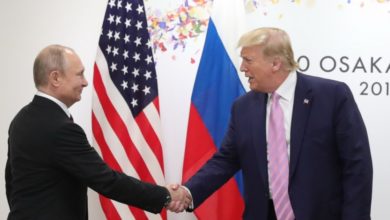
French President Emmanuel Macron surprised at the weekend with a new anti-Donald Trump and anti-US statement. Being in Athens over the weekend, on a state visit, the French head of state put Trump in the same row as Vladimir Putin and Xi Jinping, more or less directly comparing the relationship with the United States with those with Russia or China.
The leader from the Élysée Palace said that Europe is living a “unique moment” and that “an American president, a Russian president and a Chinese president are staunchly opposed to the Europeans“, according to AFP, quoted by Agerpres. “This moment could be the European moment”, Emmanuel Macron pointed out. He then softened his tone and said Donald Trump is still an ally, but not always “reliable.” With that “still”, Macron also hinted that sooner or later the United States will become the European Union's rivals, maybe even enemies.
Who is right
It is not the first time that Emmanuel Macron has made controversial statements regarding the European alliance with the United States. A few years ago, Macron states that it is mandatory for the European Union to build its own army, to defend itself against China, Russia and… the United States of America.
Andra Martinescu is a researcher at the University of Cambridge and Senior Research Fellow at The Foreign Policy Center, in the United Kingdom. In her analysis for “The Truth” she explains the extent to which the United States is about to transform itself from Europe's protector and main ally to its enemy.
In the opinion of the researcher, the United States of America did not turn overnight into an enemy of the European Union countries, as it would be, for example, Russia. Instead, she believes that the uncertainty that has arisen across the Atlantic must also be taken into account, after Donald Trump questioned the very position of the United States of America in NATO. That means the alliance is weakened and unity suffers, but even so it is a mistake to compare Washington to China, or even more so, to Russia.
How to view Emmanuel Macron's statements
“President Macron's statements must also be seen in a political register, of strategic positioning and in response to threats (more or less declarative) from the Trump Administration, which has strongly criticized the refusal of European allies, including the British, to get involved in the Middle East as some did during the Bush Administration, at that time in Afghanistan and Iraq. Then they engaged in a regional conflict extended for almost two decades, and the costs they were enormous”, says Andra Marinescu.
European leaders cannot afford to involve their countries in the Iran war. They would not have the support of the population, especially as the conflict drags on and causes significant damage to the global economy.
“The European public wouldn't have the appetite either, but as we see, even public support in the US is not enough to support a long war, especially in the absence of a well-defined plan and against the background of extremely contradictory statements from the Administration. And even then I don't think it would have traction.” says the expert.
Who else can convince the US and Iran to sit at the negotiating table. “He built a very good relationship with Trump”
Strategic autonomy, the solution for the peace of the European Union
At the same time, Europe is preparing to adopt the so-called strategic autonomy, which has been persistently requested for several years now by certain states, especially France. European strategic autonomy in terms of foreign policy is more and more doubled by an economic one, in which Brussels tends to build its own tech ecosystem. France and the United Kingdom are Europe's leaders, with the British, although no longer part of the European Union, having a close alliance.
“Then, if we look at the developments in the European space, the conversations at the political and decision-making level insist on European strategic autonomy, a construct accelerated through the prism of the SAFE program and other strategic, defense initiatives, but also from other fields such as tech – the development of sovereign systems that will reduce dependence on the American Big Tech sphere, at least over time, if the investments will be adequate, or perhaps a European defense industry in which substantial investments are made, but which still remains insufficient integrated, with deep rifts between member states. However, we note that France and Great Britain are already positioning themselves as leaders in this emerging European defense construct, even outside NATO's orbit, even if both President Macron and the British Prime Minister are going through difficult times domestically.”
On the other hand, she also referred to the words of the same Emmanuel Macron, who claimed that the states of the European Union guarantee each other's security.
“From a legal point of view, the statements of the French president are valid, but we must take into account certain nuances and pragmatic elements. Indeed, the wording of the European clause, Art 42(7), shows an obligation to intervene by all means to help and provide assistance to another member state in the context of aggression (the emphasis falls on “by all means”). The clause of the European Treaty also recognizes the special neutrality status of certain countries such as Malta, Ireland, as well as the Danish opt-out”. adds the expert.
NATO guarantees remain
In Andrei Martinescu's opinion, although these guarantees exist, the discussion deserves nuance. Moreover, it is not very clear how Europe would do it on its own, without American support, as long as it does not have its own army.
How many soldiers does Romania need to be safe? General (r) NATO: “It would be very complicated to manage an army of 300,000”
“However, without structural mechanisms to ensure compliance, the exception can relativize the obligation. The wording of Article 5 is not so vehement, as it leaves it up to the allies to intervene 'as they see fit'.” But NATO through the command structure at the SACEUR level, through the presence and pre-positioning of troops, through the infrastructure itself, lends more credibility to Article 5, even despite declarative threats to withdraw security guarantees. And at the NATO level, the decision to intervene or assist will be political, within the NAC, so a certain uncertainty is foreseen in both cases. For once, the European Union does not have its own command mechanisms and integrated military infrastructure, nor a nuclear umbrella as an effective deterrent (means of prohibition). Even if they seem to take root more decisively, the process is not immediate“, explains Andra Martinescu.
The bad news is that there is some uncertainty from Washington as well. Even so, a common European solution is needed to ensure the so-called “nuclear shadow”.
“On the other hand, NATO has the extended nuclear umbrella guaranteed by the American arsenal, but the recent tensions in relation to the Trump Administration place this guarantee again under the sign of uncertainty. The European solution can also be a lesson learned from this period of crisis. Not a single state, as suggested by President Macron, for France to ensure this capability, but an integrated capability, truly built collectively. This will also be the great challenge for the EU in the project strategic autonomy, a truly integrated defense and not just the sum of national defense industries cooperating occasionally”concludes Andra Martinescu.