The son of the chess of Iran, in exile, asks for the removal of the regime from Tehran: “This is the moment!”

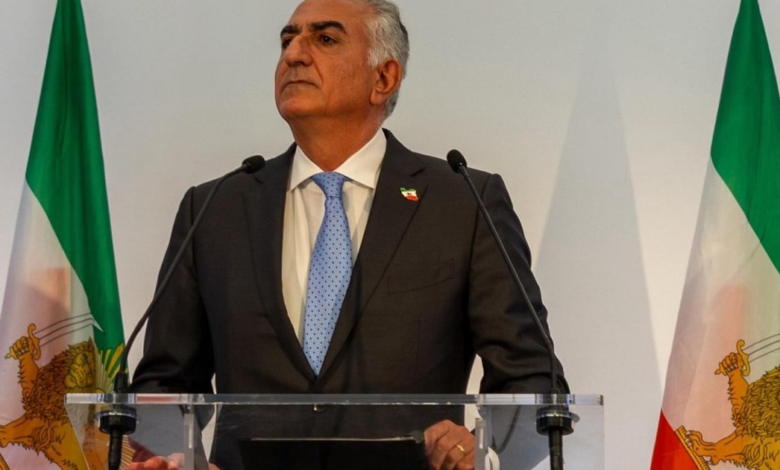
Reza Pahlavi, considered “the inheriting prince of Iran”, asked, on Monday, to the international community to force the removal of the theocratic regime of Ayatollah Ali Khamena. He argued that removing the current Iranian authorities is necessary to provide a sustainable peace and stability.
Reza Pahlavi
He said he was setting up a new “safe platform” for the regime's dissidents and opponents to coordinate their efforts to overthrow the dictatorship and to put the country on the path of a “free and democratic future”
“We are a proud, ancient and resistant people,” said Reza Pahlavi on Monday, in a press conference in Paris. “For my compatriots: This is our time. I am with you. Let's build this new Iran together.said the last heir of the Iranian monarchy, writes News.
The United States, which bombed Iranian nuclear installations on Saturday, said they want to prevent Iran from developing nuclear weapons, not to open a larger war. Washington officials said the purpose of American bombing was not “Changing the regime”But on Sunday, in a post on social networks, US President Donald Trump mentioned the possibility of overturning the hard line clergy in Iran.
“Now is the time to be with the Iranian people. Do not repeat the mistakes of the past. Do not give this regime a rescue collage. Only the destruction of the nuclear installations of the regime will not bring peace“, Reza Pahlavi, the exiled son of the chess from power in 1979, pleaded.
“You are right to be concerned about stopping nuclear weapons and ensuring regional stability, but only a democratic transition in Iran can guarantee that these objectives are achieved and lasting.”he continued.
The Iranian authorities did not immediately comment on Pahlavi's statements.
He has been living in exile for almost four decades, since his father, the chess supported by the US, has been overturned from power through the 1979 Islamic Revolution.
It is not clear how much support has pahlavs in Iran. Many Iranians remember the repressive secret police, Savak, and in the past there have been pro- and anti-monarchy slogans during mass demonstrations in Iran.
Without providing evidence, Pahlavi, who is established in Washington, said that the Iran's governance system also collapses that the supreme leader Ali Khamena, his family and other high -ranking officials make preparations to leave the country.
“This is the moment of the Berlin Wall. But, like all moments of great change, it is full of dangers,” He warned, referring to the collapse of the wall that divided the East Berlin and the West Berlin in 1989, with the disintegration of the communist block led by the Soviets.
Fragmented opposition
Iran and Israel have an aerial war since Israel has launched air attacks on June 13, saying that it wants to prevent Iran from developing nuclear weapons. Iran argues that its nuclear program is intended exclusively for peaceful goals.
The main security body of Iran is to make a final decision on the closing of the Ormuz strait, Iranian television said on Sunday.
Asked if he wants to lead a future transition or be a new chess, Pahlavi said he is not looking for political power. He said he saw the cornerstone of a transition based on the territorial integrity of Iran, the individual freedoms and equality of all citizens, as well as the separation of the state religion.
The opposition to the Iranian clerical government is fragmented, without a clearly recognized leader and with a multitude of ethnic groups.
Pahlavi said that his teams are working on a future economic plan and that he wants to convene a meeting of national unity to include activists, dissidents and groups throughout the ideological spectrum to agree on the principles of transition. The forum will also bring together business leaders, professionals and experts, he said, without offering a calendar.
He also said he also created a platform for Iranian officials in the field of security, police and army, who would join them if they want to abandon the government.
Asked about the hesitations of some Western leaders regarding the potential consequences of the collapse of the authorities, he said: “It is not that it has to plead for the change of the regime. It simply must recognize that the change of the regime is the only final solution.”