Article by GSP – Published Monday, April 27, 2026, 12:19 / Updated Monday, April 27, 2026 12:19
Rice appears frequently on your menu: you use it as a side dish, include it in soups, pilafs, salads or desserts. Although it seems like a simple food, the type you choose directly influences the texture of the dish, the final taste and the nutrient intake. If you are concerned about your or your child's health, if you want to keep your blood sugar within normal limits or have a balanced digestion, it is worth making an informed choice.
In the following lines you will find a guide structured in 6 steps, which will help you select the right rice for your daily meals. The information is based on validated nutritional data and recommendations frequently used in dietetic practice. The article is for informational purposes only and is not a substitute for medical advice or a dietitian's evaluation.
Understand your dietary needs
Before you put the bag of rice in the basket, clarify your goal:
-
Do you want to control your weight?
-
Do you have diabetes or insulin resistance?
-
Are you experiencing irritable bowel syndrome?
-
Are you cooking for a diversifying child?
-
Looking for an easy-to-digest side dish after surgery?
Rice mainly provides complex carbohydrates, which are a source of energy. The difference between the types appears in the fiber content, B complex vitamins, minerals (magnesium, phosphorus, iron) and glycemic index.
Glycemic Index (GI) shows how quickly blood sugar rises after eating a food. White rice generally has a higher GI than brown rice. For people with diabetes, choosing a lower GI rice and combining it with protein and fiber helps maintain a more stable glycemic profile.
Dietary fiber they slow down glucose absorption, support intestinal transit and contribute to satiety. If you're looking to lose weight or prevent cardiovascular disease, whole grains are a good choice for regular use.
If you have an active digestive condition, talk to your doctor before consuming large amounts of fiber. In some situations, well-cooked white rice may be better tolerated temporarily. For balanced meals, you can opt for quality rice for side dishes and daily dishes, carefully checking the information on the label and the origin of the product.
Types of rice and their characteristics
This is where most of the differences occur. Understanding them helps you make the right choice for each recipe and your nutritional goal.
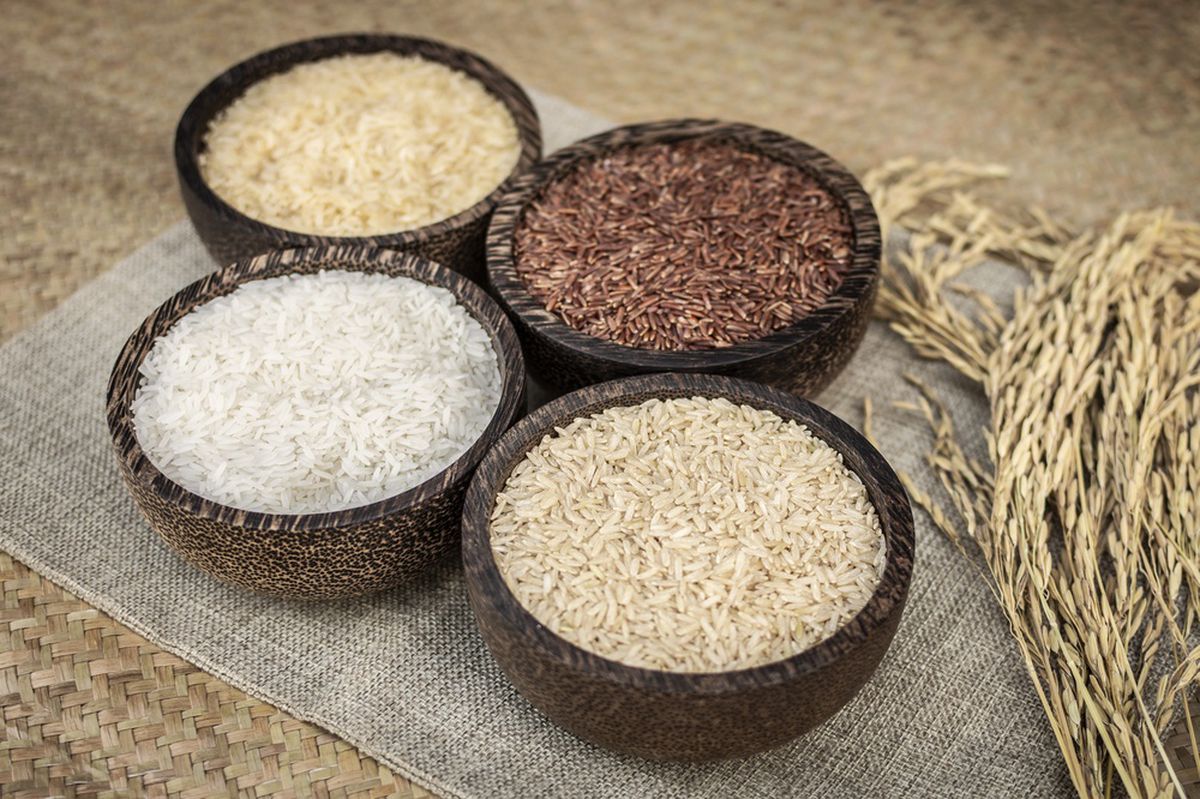
White rice
Manufacturers remove the bran and germ in the refining process. The grain remains rich in starch, with a fine texture and a short cooking time (15–20 minutes).
Advantages:
Limitations:
In practice, you can use it:
-
During periods of convalescence.
-
In the menu of a small child, in amounts adapted to the age.
-
As a base for simple pilaf or rice with milk.
If you have diabetes, limit the portion and pair it with vegetables and protein. Do not eat white rice as a single dish.
Brown rice (whole grain)
Brown rice retains the bran and germ. That's why it has a brown color and a firmer texture.
Benefits:
-
Higher fiber content.
-
Increased intake of magnesium, vitamin B1 (thiamine), vitamin B6 and antioxidants.
-
Lower glycemic index than white rice.
The cooking time reaches 40–50 minutes. The texture remains slightly firm, with a subtle nutty taste.
Practical example: If you prepare baked vegetables, chickpeas and grilled chicken breast, brown rice provides consistency and keeps you full for several hours.
Caution: people with active inflammatory bowel disease or irritable bowel syndrome may have a harder time tolerating insoluble fiber. In such situations, seek medical advice.
Parboiled rice
Parboiled rice goes through a steam treatment before dehusking. The process transfers some of the vitamins from the outer layer to the inside of the bean. You can read more about this process in the technology description.
Features:
-
Firm, non-sticky grains.
-
Intermediate glycemic index.
-
Good reheat stability.
You choose it if:
-
You cook for several days.
-
You want a garnish that stays with the beans separated, even after you reheat it.
Shelf selection criteria
This step makes the difference between an average product and one suitable for your daily meals.
Appearance and packaging
Check:
-
Whole, uniform grains.
-
Absence of excessive dust.
-
Intact packaging, no traces of moisture.
Moisture favors mold growth and can alter nutritional quality.
Origin and type of grain
Authentic basmati comes from India or Pakistan. Jasmine is mainly grown in Thailand. Arborio and carnaroli are associated with Italy.
Choose:
-
Long beans (basmati, jasmine) for pilaf and curry.
-
Medium bean (arborio) for risotto.
-
Short bob for sushi.
The starch content differs. Amylose-rich rice remains more separated. The one rich in amylopectin becomes stickier.
The degree of processing
Ask yourself:
For regular use, alternate brown rice with white or parboiled rice.
Nutritional information
Read the label and analyze:
If the product is fortified with B vitamins, avoid excessive washing before cooking, as you may lose some of them.
How do you read the nutrition label correctly?
The label gives you standardized data, usually for 100 g of raw product.
Watch:
-
Energy value – expressed in kcal.
-
Carbohydrates – of which sugars (plain rice has a low content of sugars).
-
FIBER – relevant for glycemic control and transit.
-
The proteins – rice contains moderate amounts.
-
Salt – normally very low.
If you have diabetes, compare rice types and note the differences in fiber content. Talk to your doctor about integrating portions into your meal plan.
Do not interpret the label as a self-diagnostic tool. Use the information for more informed dietary decisions, not for therapeutic adjustments without medical advice.
Practical recommendations for different situations
For weight control
-
Choose brown or red rice.
-
Limit the portion to around 150–200g of cooked rice.
-
Pair it with lean protein and fiber-rich vegetables.
Example: brown rice + baked salmon + broccoli.
For diabetes
-
He prefers whole or pre-boiled versions.
-
Cool the rice after cooking and eat it later; the resistant starch formed can reduce the glycemic impact.
-
Monitor blood sugar and adjust portions together with the diabetologist.
For children
-
Introduce progressive rice in diversification.
-
Choose simple options, without added salt.
-
Observe possible digestive reactions.
For sensitive digestion
-
Use well-cooked white rice.
-
Avoid excess fiber in the acute phases of inflammatory diseases.
-
Seek medical advice if symptoms persist.
Storage and preservation of freshness
Store the rice:
Brown rice is higher in natural lipids and can go rancid faster. If you live in a warm environment, store it in the refrigerator.
Wash the rice before cooking to remove impurities and some of the inorganic arsenic. Boiling in excess water (1:6 ratio) and subsequent draining can further reduce the arsenic content. Vary grain sources in the diet to limit cumulative exposure.
Choose consciously, adapt the type of rice to your needs and observe how your body reacts. For personalized recommendations, especially if you have a chronic condition, talk to your doctor or a dietitian.