Historic revelations reignite controversy over Israel's nuclear program. What was the discreet involvement of West Germany in the 60s and 70s

In a tense context in the Middle East, against the background of the confrontation between the United States, Israel and Iran, the daily Haaretz brings back to the fore the origins and financing mechanisms of the Israeli nuclear program, suggesting the discreet involvement of West Germany in the 60s-70s.
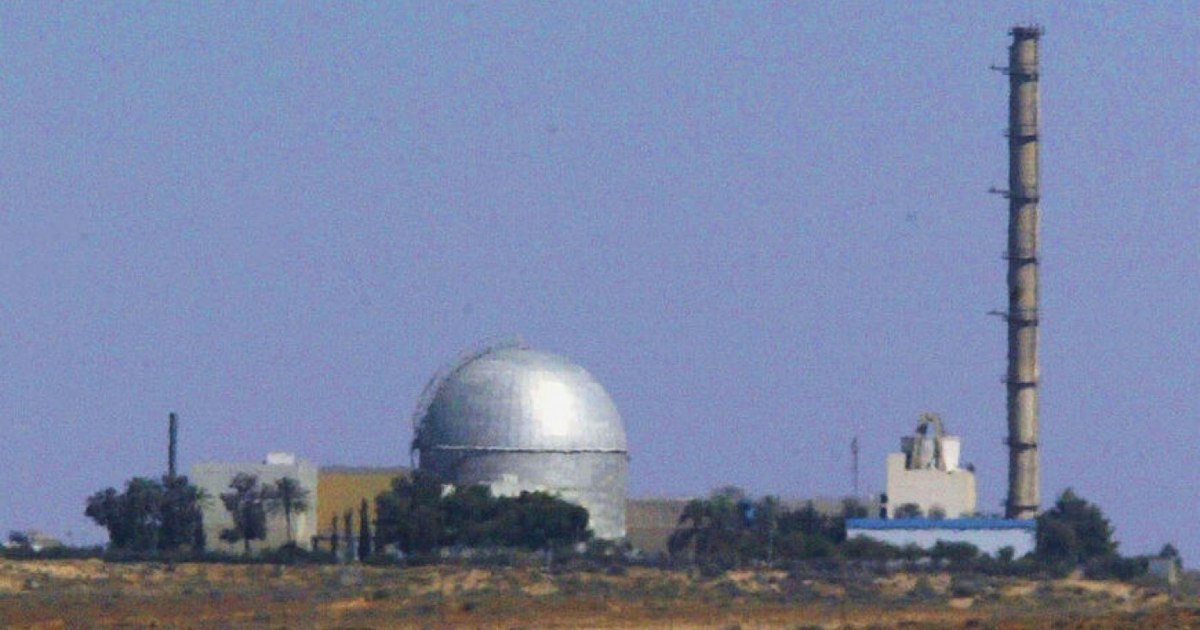
The Dimona nuclear power plant would have allowed the expansion of the civil nuclear program to a military one
The investigation, published in mid-March 2026, did not go unnoticed, especially given the timing. While the region was once again marked by military escalations, including after coordinated US-Israeli strikes on Iran, the Israeli opposition publication revived the debate on the beginnings of Israel's nuclear program.
At the center of the discussion is the hypothesis of a secret financing, in which West Germany would have been involved, at least in part. Since the disclosure of the existence of the Dimona plant in 1960, the Israeli nuclear program has remained shrouded in many unknowns, especially regarding the real costs and sources of financing, notes slate.fr.
The subject takes on increased relevance in today's security context. On March 21, Iranian missiles hit southern Israel, including areas near Dimona and the city of Arad, in response to an attack on the Natanz nuclear site. About 200 people were injured, and explosions near the nuclear center in the Negev desert reignited fears of the conflict spreading to sensitive strategic infrastructure.
A discreet financial mechanism between Bonn and Tel Aviv
“The irony is obvious,” remarks historian Avner Cohen, one of the most important specialists in the field. “A West Germany led by Konrad Adenauer, just a generation after the Holocaust, would have helped finance a project designed to prevent a repeat of such a tragedy for the Jewish people.”
According to the investigation signed by the political scientist Uri Bar-Joseph, professor emeritus at the University of Haifa, the federal government in Bonn allegedly transferred between 140 and 160 million German marks to Israel annually, between 1961 and 1973, through a secret loan mechanism.
In current terms, the total amount would be equivalent to approximately 5 billion euros, funds later transformed into grants.
Moreover, international collaboration was not new. As early as 1957, Israel had entered into confidential agreements with France, following the Suez Crisis, which allowed the construction of the Dimona reactor and access to technological and military expertise. Officially, the project had a civilian component, but later it was interpreted as the foundation for the development of a military nuclear capability.
However, French support was not considered sufficient. As Uri Bar-Joseph points out, former Prime Minister David Ben Gurion was looking for “a safety net for difficult times”. In this context, West Germany emerged as a strategic partner, despite its historical burden. A rising power with no colonial past in the Arab world and animated in part by a sense of moral duty to Israel.
Who wins after the Iran war? The Atlantic Council think tank's four scenarios for the future of the Middle East
It remains unclear, however, whether these funds should be interpreted as a tacit extension of post-Holocaust reparations or as a decision dictated by the logic of the Cold War. Avner Cohen suggests caution: with the exception of Defense Minister Franz Josef Strauss, most German officials, including Adenauer, would not have been fully aware of the real destination of the funds.
In parallel, there were two distinct channels: one military, known as “Operation Frank/Kol”, and another, ostensibly civilian – “Aktion Geschäftsfreund” (“Business Friends”) – which financed projects presented as regional development in the Negev, but which in reality targeted the nuclear infrastructure at Dimona.
Strategic ambiguity and official silence
Since the 1960s, Israel has adopted the “amimut” doctrine – a policy of deliberate ambiguity, whereby it neither confirms nor denies the possession of nuclear weapons. This strategy allowed it to maintain a delicate balance: strategic deterrence without the diplomatic costs of official recognition. At the same time, the Jewish state remained outside the Nuclear Non-Proliferation Treaty.
However, the nuclear program has been a priority since the beginnings of the state. In 1952, under the leadership of David Ben Gurion, the Israeli Atomic Energy Commission was established, coordinated by the chemist Ernst David Bergmann, which later became the core of the development of the nuclear infrastructure.
The Vanunu case and the limits of secrecy
Domestically, the subject remains extremely sensitive. The case of Mordechai Vanunu is emblematic. In 1986, the former Dimona technician provided the British press with information and photographs from inside the facility, claiming that Israel possessed a significant nuclear arsenal. The revelations broke the official silence, but had severe consequences: Vanunu was kidnapped by Mossad agents, tried in secret and sentenced to 18 years in prison.
This episode reflects the importance of secrecy in Israeli nuclear doctrine and, at the same time, the extreme sensitivity of the subject in Israeli society. An opacity that contrasts strongly with the international control mechanisms applied to other states in the region.
Currently, although Israel has not signed the Non-Proliferation Treaty, estimates indicate an unofficial arsenal of 80–90 nuclear warheads outside of IAEA inspections. In parallel, Iran – signatory to the treaty – is subject to regular controls and international sanctions. According to recent IAEA data, Tehran has more than 400 kilograms of 60% enriched uranium, approaching the threshold required for military use, without the existence of an active military nuclear program having been officially confirmed so far.