
Interlink.ro: The circular economy in IT is no longer an option. It is a competitive advantage


In more and more companies, IT infrastructure is no longer seen as a simple necessary cost, but as a strategic resource. The way you choose, use and manage your IT equipment can directly influence your company's profitability, flexibility and even image.
In this context, the circular economy in IT — that is, reusing, refurbishing and extending the life of equipment — becomes a logical choice, not just an “eco” one.
For most organizations, the question is no longer whether it's worth it, but how quickly they can make the transition.
From “buy and replace” to “optimize and reuse”
For a long time, the model was simple: you buy new equipment, use it for a few years, then replace it.
It's a convenient model – but expensive and inefficient.
The circular economy comes with a much smarter approach:
- you extend the life of the equipment
- refurbish enterprise devices
- you reintegrate them into the company's activity
In Europe, this model is already normality. In Romania, it is starting to pick up speed, especially through specialized platforms such as Interlink.ro, which offer refurbished equipment ready for business use.
How much are you actually saving?
This is where things get very specific.
A new business laptop costs, on average, between 4,000 and 6,000 lei.
An equivalent refurbished model can cost between 1,500 and 2,500 lei.
For a team of 20 people:
- new equipment: ~100,000 lei
- refurbished equipment: ~40,000 lei
The difference is obvious: savings of up to 60%.
And important: without feeling a real difference in everyday use.
That means money left in the company – money that can go to development, marketing or people.
It's not just about the money. It's also about responsibility.
Beyond costs, there is increasing pressure on companies to be sustainable.
Manufacturing a single laptop means:
- 200 – 300 kg CO₂
- consumption of scarce resources
- energy-intensive industrial processes
By reusing, you can reduce your carbon footprint by up to 70%.
For this reason, more and more companies are including refurbished equipment in their ESG strategies. Not just for the image, but because it's the right decision in the long run.
Why large companies adopt this model
An interesting thing: refurbished is no longer the “cheap option”.
It's the smart option.
Large companies choose this model for:
- better operational efficiency
- flexibility in upgrades
- reducing electronic waste
- alignment with international standards
In this context, specialized suppliers are no longer just sellers, but partners.
Refurbished vs. new: where is the real difference?
For most activities – email, office, ERP, CRM, accounting – the difference is almost invisible.
Instead, the important differences are others:
- much lower costs
- fast delivery
- easier scaling
- low financial risk
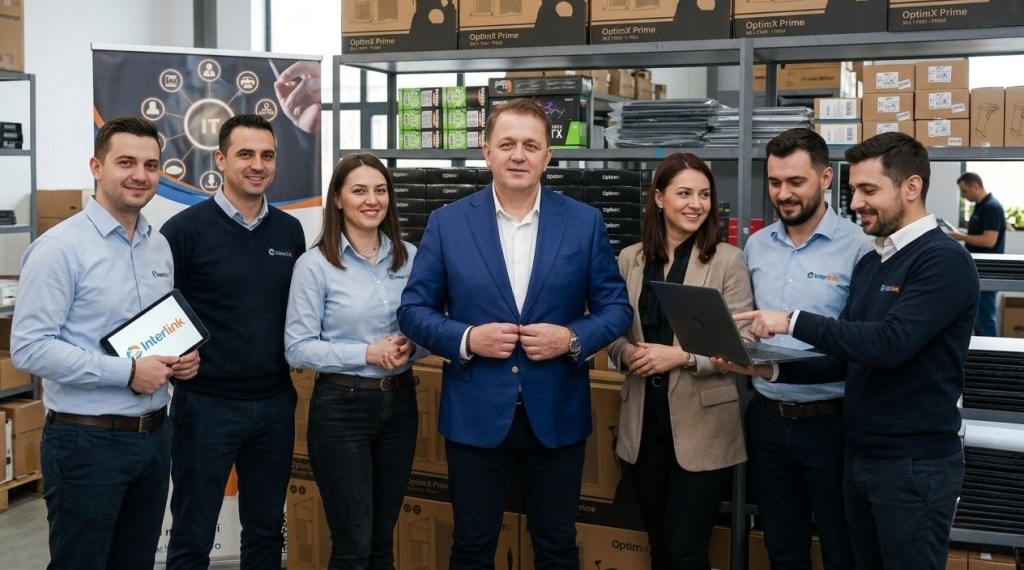
In short: you get exactly what you need, without paying extra for something you don't use.
What about the risks?
The most frequent question is related to reliability.
In reality, we are not comparing “new vs. refurbished”, but:
- professionally tested equipment
vs. - second-hand products without verification
The difference is huge.
Refurbished equipment from serious suppliers goes through testing, cleaning and validation processes. Basically, the risks are controlled.
Where the impact is felt the most
Refurbished makes the most sense in:
- SMES
- startups
- growing companies
- support or back-office teams
- educational institutions
In all these cases, the cost-performance ratio matters enormously.
When is it worth choosing new equipment though?
There are also exceptions – and it is important to mention them:
- intensive video or 3D rendering
- complex AI or machine learning projects
- high-end hardware needs
But realistically speaking, they represent a small fraction of the actual uses in a company.
A simple example
A financial services firm with 15 employees:
- new equipment: ~75,000 lei
- refurbished equipment: ~30,000 lei
Economy: 45,000 lei.
Performance? Exactly what they needed.
conclusion
The circular economy in IT is no longer a “future” idea. It is already the present.
For companies that want to be efficient, flexible and responsible, refurbished equipment is not a compromise – it is a strategic choice.
And as the market evolves, the difference will no longer be between companies that “take into account” this model and those that don't…
but between those who adopted it in time and those who were left behind.
Article powered by Interlink


