Cost of living for a teenager: David needs €300,000 to live. Romania, powerless in the face of serious cases


The chance of a teenager from Constanța to a treatment that the system in his country cannot offer is estimated at 300,000 euros. It is just one of the recent cases of patients for whom the best solutions are sought abroad.
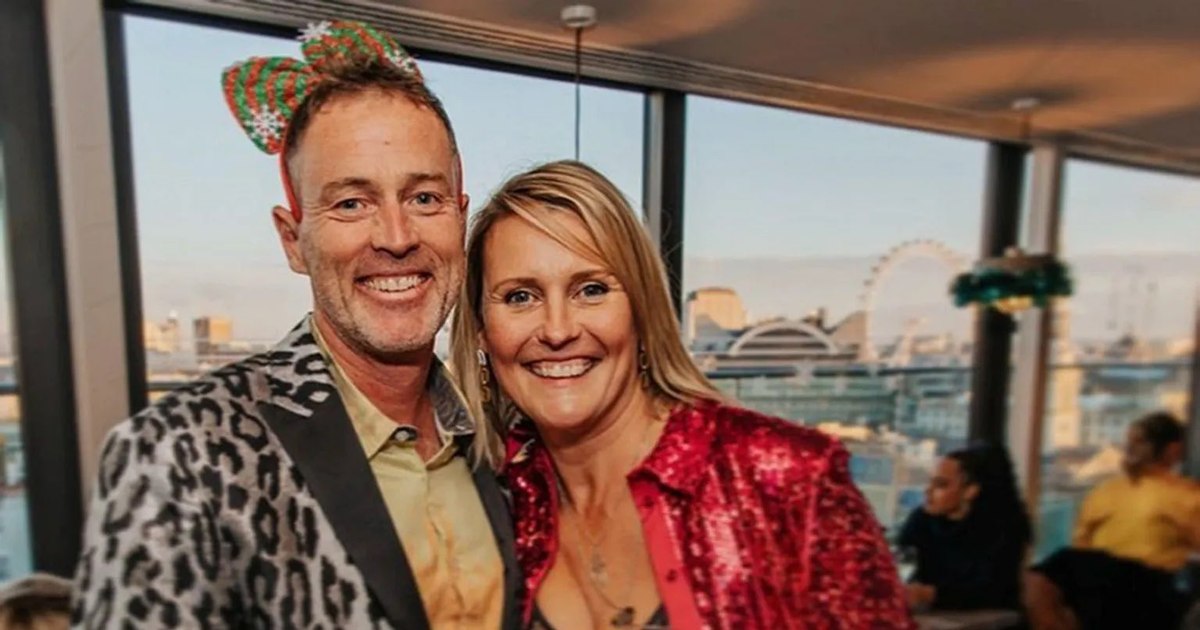
David, the teenager from Constanta, needs support FOTo: Fb/Flory Petrovici
David is a teenager from Constanța who, until recently, had age-specific concerns. He studied, enjoyed with friends, played sports, even performance sports. A cold made the parents think, when the nodes in the neck became inflamed. Searches began from here, which lasted for more than two months, until finally the hard-to-receive news came: it was T-type acute lymphoblastic leukemia. The parents are desperately looking for help, because they found out that outside the country the chances of a cure could be much better.
“As parents, we experience the greatest pain and cling to every hope”
“We are the parents of David, a 17-year-old boy who is fighting the hardest battle of his life. He was diagnosed with T-type Acute Lymphoblastic Leukemia, an extremely aggressive disease that requires immediate intervention.
The doctors gave us a chance: treatment at the Humanitas Hospital in Milan, where a bone marrow transplant is also necessary.
But the costs for a complete treatment is around 300,000 euros – an amount impossible for us to cover in such a short time. Every day counts.
As parents, we experience the greatest pain and cling to every hope. That's why we're calling on you, big-hearted people.” is the call to parents asking those who can help to make a donation, share the post online and mention David in prayers.
The teenager's mother told “Adevărul” that the first alarm signal appeared in December 2025, when, during an episode of cold, the boy's nodes at the base of the neck, submandibular, became inflamed. They went to the family doctor, who recommended a set of tests. After the result, he referred them to Infectious Diseases. They did further tests and were told that it was mononucleosis and that what they had to do was to be patient, that the lymph nodes would shrink in size.
In January, the parents returned with David to the family doctor, because the alarm was still there. So they were referred to the hematologist. It was already February when they arrived at a hospital in Constanța, where David underwent extensive investigations and it was decided to take a biopsy. The parents also asked for the opinion of an ENT specialist, they finally did the biopsy, and after that came the diagnosis.
That's how they arrived at the Fundeni Institute, where David has been under treatment for over a week. The parents began to look for other options, knowing that Romania does not have the capacity to treat its patients with the most innovative drugs, and the state hospitals, on the other hand, although they have highly qualified human resources, do not have the conditions of hospitals abroad that treat similar pathologies.
“I have no doubt, I know that the doctors here are doing the right thing, but I feel that it is not enough for David, and that is also because this form is very aggressive”says the mother.
The doctors told them that the disease was advanced, it was in stage IV and that they had arrived late. So they decided to look for ways to improve David's chances of beating the disease.
It's a race against time. The sums that were sent to them, without being a final calculation, added up, are approximately 300,000 euros, “to begin with”. If the question of a bone marrow transplant arises, the costs will increase. It's money that the family can't raise overnight, so an entire community mobilized.
David's colleagues are organizing charity events, online campaigns have also been started, the family is inventorying the assets that can be used quickly to get closer to the required amount.
All in the conditions where things must proceed quickly and the patient must arrive at a hospital abroad.
For people who can help David with a donation, please find below the accounts where this help can be given, opened in the name of the teenager's mother:
Euro account: Petrovici Florentina
RO50 RNCB 0614 1316 8542 0016
RNCBROBU
Dollar account: Petrovici Florentina
RO40 RNCB 0614 1316 8542 0002
RNCBROBU
LEI account: Petrovici Florentina
RO28BTRLRONCRT0270841001
Revolut account: Florentina Petrovici
RO12 REVO 0000 1662 1433 5375
BIC/SWIFT code
REVORB
Treatment settlement, questionable
Romania settles the treatment of patients who arrive abroad only in certain situations. For the S2 form, run through CNAS, the condition is that the treatment that can also be administered in Romania cannot be done on time (due to waiting lists, etc.). Another situation in which the state supports the costs is that in which the disease is not treatable in Romania (there are no specialists, there are no resources or there is not enough experience). David is in none of these cases, so his chance is that the necessary amount will be raised, the parents will pay the first bill, and the treatment will begin. If he will also receive therapies abroad that are also settled in Romania, based on the subsequent request, part of the amounts may be reimbursed, at the value at which the settlements are made in the country.
Campaign to save Nicole, a two and a half year old girl. The little girl was diagnosed with leukemia and epilepsy
The mother repeats that she is in a desperate situation and that the family is forced to make such a call because their means are far exceeded by the advanced costs.
“There are other situations where they leave simply out of desperation”
The question – Why are you going to be treated abroad? – is, in many similar cases, on the lips of many. Monica Althamer, patient navigator and program director at the Metropolis Foundation, which runs the “Public Hospitals from Private Money” project, explained to “Adevărul” what are the situations in which Romanian patients look for better opportunities outside.
The most common, explains Althamer, are those in which the treatment cannot be offered in Romania in a timely manner or cannot be offered at all in Romania, in these circumstances the state can also offer support, by settling the treatments.
“There are other situations in which they leave simply out of desperation, when treatment doesn't work or doesn't work as well as everyone hopes; or when they ask for a second opinion and there are considerable differences in approach and then their confidence is affected and they choose to go to the hospital that provided them with the most complete information, data about what they would do, alternative treatment protocols. And then they go to the clinics that give them details about the long-term treatment that will inspire them with more confidence and hope.” explains Monica Althamer.
Romanians choose, in desperate cases, abroad because our health system is still far from the services of developed countries. The protocols are international, it's true, a Romanian hospital will do the same, but possibly only up to a point.
“Our access to the personalized medicine that the rest of the world is moving towards is extremely limited. That is, we have this reporting to protocols with some limitations. Not all innovative substances are settled, delays because one drug or another is missing, waiting lists when it comes to transplantation, we still have delays because the holidays are coming”, the patient navigator explains some of the reasons.
Situations where families sell everything they have for a better chance in hospitals recognized for treating certain pathologies are the rule. What is happening today, different from the situation several years ago, is that doctors in Romania are much more open when patients tell them that they would like to have a second opinion. On the other hand, patients are also better informed, they are aware of their rights.
Often the limitations are not related to the competence of the medical staff, but to drugs, investigations and equipment that patients do not have access to. The statistics show that we are at the bottom of the ranking in Europe in terms of the time from the approval of an innovative drug by the European Medicines Agency to the moment it becomes compensated in Romania, draws Althamer's attention. In addition, “on the side of personalized medicine, we don't have the idea of over-specialization. Abroad, hospitals can afford to have doctors with over-specialization who do only that. And then, naturally, a doctor who only does sarcomas will have a case history that will never compare to that of a doctor who does everything for everyone, all types”adds Althamer.
Patients who arrive at state hospitals, in a vulnerable situation both mentally and physically, still spend hours waiting, are crammed into overcrowded halls housed in old and over 100-year-old buildings, see things they would not like to see, and rarely find the strength to rebel. There are details that destroy the patients' confidence.
The drama of the child who suffers from a disease so rare that it is unknown in Romania. What chances does the middle child of the family have
“The hospital from abroad practically borrows from the Romanian state”
On the other hand, the services offered abroad cost money, and the Romanian state settles, in the situations where it is possible, these costs with a very long delay. “There are more and more hospitals in the European Union which no longer accepts patients with forms S2 or accepts them for the surgical part and less for the oncology treatment part. (…) In addition, through S2 forms, hospitals recover from their insurance companies, from the countries where the patients arrive, they recover their money 18 months after the invoices are issued. This means that the hospital abroad practically borrows the Romanian state for 18 months”, points out Althamer.
This is the reason why more and more often families turn to humanitarian campaigns to be able to cover these costs that are far beyond their means.
What reference centers abroad also do is personalized medicine, multiple genetic testing. “Practically, they do not only refer to the standard protocol, but go as close as possible to the patient's needs and his profile, his disease, genetic. There, the chances of the Romanian state settling something, considering that they are not in the basic service package, are non-existent”says Monica Althamer.