The mocked clashing between the great powers in the Arctic. How to position China, Russia and Europe in the race for critical resources

Arctic quickly becomes one of the most disputed areas of the world. China is facing fierce competition from Russia, Europe, India and the US. It can be said that a race for arctic resources has begun, while in the background the geopolitical tensions are increasing.
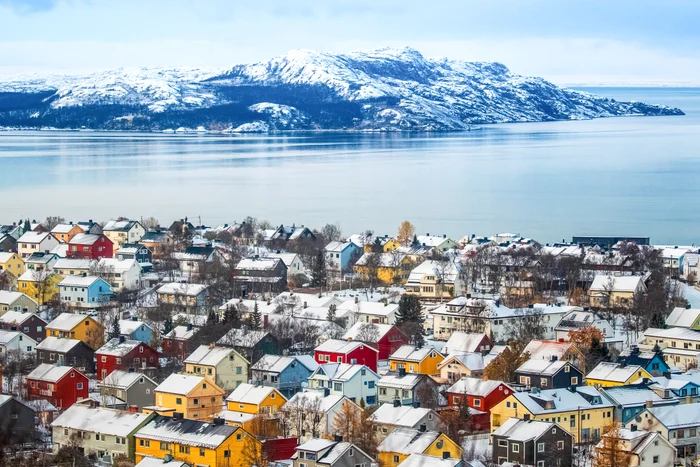
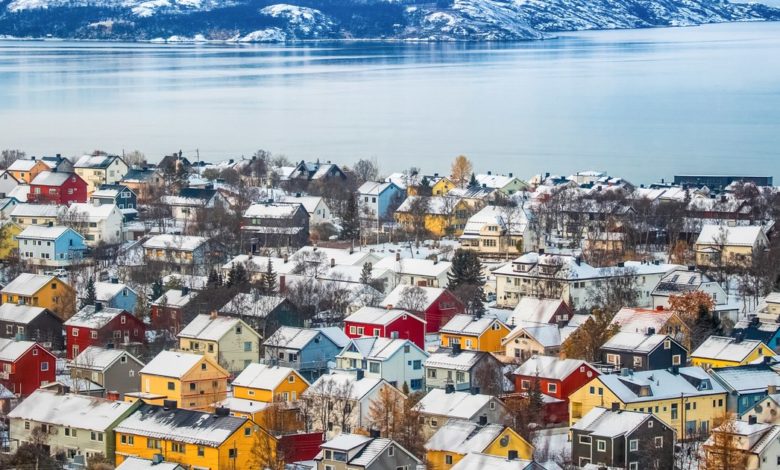
View from Kirkenes, Norway Photo Shutterstock
As soon as Magnus Mæland was chosen the mayor of a town in the northern end of Norway, at the end of 2023, three delegations from China knocked on the door. “Because they want to be a polar superpower,” he commented for the BBC.
Although no one would immediately think of China in association with Arctic, it is certain that this country is determined to become an important actor in the region. The Chinese compete for real estate, for infrastructure projects and hope to establish a permanent regional presence.
China is already present as a “state close to the Arctic”, although its most northern regional capital, Harbin, is about the same latitude as Venice, Italy.
Climate scientists estimate that the Arctic warms four times faster than any other globe with an impact on ecosystems, wildlife and local populations
The Arctic area has a huge stretch, covering 4% of the globe, and the global powers see new opportunities opening in the Arctic with the melting of the ice, which facilitates access to vast natural resources, oil and gas.
According to some estimates, about 30% of the unexploited natural gas can be found in the Arctic.
At the same time, possibilities for new maritime commercial routes are opened, dramatically reducing the travel time between Asia and Europe. In the field of exports, time means money. China is already working on a plan for a “polar silk road” for maritime transport in Arctic.
The dream of a Singapore in the tall north
Inside the Arctic Polar Circle, at the northernmost point of the continental Norway, the former mining city Kirkenes contrasts with the images in postcards with snow -covered mountains and fjords around.
Here you come across closed shops and abandoned warehouses, with broken windows. The city seems forgotten and abandoned.
Under these conditions, it is not surprising that the possibility of building here one day the first European port for massive Asian containers is as attractive as possible.
The director of the port, Terje Jørgensen, intends to build a new international port. His eyes light up when he talks about a future in which he would become a Singapore in the High European High.
“What we are trying to build here in Kirkenes is a port of transbial where three continents meet: North America, Europe and Asia. We will take the goods to the shore and we will recharge on other ships for further exports. he says.
“The new Norwegian laws prohibit the transfer of properties or enterprises, if the sale could affect the Norwegian security interests.” Exhe plumped. So they are waiting for clear orientations from the government on what kind of critical infrastructure could be targeted by the legislation.
Mayor Mæland is cautious about China's intentions. “We want a relationship with China, but we don't want to be addicted to China,” he says.
“Europe has to wonder: how dependent do we want to be on the totalitarian and authoritarian regimes?”
China's approach to try to pay an entrance path to the Arctic begins to hit refusals in the European Arctic Region. The recent Beijing attempts to buy maritime ports in Norway and Sweden and an airport in Greenland, for example, have been rejected.
Russia, the largest player in the Arctic
This context pushes China – the largest emerging superpower in the world – in the arms of the largest player in Arctica, Russia.
Russia controls half of the Arctic shore and has swallowed Chinese investments.
The two countries also cooperate in the Arctic. The Chinese coast guard first entered the Arctic in October, in a common patrol with Russian forces. The two countries had organized common military exercises here a month before. In July, long -range bombers in both countries have challenged the Arctic Ocean near Alaska in the United States.
It is as if Beijing and Moscow would look at NATO, which intensified its exercises in the Arctic, and would say: we can do that too.
All countries that are bordering with the Arctic area are NATO members except Russia.
Andreas Østhagen, a researcher at the Independent Institute Fridtjof Nansen, describes the Arctic region as the “easy to obtain fruit” for the Russian-Chinese collaboration.
“Russia needs investments and commercial actors who are interested in the development of the Arctic – liquefied natural gas resources, oil resources or the development of a northern maritime route as a maritime transport route.
“China is that market. The two countries seek ways to expand their political, economic and even military cooperation.”
But China is not eager to align too closely with Russia as far as Western sanctions wishes and continues to do business with Western powers, inside and outside the Arctics.
Russia has reserves.
“Be careful not to overestimate the Russia-China relationship,” says Østhagen. “Russia keeps away from letting China penetrates too deep in its Arctic region.”
Moscow is based a lot on his natural resources there. And, according to reports, other investors from Arctic, including the US are also courting.
The shadow of the bear
Russia is also based on its Arctic to store strategic weapons – mainly in the Kola Peninsula, which has nuclear capabilities and houses its legendary northern fleet.
In Norway, the residents of Kirkenes live under the shadow of the Russian bear. The border with Russia is a 10 -minute drive. And the Kola Peninsula is uncomfortable.
During the Cold War, the city became known as a spy nest – a line of the front between the West and the Soviet Union.
Norway believes that Russia uses its Arctic area to train new recruits and as a place to launch bombers to attack Ukraine.
Although it is not directly in the war with Russia, Norway, and especially the north of the country, along its terrestrial border of about 200 km, it feels under attack.
“We see it here, locally”, says Colonel Jørn Kviller, next to the clear waters of the Pasvik river, which separates Norway from Russia. In front are the bright yellow border stations of Norway and the red and green ones of Russia.
Since the large -scale invasion of Ukraine, there have been increasing GPS jamming incidents that caused commercial pilots to change navigation systems. Cases of espionage at the border – “Everything, from information on signals to agents sent to Norway” “They multiplied vertiginously,” says Colonel Kviller.
Norway and NATO allies are also on alert because of Russian spy submarines and other Arctic ships.
The common military command is located deep in a quartz mountain in Bodø, inside the Arctic Polar Circle.
From a maze of tunnels and surveillance cameras Norway gathers real-time information from land, air and sea, focusing on suspicious vessels in its arctic waters and near them. Everything is shared in real time with NATO allies.
It is important that any Russian ship that wants to enter Europe must first pass through the Norwegian waters.
The agents in the General Montan district are attentive to the signs of espionage and sabotage around what officials call underwater “critical infrastructure”, as part of the Kremlin hybrid war against the West.
Targets include submarine communications cables – which connect the continents and allow daily financial transactions worth trillion of dollars – as well as oil and gas pipes.
Norway is an important supplier of natural gas for Europe, including the United Kingdom, especially since sanctions have been imposed on Russian exports following the large -scale invasion of Ukraine.
Moscow has modernized its military capabilities in the Arctic. It has a serious fleet of spy and nuclear submarines. If they go undetected, they could launch rockets to capital in Europe and threaten the US.
US President Donald Trump told Europe that he has to do more for his own defense, but inside the Arctics, there is a “great overlap of interests,” says the head of the Norwegian Common Command, Vice -Adersen.
“It is also about the US internal defense … The concentration of Russian nuclear weapons, the capabilities that Russia carries out not only for Europe, but also the USA”, he says.
Vice -Adersen does not believe that any of the parties are pursuing an open conflict in the Arctic, but, as global tensions grow in other parts, such as Ukraine, there is a propagation potential in the Arctic.
The Viceamiral team has scheduled a routine call to the northern fleet of Russia every Wednesday afternoon, to keep the communication channels open, they say.
Competition for Arctic Resources
On the way from Kirkenes to the North Pole, is the Norwegian Svalbard archipelago, which is at the center of the fight between the global powers for the Arctic resources.
Although Norwegian, the archipelago is governed by a treaty that allows citizens from all the signatory countries to work there without a visa. Most are employed in me, tourism and scientific research.
However, from the large -scale invasion of Ukraine, in some communities here, a visible intensification of the nationalist current has been observed. These include the military parades of the Russian settlement to mark the end of the end of World War II, the tree of a Soviet flag on the Russian infrastructure and the growing suspicion that Beijing has transformed its research station from Svalbard into a double purpose – for military spy.
The indigenous communities in the region, of which a little over half live in the Russian arc, often have the feeling that those in power do not recognize the rights of the peoples for which the region is a house.
Miyuki Daorana, a young activist in Greenland who represents the indigenous community accuses European countries of using the “climatic crisis” as an excuse to “extract and invade indigenous land.” “It is something that we call green colonialism or development aggression, by which the real desire is to take more and more from the land,” she says.
Not long ago, there was talk of Arctic exceptionalism, in which the eight countries that bordered with Arctic – Canada, Russia, USA, Finland, Sweden, Norway, Denmark and Iceland – together with representatives of six indigenous communities and other observing countries, including China and the United Kingdom, would be left to the world.
But these are times when the great powers make political games, and the countries act more and more in their own interest. With an increased rivalry between the nations in the Arctic, the risks of misinterpretation or calculation are high, COAND BBC.