
The quiet revolution in the Ukrainian army: how rudimentary volunteer units turned into elite corps

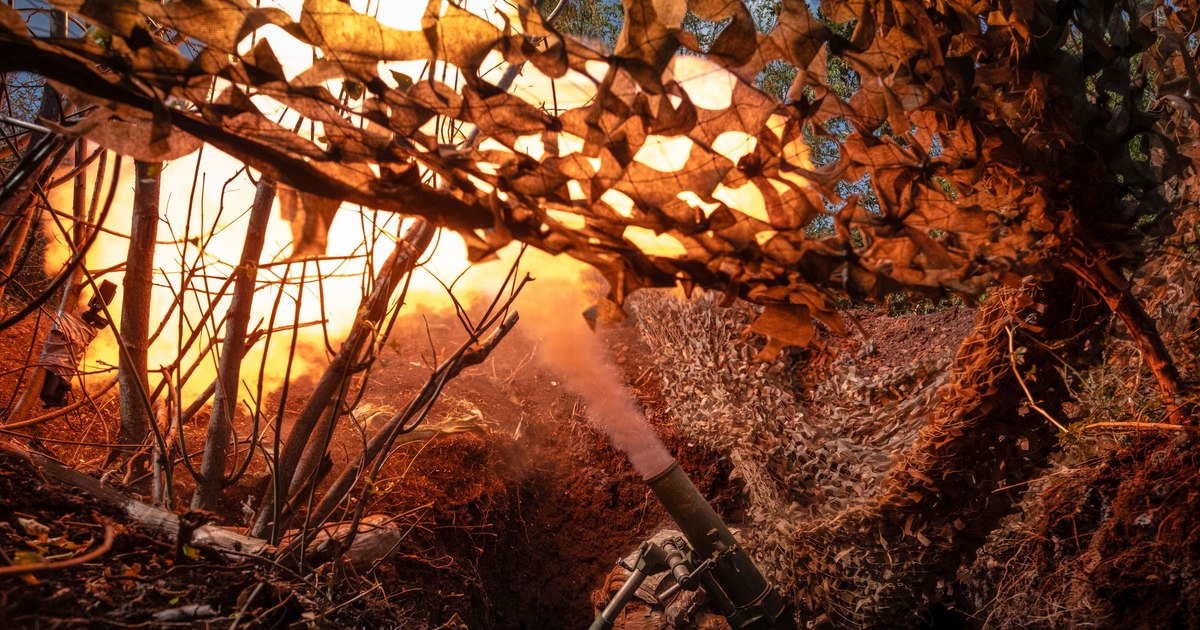
At the beginning of the Russian invasion, when uncertainty hung over the future, a Ukrainian agricultural magnate followed an impulse: he formed a volunteer unit of just 30 people. He didn't know if he would survive the war. Today, the unit he created has become a symbol of the deep transformation of a Ukrainian army that is gradually leaving behind its Soviet legacy, AP reports.
PHOTO PROFIMEDIA
That group has grown into a force of about 40,000 soldiers and is considered one of the most effective in Ukraine's defense forces. Its founder, Vsevolod Kozhemyako, currently an adviser to the commander of the Khartiia Corps, emphasizes that the main lesson of the war is clear: the security of the invaded country depends, first of all, on its own army.
“Ukraine needs a modern and effective army. It is the main guarantee of our security”he says, adding that the future of the country depends on the generations that choose to stay and fight for this territory.
The break with the Soviet past
The rapid rise of the Khartiia Corps reflects a wider reformation in the Ukrainian military, alongside other new formations such as the 3rd Army Corps or the Azov Brigade. These units are trying to break away from the Soviet legacy – a system characterized by rigidity, excessive bureaucracy and a culture where bad news is often withheld for fear of punishment.
After the collapse of the Soviet Union, Ukraine inherited a large military but weakened by underfunding and corruption. The problems became apparent in 2014 with the annexation of Crimea and the Russian invasion of the east of the country. The reforms initiated then helped Ukraine withstand the invasion of 2022, but during the war, the old dysfunctions began to surface again.
Kozhemyako says that from the very beginning he understood that his unit had to work differently. Many of those who joined him were civilians, some from business backgrounds, who refused to enter a rigid Soviet military system, yet were eager to fight. Thus they have left their mark, introducing a mentality that values initiative.
Western methods and continuous adaptation
The new structure was based on methods inspired by the US military, combined with direct experience from the battlefield. Protocols such as Troop Leading Procedures (TLP), which allow lower-level units to rapidly plan operations, or After Action Reviews (AAR), which review each mission to identify lessons learned, have become essential.
These mechanisms have been constantly adapted and refined, especially in the context of the accelerated use of technology.
Technology and trust, new tactics
One of the body's most spectacular developments has been the integration of technology into daily operations. In December 2024, Khartiia carried out what was described as the first fully robotic attack on Russian positions near Kharkiv – a watershed that US military experts see as a landmark for how modern warfare is transforming and redefining battlefield survival.
How a commander responds to Rheinmetall's CEO after he compared Ukrainian drones to Lego pieces
However, technology is not the only defining element. Organizational culture plays an equally important role. A 23-year-old platoon leader transferred from a regular unit in the Khartiia corps, which works with ground robots for evacuation and supply missions, noted the difference: less formality and rigid discipline, and a relationship based on trust between soldiers and commanders.
“People understand why they are here and are not burdened with unnecessary tasks,” he says, recalling the stark contrasts with traditional structures, where rigid hierarchy discouraged honest communication.
“When officers look down on you, as they do in rear units, they become almost like enemies to you,” he said. “In Khartiia, relationships are different. When you go on a mission, you trust those who give you orders.”
Results on the battlefield
The efficiency of this model translated into concrete results. In December 2025, the Khartiia Corps led a counterattack in the direction of Kupiansk, liberating several villages and pushing the front line to the Oskil River. Although the area was a strategic priority for Russia and Moscow's forces made strenuous efforts, they still failed to make significant gains.
According to the assessment of the Institute for the Study of War, the operation is a testimony that Ukraine is still able “to carry out effective counter-offensives, and to achieve tactical gains, especially when the adversary is overwhelmed.”
Business-style management in a modern war
Another distinctive element of the body is the way it has integrated practices from the business environment. Khartiia has built its own recruitment system a brand identity and an active communication strategy, using social media and collaborating with public figures to attract volunteers and donations.
“The principles that work in business apply perfectly here – only you are not competing for profit, but for people, equipment and the attention of volunteers”, explains an officer involved in recruitment campaigns.
A model that expands
Entering an underground command post, where large screens display real-time images from the front, the atmosphere is more reminiscent of a gaming hall than a classic military center. Here, commanders insist on a clear philosophy: tough training, but an emphasis on protecting the lives of soldiers in combat.
Testimonies about the recruitment crisis in the Ukrainian army: “One way ticket”
“One of our secrets is that we don't groom people during training, we train them constantly,” he said. “But during fights, it's the exact opposite. People come first. We don't save drones or equipment at the expense of people”says a senior officer.
Khartiia is now trying to expand that model by partnering with other units, including the Army's 3rd Corps, to create a joint training and resource sharing system. The two formations, which total approximately 80,000 soldiers out of the approximately 300,000 deployed on the front, hope to bring about change at the level of the entire army.
However, there is still no certainty that the high command will be willing to abandon old Soviet practices.
“We want to offer a tool to the General Staff. Whether they accept it or not is their decision,” said Andrii Biletskyi, commander of the 3rd Army Corps.
Faced with a tough war, these pioneers reached a pragmatic conclusion: the surest guarantee of the future may be the very ability of the military to reinvent itself from within.


