The highways accelerated the development of Sibiu. The transformations of the strategic city for transport in Romania

Started in the 2000s, investments in road infrastructure accelerated the economic development of Sibiu. In the coming years, the new highways to Brașov and Bucharest are expected to strengthen its role in transport, industry and economy.
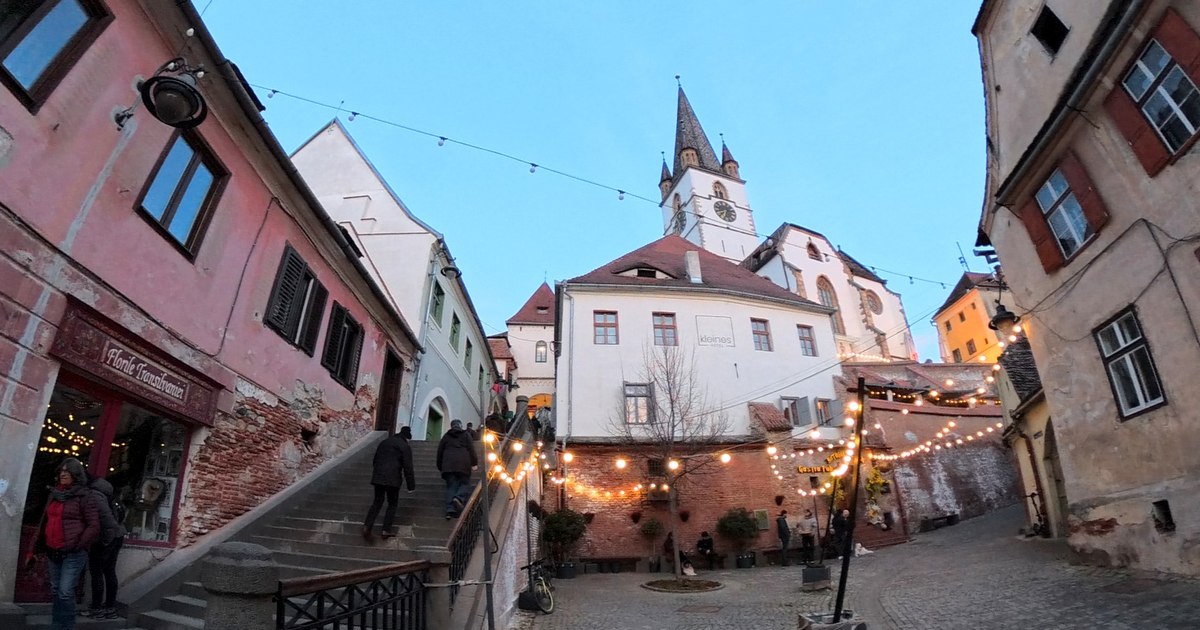
The city of Sibiu. Photo by Daniel Guță. TRUTH
The story of the city of Sibiu began eight centuries ago, when the settlement near the Olt Valley was attested as the first Saxon seat, under the name of Siebenbürgen, then Hermannstadt. In the following centuries, Sibiu became one of the most important urban centers of medieval Transylvania.
The medieval city, increasingly important for Romania
In the 18th century, it was the capital of Transylvania, and in the 19th century, it consolidated its administrative and commercial role, with the modernization of the Olt Valley road, which connected it to Muntenia.
Sibiu is located about 20 kilometers from the entrance to the Olt Gorge, the pass between the two historical regions of Romania, and roads have connected it to Brașov, Alba Iulia and other important cities of Transylvania since ancient times. Over time, other Saxon settlements developed around Sibiu, with an economy based on crafts, trade and agriculture, but also numerous Romanian villages near the mountains, where shepherding and animal husbandry were traditional occupations that supported the region's economy.
In the 20th century, the Saxon community of Sibiu gradually decreased, but the city continued to develop and expand, reaching a population of over 170,000 in the 1990s. In the second part of the 20th century, the economy of Sibiu was based on large enterprises in the construction of machines and equipment, on auto parts and equipment factories, as well as on factories in the textile industry.
After 1990, the industry of Sibiu went through restructuring, and the former state enterprises disappeared or were reorganized. Their place was gradually taken by private and foreign investment, most important in the auto parts industry and manufacturing.
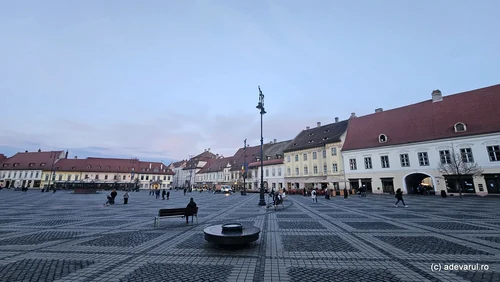
Image 1/17:
Sibiu Photo Daniel Guță THE TRUTH jpg
Sibiu has become more and more popular as a tourist destination, the most sought-after place being its historic center, dominated by the Council Tower and the old squares, with historic churches and cathedrals, old houses with Saxon characteristics, defense towers, passages and fortifications that preserve the atmosphere of the old Transylvanian citadel. In 2007, the city became the European Capital of Culture, a title that increased its appeal outside the country. Around it, new industrial and business parks, as well as new apartment blocks, have taken the place of former industrial platforms, pastures and vacant lots.
The belt that removed heavy traffic from Sibiu
An important role in the accelerated development of Sibiu was played by the extensive investments in the modernization of the road infrastructure, which began in the 2000s. Designed in the early 2000s and built as a segment of the A1 Highway, the Sibiu bypass, between Şelimbăr and Șura Mică, proved essential to solve the traffic problems in the city, which is transited daily by more than 20,000 cars.
“Starting today, Sibiu gets rid of the nightmare of heavy traffic. Bypasses bring development everywhere”, informs, on December 1, 2010, the former prime minister Emil Boc, at the inauguration of the “mini-highway” of Sibiu.
In Romania, the construction of the first bypass belts of large cities began in the 2000s, and, along with Pitesti, Constanța, Craiova and Cluj-Napoca, the city of Sibiu was among the first large localities with highway belts or express roads.
Motorways connect Sibiu with the rest of the Transylvanian region
Infrastructure investments continued in Sibiu. By 2016, the works on the A1 highway between Sibiu and Deva were completed, completed in 2019 by the segments to Lugoj, Timișoara, Arad and Nădlac. Also in 2022, the Sibiu highway was completed with the Sibiu – Boita section, 13 kilometers long, which continues from the entrance to the Olt Gorge, in connection with DN7.
The city revitalized by the construction of highways. Investments of hundreds of millions of euros have arrived in Sebeș
By the end of 2026, the estimated date of completion of the Margina – Holdea section, from the A1, Sibiu could be completely connected by highway to the western border of Romania, over a distance of approximately 350 kilometers, which could be covered in approximately three hours only on the highway.
In 2021, with the completion of the Sebeș – Turda Highway, the city of Sibiu was linked by highway to Alba Iulia, located 80 kilometers away, the road between them being shortened to less than an hour, but also to Cluj-Napoca, located 180 kilometers away, the route being able to be traveled in about two hours.
In 2023, Sibiu was connected by highway to the city of Târgu Mureș, located about 200 kilometers away, the distance between the two can be covered in about two hours on the highway.
The highways of the future for Sibiu
Entering the construction site in 2025, the mountain sections of the Sibiu – Pitesti Motorway (A1) and the Sibiu – Făgăraș Motorway (A13) will transform Sibiu into one of Romania's major communication hubs. In recent years, the city in the center of Romania has developed rapidly along with the investments in the infrastructure around it.
The Sibiu – Făgăraș and Sibiu – Pitești highways currently have, as a landmark, the town of Boita in the vicinity of Sibiu, the place where a highway node will ensure high-speed interconnection between the A1 and A13 highways and the National Road 7.
The Boita motorway junction is built on the 14 kilometer section between the Sibiu towns of Boita and Avrig, part of the A13 Sibiu – Făgăraș motorway.
From here, the highway, which follows the upper course of Olt, at the foot of Făgăraș, continues on a route of about 70 kilometers towards Făgăraș, close to that of National Road 1 Sibiu – Brașov. The future highway will have six junctions, at Boita, Avrig, Arpașu, Sâmbăta, Ileni and Făgăraș, and will reduce the travel time between Brașov and Sibiu.
The Sibiu – Pitesti highway, expected in 2028
A third of the 122 kilometers of the A1 Sibiu – Pitești Highway are open to traffic, between Sibiu and Boita (14 km) and between Curtea de Argeș and Pitești (30 km). The mountain segment, between Boita and Curtea de Argeș, remains the most difficult and has a completion date of 2027-2028.
The most complex highway interchange is taking shape. “It will have numerous bridges, passages and even viaducts, on three levels”
The mountain highway, which will connect the historical regions of Transylvania and Muntenia, is under construction from 2024 on Lot 2 Boita – Cornetu, 31 kilometers long. It crosses most of the Olt Gorge, and the route includes seven tunnels, an ecoduct in the Lazaret area and 48 bridges, passages and viaducts.
From the Oltului Valley, the Sibiu – Pitesti Highway route is continued by another spectacular sector, which passes by the Cozia National Park. Lot 3 Cornetu – Tigveni will be 37 kilometers long, connecting the counties of Vâlcea and Argeș and will include the Poiana Tunnel, 1.7 kilometers long, an ecoduct on the Olt Valley and over 50 bridges, passages and viaducts.
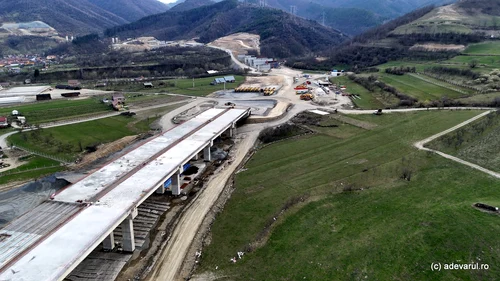
Image 1/10:
Boita area, A1 Sibiu Pitesti and A13 Sibiu Făgăraș highways Photo Daniel Guță THE TRUTH (8) jpg
The most advanced works on the A1 Sibiu – Pitesti Highway are on Section 4 Tigveni – Curtea de Argeș, ten kilometers long, and could be inaugurated in 2026. This includes the Curtea de Argeș Tunnel, 1.35 kilometers long, consisting of two unidirectional galleries, the first road tunnel drilled on a highway in Romania.
With the completion of the Sibiu – Pitesti highway, the distance of about 300 kilometers between Sibiu and the Capital will be reduced by about 40 kilometers and will be covered in about three hours.