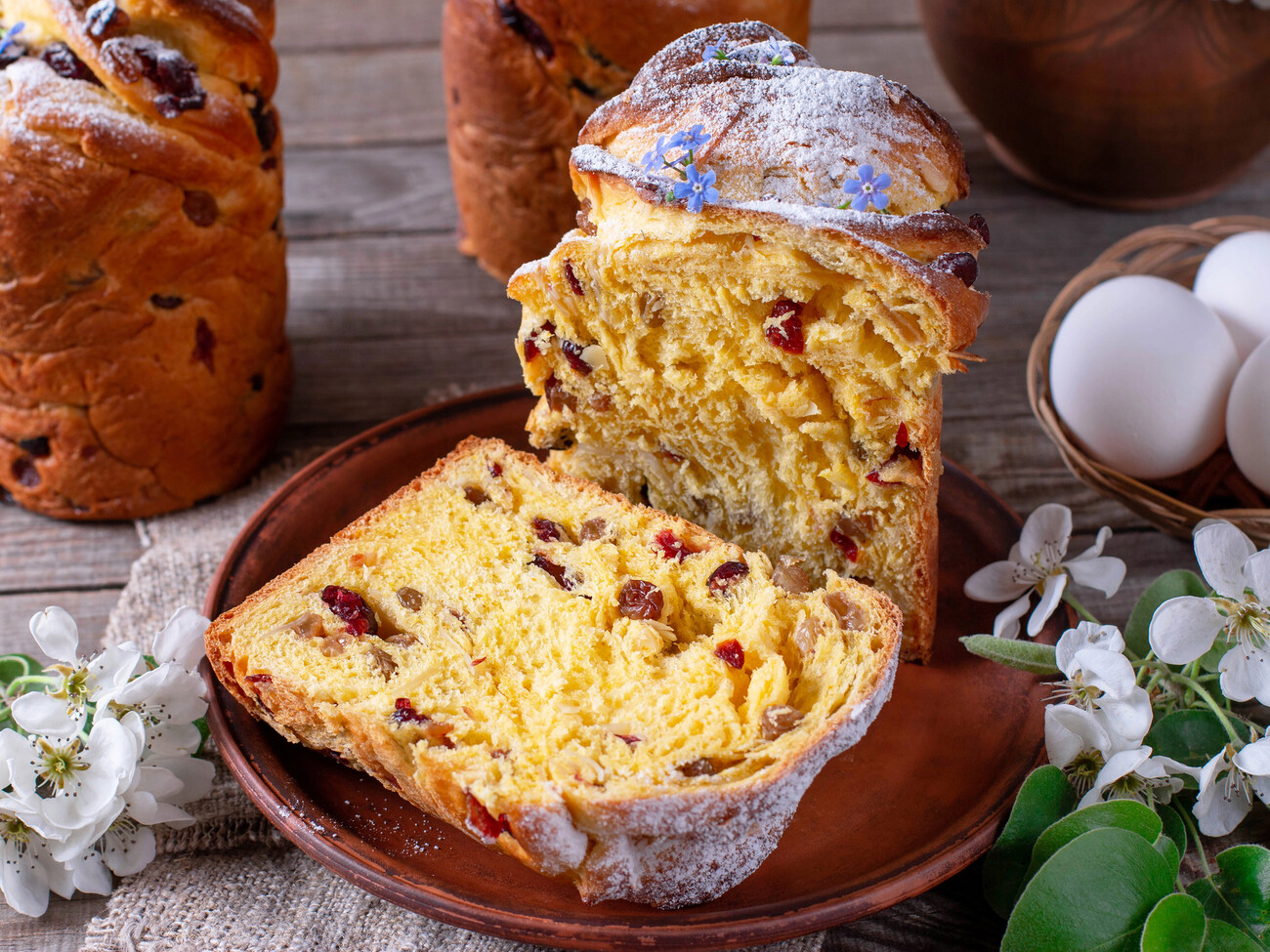
“Even if the paska looks quite normal, you should pay attention to several signs before serving. If there is an unpleasant odor, stickiness, a wet film or traces of mold on the surface, it is better not to eat such baked goods,” the culinary specialist warned.
Klopotenko emphasized that you should not cut off only the damaged part and leave the rest: if the mold is already noticeable, its spores could have spread deeper than is visible from the outside.
You should be especially careful with Easter cakes that have a protein glaze, curd filling or cream decor, because they spoil faster than classic baked goods without filling.
In order not to risk it, it is better to immediately divide the Easter eggs according to the storage method: leave one for the table, pack the others separately and put them in a cool place or freeze them.