President Donald Trump cannot single-handedly withdraw the United States from NATO, but experts warn that his rhetoric and decisions risk deeply affecting the relationship with European allies, to a critical point, reports Axios.
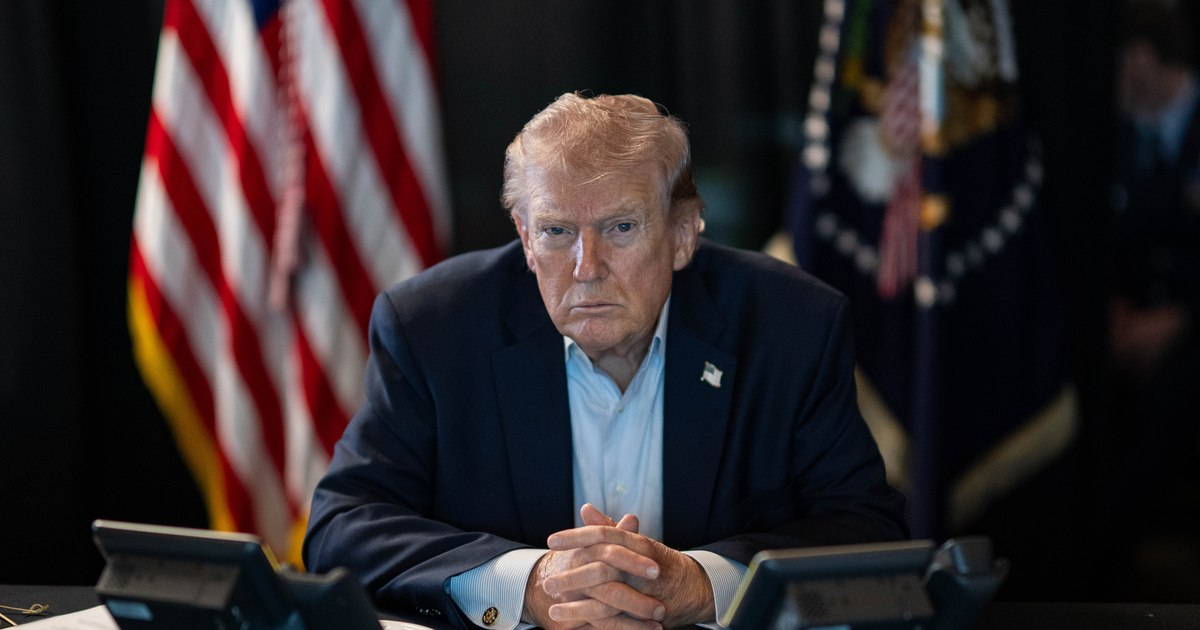
President Donald Trump cannot single-handedly withdraw the United States from NATO. PHOTO: Shutterstock
Although the US remains the central pillar of the transatlantic alliance since 1949, growing voices say mutual trust is eroding.
“It is already quite well understood and feared by many Europeans that even if the US remains in NATO, it is an unreliable partner,” said Mark Webber, a professor at the University of Birmingham.
Tensions escalated after Trump harshly criticized allies who did not support US military intervention against Iran.
After a meeting with NATO Secretary General Mark Rutte, the American leader sent a virulent message: “None of these people, including our own, very disappointingly, NATO, understand anything unless pressure is put on them!”
Trump has repeatedly accused European states of failing to meet their defense spending obligations and imposing restrictions on the use of their territory for US military operations.
For their part, the allies pointed out that Washington launched the military operation without prior consultations.
Doubts about US commitments
A White House official told Axios that “NATO has been tested and failed”, echoing Trump's message.
Even though he cannot withdraw the US from the alliance without the approval of Congress, according to a 2023 law, the American leader can significantly influence the functioning of NATO.
The former US ambassador to NATO, Ivo Daalder, warns that Trump has created serious doubts about compliance with Article 5 – the principle of collective defense.
According to him, the erosion of trust could have long-term effects, including after the end of Trump's mandate, in the context in which support for NATO is decreasing even among Republicans.
Possible sanctions within the alliance
Without leaving NATO, Trump could adopt measures that directly affect allies, such as withdrawing American officers from command structures or blocking consensus – the alliance's essential decision-making mechanism.
According to The Wall Street Journal, the US administration is also considering the relocation of troops from countries considered “uncooperative” and even closing some military bases in Europe.
But such decisions could have major consequences.
“There is no sanction we can apply to NATO or an ally without affecting us as well,” warns Jim Townsend.
The costs would be high and the impact on military capability could be significant. “Financially it doesn't make sense. Militarily, the same,” says Daalder.
Europe is trying to adapt
At the same time, European states are trying to reduce their dependence on American military protection, amid the uncertainties generated by Washington's policy.
However, Mark Webber believes that NATO continues to function operationally despite the political tensions.
“Day-to-day activity continues beyond political visibility in Washington,” he explained, adding that the US remains, even now, an important factor in building consensus.
The crisis within the alliance could, however, deepen. Trump recently hinted at a possible one “next conquest” military after Iran and resumed the idea of taking over Greenland, a territory belonging to Denmark, a NATO member state.
According to Daalder, such a move would provoke an extremely harsh reaction from Europe, even stronger than previously recorded.
In this context, the future of the transatlantic relationship remains uncertain, and trust – an essential element of the alliance – seems more fragile than ever.