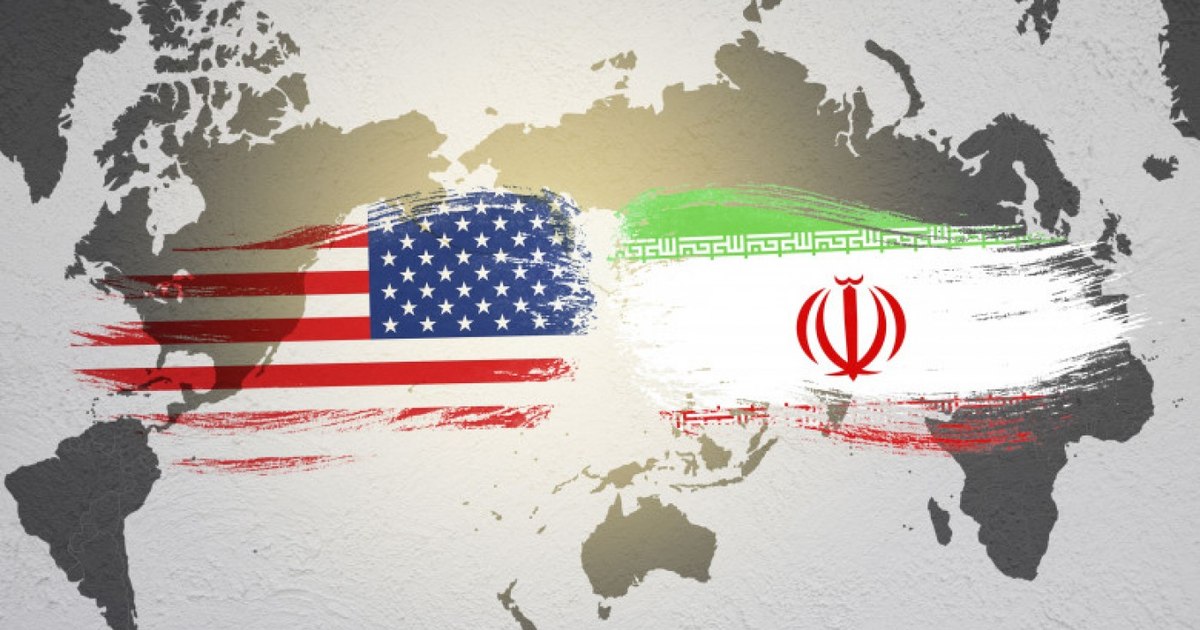
Gulf leaders are pressing US President Donald Trump to ensure that any end to the war with Iran will impose long-term limitations on Tehran's capabilities, amid fears that a premature end to hostilities could leave major threats to the region unresolved, the Jerusalem Post reported, citing sources.
SHUTTERSTOCK PHOTO
According to two sources familiar with the matter, United Arab Emirates President Mohammed bin Zayed and Saudi Arabia's Crown Prince Mohammed bin Salman have warned Trump in recent days not to end the conflict before securing significant limitations on Iran's military influence. Their message, delivered in private conversations, reflects deep unease in Gulf capitals about how the war might end and what Iran might be able to do next.
“No one knows how or when Trump will decide to end the war, so all the Gulf states are worried,” one of the sources said.
At the heart of these fears is the possibility of Iran emerging from the conflict still capable of threatening neighboring states and disrupting critical sea routes, particularly the Strait of Hormuz, through which about a fifth of global oil exports passed before the war.
Both Emirati and Saudi leaders see the current conflict as a rare strategic opportunity to significantly weaken Iran's ability to project power in the Gulf region. In closed-door talks, they urged US officials not to accept an end that would leave Tehran's military posture largely intact.
“Their message to Trump and other senior US officials is that it is a 'historic opportunity' and that any end to the conflict should leave Iran unable to resume the pattern of coercion that has defined its regional posture,” the sources said.
Iran should not come out of the war keeping its leverage
Publicly, UAE officials have made similar demands. Anwar Gargash, diplomatic adviser to the UAE president, said recently that any negotiated solution must include guarantees against resumption of attacks by Iran, as well as compensation for loss of life and damage to infrastructure.
Gargash also stressed that, from Abu Dhabi's perspective, a simple ceasefire would not be enough. Instead, he called for concrete restrictions on Iran's nuclear program, as well as its drone and missile capabilities, and its behavior in the Strait of Hormuz.
Saudi Arabia has been more reserved in public statements, but people familiar with the kingdom's position say Riyadh has privately supported the continuation of the conflict until Iran no longer poses a serious regional threat.
One of the most sensitive aspects of the war remains control of the Strait of Hormuz. Gulf officials fear the United States could accept an end to the war without fully restoring freedom of navigation through this vital route. Those concerns were heightened by an article in The Wall Street Journal that indicated Trump had told advisers he would be willing to end the conflict even if the strait remains largely closed.
The topic was also addressed at a White House briefing on March 30, 2026, when spokeswoman Karoline Leavitt presented the war objectives to the US administration. She mentioned destroying the Iranian navy, eliminating ballistic missile capabilities, dismantling the industrial defense infrastructure and preventing Iran from obtaining a nuclear weapon.
However, when asked if the full reopening of the Strait of Hormuz was a central goal, Leavitt said the administration was working in that direction, but did not explicitly define it as a priority of the operation.
For the Gulf states, which have endured weeks of missile and drone attacks, this difference in approach has heightened fears that Washington's definition of success may not match its own security imperatives.
This ambiguity comes in the context of Trump sending mixed signals regarding the evolution of the conflict. While he warned Iran that it would have to reopen the strait or face attacks on critical infrastructure, he also hinted that a negotiated solution could be close, signaling that he would be reluctant to engage in a protracted military campaign to secure the sea route.
For Gulf leaders, the stakes go beyond the immediate conflict, focusing on the post-war situation and Iran's ability to reassert its regional threats.
“The situation must end with the containment of Iran's nuclear threat, drones, missiles and aggression in the Strait of Hormuz,” Gargash concluded, reflecting a growing sentiment among leaders in the region.