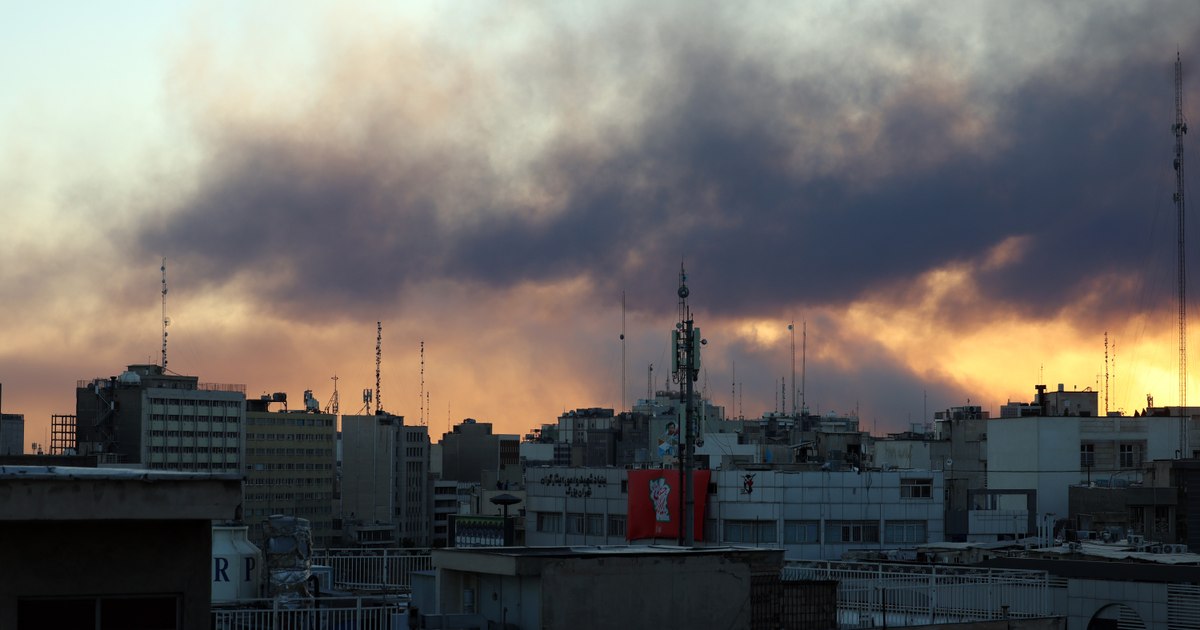
As U.S. and Israeli military leaders met to plan operations against Iran, they debated how to divide responsibilities over a wide range of targets — missile batteries, military bases and nuclear targets. From the beginning, however, a dark mission was inevitably assigned to Israel: hunting down and eliminating Iranian leaders, the Washington Post reports.
Israel carried out this mission with ruthless efficiency, killing, according to an Israeli military tally, Iran's supreme leader on the first day of the war, and more than 250 “high-ranking Iranian officials” in the meantime. The latest attack came on Thursday, when Israel announced the killing of the naval commander of Iran's Islamic Revolutionary Guard Corps (IRGC).
The beheading campaign relies on a dedicated assassination machine that Israel has been building for decades and perfected in recent years to unprecedented levels of lethal accuracy, senior Israeli military and intelligence officials said.
Officials cited the proliferation of surveillance sources inside Iran, including informants recruited by Israel, as well as cyber attacks on street cameras, payment platforms and Internet checkpoints created by the regime to enforce information blackouts. These information streams are analyzed by a classified artificial intelligence platform programmed to extract clues about the leaders' movements and routines.
Israeli tactics, including bombs planted months in advance, drones capable of sneaking through apartment windows and supersonic missiles launched by stealth planes, have been perfected over decades of conflict in Gaza, Lebanon and Iran.
Asked why Israel was designated to target Iranian leaders, a senior Israeli security official explained: “The need arose to target them. And we could do it.”
Efficiency versus strategic objectives
It remains unclear whether the campaign will achieve Israel's broader goals: eradicating the threat posed by Iran's missiles and proxy militias, blocking the country's nuclear ambitions and weakening the regime to the point where it could be overthrown. Officials note that those killed are often replaced by more militant subordinates, and anticipated public protests have not materialized due to continued US-Israeli bombing and fears of regime retaliation.
Senior Israeli officials described Iran as shaken but resilient, stable and feeling triumphant after withstanding a month-long bombing campaign by two of the world's most powerful militaries.
Experts warn that the reliance on targeted killings could create a strategy to continually expand their limits. “We've gone too far in making this a strategy instead of an occasional operational necessity,” commented Ariel Levite, an expert on Israeli nuclear policy and security at the Carnegie Endowment for International Peace.
Levite also observed that the arrangement conveys that “the United States has relied on Israel to do the dirty work in the war,” with Washington taking a position of “we can't kill them, but we're more than happy for you to do it.”
A US official familiar with the operations confirmed that Israel's responsibility for the strikes on the leaders reflected a coordination in which “we work together, but we have our own objectives.” US officials said the division of duties reflected the capabilities of each side, and not legal limitations. The US has previously carried out targeted assassinations, including the killing of Quds Force commander Qasem Soleimani in 2020.
President Donald Trump described the strikes as a joint effort: “We killed all their leadership, and then they met to elect new leaders and we killed them too,” he said last week. Trump argued that the goal of regime change has been achieved because “the leaders are now very different than they were at the beginning.”
The Spanish Prime Minister accuses the US and Israel of illegal actions in Iran. “It's not fair that someone sets the world on fire and the rest swallow the ashes”
Targeting the Iranian leadership
Israel's rapid turnaround of Iran's leadership began with the Feb. 28 attack that killed Ayatollah Ali Khamenei, ending his 27-year rule, as well as the head of the defense council, the commander of the IRGC, the head of the armed forces, the defense minister and at least a dozen senior deputies.
The coup was made possible by intense monitoring of the meetings of the “Group of Five,” meaning Khamenei and his closest advisers, held over the past year. “Almost every week they gathered,” said an Israeli security official. “Sometimes in different locations. Sometimes in safer conditions. Sometimes less safe.”
Khamenei was killed at his residence while he was not in a bunker. His son, Mojtaba, appointed successor, was seriously injured but survived because he was in an adjacent garden. “He makes decisions from time to time,” said a senior Israeli security official; the young Khamenei remains isolated for protection.
The strikes were part of a prearranged US-Israeli war plan, adjusted at the last minute when Israeli intelligence learned that a meeting originally scheduled for the evening of February 28 had been moved to the morning. Israeli warplanes launched a barrage of missiles at the compound in Tehran.
Collection of information
Israel's success is largely due to the Mossad intelligence service, responsible for recruiting human sources, and Unit 8200, the cyber operations branch of the IDF. These agencies have collaborated with American counterparts, including the CIA and NSA, on covert operations against Iran since 2010, with the sabotage of Iran's nuclear program through the “Stuxnet” program.
The new capabilities emerged after a cyber exchange with Iran five years ago.
After alleged Iranian attacks on utilities in Israel, it retaliated by disrupting Tehran's traffic lights, fuel stations and financial systems. “Everything that can be hacked, we tried to hack. From phone calls and traffic surveillance cameras to internal security systems,” said a senior IDF official.
The Invisible War: How Iran Turned Digital Space into a Battlefield (Read and Crucify Yourself!)
The regime's centralized internet hubs, designed for information blockades, have also become vulnerable. “A covert intrusion would provide a very powerful covert vantage point” for Israeli operations, said a former Western intelligence official.
This data is analyzed through an AI platform described as “one of the most significant advances in espionage in the last decade.” Raz Zimmt, director of Iran research at the Institute for National Security Studies, said AI “gave Israel a way to harness data that was always available but previously impossible to process.”
The information Israel had about certain commanders was so precise that the missiles were redirected in flight based on the movements of the targets, officials said. A June 13 attack that killed Amir Ali Hajizadeh, commander of the Revolutionary Guards' (IRGC) aerospace force, was staged as he moved from an office to a nearby apartment, according to a former senior Israeli military officer who was briefed on the operation.
In early March, Israel bombed the headquarters of the Assembly of Experts in Qom while members were meeting online, escaping unscathed. An Israeli official said the strike was aimed at preventing the meeting, not killing members.
Israeli officials expressed astonishment at the boldness, or perhaps recklessness, of Iranian leaders. “Any man on the planet would have seen the perfect storm coming,” said a senior Israeli security official, describing the decision by Khamenei and his deputies to gather in central Tehran, even after the collapse of negotiations and the massive US mobilization.