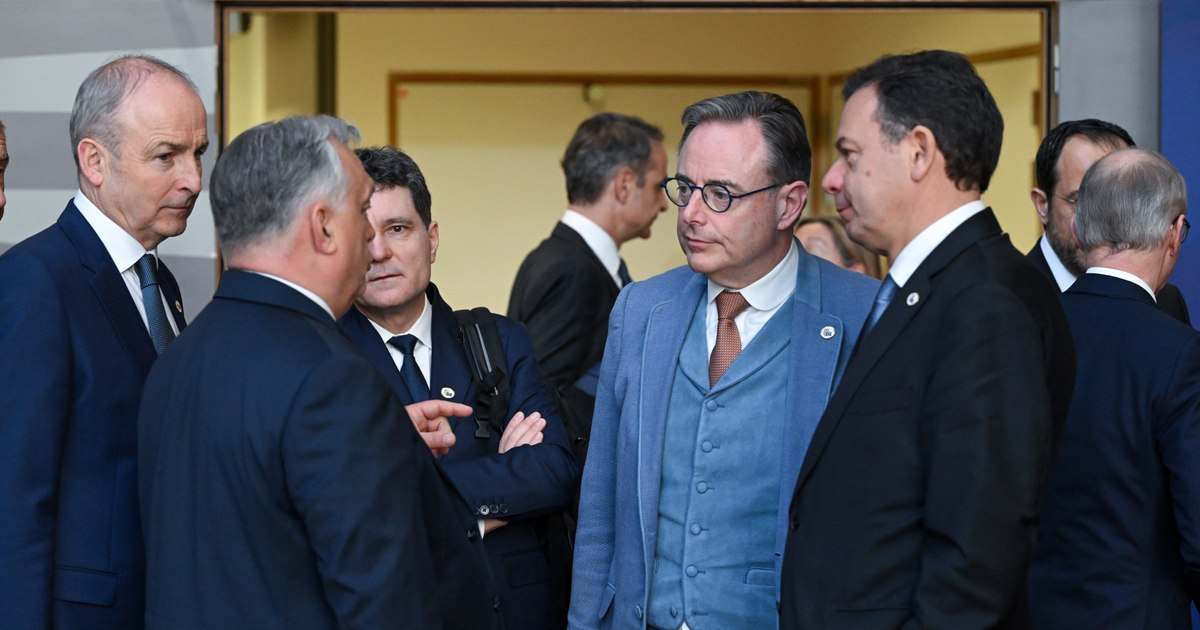
European Union leaders failed to convince Hungarian Prime Minister Viktor Orban to lift the block on a €90 billion loan to Ukraine after about an hour and a half of talks in Brussels at the European Council. “Adevărul” talked with political scientist Sergiu Mișcoiu and Gabriela Ciot, professor of international relations and European law at Babeș-Bolyai University, about the calculation behind Budapest's position and about the limits that the EU's institutional architecture imposes in such situations.
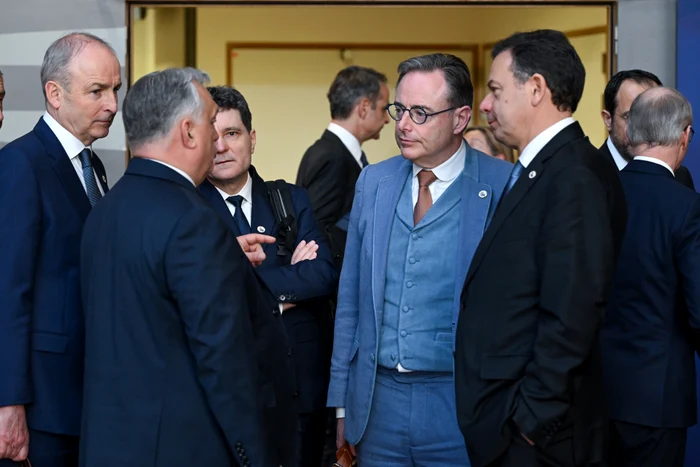
The pretext cited by Budapest is the dispute related to the Drujba pipeline, through which Russian crude oil reaches Hungary and Slovakia, passing through Ukrainian territory. Kiev claims infrastructure has been damaged by Russian attacks, while Budapest and Bratislava accuse it of delaying repairs.
“Until there is no oil, there will be no money” said Orban before the meeting of the leaders of the EU member states in Brussels.
The tension is all the more acute as the loan had already been agreed between the member states in December. The President of the European Council, Antonio Costa, described the deadlock as a violation of the agreements between the partners, a rare situation, as decisions agreed at the level of EU leaders are usually respected by all signatories.
Meanwhile, Ukraine is approaching a liquidity crunch. The government in Kiev allocates most of its revenues to defense, and without foreign aid it may have to cut funding to vital sectors or resort to printing money, risking severe economic disruption.
Beyond the technical arguments, analysts see an electoral calculation behind the deadlock: Orbán is on the march to the April elections, and the issue of Ukraine occupies a central place in his campaign speech. That is precisely why many European leaders prefer to avoid an escalation that could interfere with Hungarian domestic politics.
For now, 25 of the 27 member states support the loan and want to start payments as soon as possible, possibly as early as April. Without the agreement of Hungary and Slovakia, however, the decision remains suspended, and the prospects for a quick compromise seem remote.
Nicusor Dan: “It's unacceptable”
Hungary's decision to block the 90 billion euro loan intended for Ukraine was also harshly criticized by the president Nicușor Dan, who stated that there are still some premises for unblocking the negotiations.
“It is unacceptable for a decision already made to be called into question on a later event, no matter what this event is, because we know well what is Ukraine's point of view. On the one hand, the Union reaffirmed its support for Ukraine, from a procedural point of view, a team, precisely to resolve this dispute, a team of people from the European Commission and some member states are on the spot to assess the damage to the pipeline and there is a promise that, when the oil will starts circulating again, the loan is unblocked, that's the situation. So we expect that in a month, from now, the money will reach Ukraine”said the Romanian head of state, in a press conference.
Sergiu Miscoiu: “Antipathy towards Ukraine has been carefully cultivated since 2022”
Sergiu Mișcoiu, professor of political science and specialist in European affairs, sees an electoral calculation behind the blockade, given that early elections are scheduled for April 12 in Hungary. According to opinion polls, Fidesz, Viktor Orban's party, is in second place in voting intentions, ahead of Peter Magyar's Tisza party by around 10 percent.
“Hungary's decision is purely electoral, as you can imagine. The political battle is extremely important and, for the first time in a long time, undecided. Viktor Orbán is under electoral threat and is trying to focus his message on the Ukrainian issue, which is a real concern for his electorate. At the same time, there is also a strategic calculation: if the opposition were to come to power and take a more pro-European line, Hungary could lose Russia's energy support, which it still benefits from. Antipathy towards Ukraine has been carefully cultivated since 2022 by Orbán, who understood that it would become an effective campaign theme for the upcoming elections. Therefore, the whole positioning can be understood primarily in this electoral logic and does not necessarily reflect deep ideological convictions of the Budapest government”, explained the Political Science professor at Babeș-Bolyai University.
Miscoiu warns that, on a technical level, the EU's options to overcome Hungary's veto are practically non-existent in the current architecture.
“Otherwise, the technical solution is hard to find, because overriding a member state's veto in such decisions is not, at the moment, possible. The decision-making mechanism of the European Union was built in another era — for a much smaller community, based on consensus and solidarity. The scenario where a deadlock minority could paralyze the collective decision was not really taken into account then. In the long term, it is obvious that the European Union needs an adaptation It is difficult to accept that a single government can block a collective decision of this magnitude. Of course, this would mean a return to a “Europe of nations” in the sense that Viktor Orbán wanted. In the short term, however, the options are limited: greater political pressures on Budapest and the hope, present in some European circles, that after April Viktor Orbán will no longer hold the position of prime minister. says Sergiu Miscoiu.
The political scientist also identifies a deeper tension, visible in the way the summit projected a formal rather than real unity.
“I think there remains a considerable distance between what the European Union wants to be and what it can be in the current institutional configuration, taking into account the treaties and the global geopolitical context. There is a constant temptation, among several member states, to act separately. This type of summit projects, on the one hand, an image of unity, at least on a formal level, but behind the scenes there are difficult and sometimes tense negotiations to reach a common position.” mentions the political scientist.
On the other hand, in his opinion, the European Union definitely needs a reform of the way of making decisions, a fact proven by the blockages that have generated more problems in recent years. Even Romania was seriously affected from this point of view, being blocked by the Netherlands and then by Austria in joining the Schengen Area.
“If the European Union wants to overcome such blockages, a reform of the decision-making mechanisms will be needed. The intergovernmental structures, which currently dominate and can block the decision-making process, should gradually give way to stronger, truly supranational mechanisms. In the absence of such an evolution, there is a risk that all member states will lose ground in the current global geopolitical context. If the European leadership will continue to function exclusively within the current parameters, we will increasingly end up in such jams”, emphasizes Sergiu Mișcoiu.
Gabriela Ciot: “Events on the international and European scene do not wait”
Gabriela Ciot, professor of international relations and European law, starts from the same reading of the Hungarian domestic context to explain the position adopted by Viktor Orban.
“Nor can we expect a different behavior from the Prime Minister of Hungary, especially since he is in a campaign period, and the whole campaign is built on this political message. He now needs intense activity at the European level, to show that he is following the interests of Hungarian citizens.” explained Gabriela Ciot.
From a legal point of view, the European Union's leverage to overcome such blockages is extremely limited, although not non-existent in all circumstances.
“Quite difficult, because decisions are taken, exceptionally, unanimously. There have also been situations in the past when the Hungarian prime minister left the meeting room, and in that context the decision could be adopted. However, I am a firm supporter of the European negotiation and I believe that precisely this process, which is increasingly sophisticated, can lead to a result”. pointed out Gabriela Ciot.
However, the slow pace of intergovernmental negotiations is incompatible with the urgency of crises on the international scene, to which the European Union must adapt very quickly.
“Unfortunately, things cannot move very quickly, and events on the international and European scene do not wait, especially in the context of the current interdependencies. Therefore, a revival of the way in which decisions are made would be needed. If the European leadership will continue to function exclusively within the current parameters, established by the treaties, especially by the Treaty of Lisbon, we will end up in such deadlocks more and more often”. she points out.
In these conditions, points out Gabriela Ciot, the European Union should quickly rethink its way of adopting decisions.
“There is even a risk that some member states could use these mechanisms to exert pressure on the collective decision. Under these conditions, a rethinking of the decision-making process and a clarification of the direction of the European Union's evolution is all the more necessary. A more pronounced orientation towards federalism would facilitate decision-making, support European integration and strengthen political governance at the European level.” concluded Gabriela Ciot.