How the US has disabled its own effective weapon against Russian misinformation. He had also fought on the Moldovan front

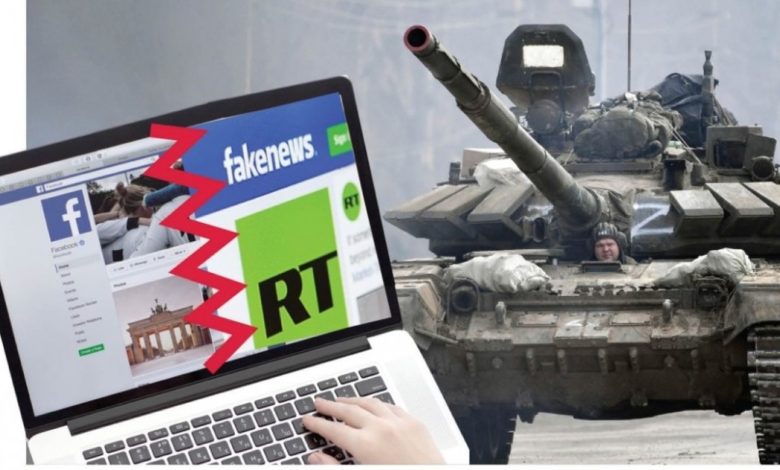
Russia spends billions of dollars annually to influence global public opinion and undermine democracies. However, the Trump administration has abolished the Global Engagement Center's global commitment center, the main US to combat Kremlin propaganda. The former head of the center, James Rubin, explains the consequences of this decision.
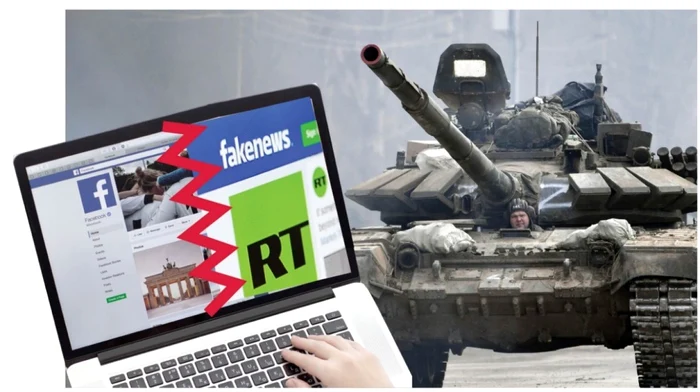
Russia has an entire misinformation/photo infrastructure: Archive
On the invisible front of the Information War, Russia is gaining ground. According to Western intelligence estimates, the Kremlin allocates over $ 1.5 billion annually for misinformation operations abroad – from the manufacture of false news to corruption to journalists and local politicians. But even when this threat reaches its peak, the United States made a surprising decision: they abolished their own weapon against Russian propaganda.
A strategic center sacrificed on the altar of internal policy
Global Engagement Center (GEC), the structure of the State Department that for eight years unmasked the subversive operations of Russia and China, ceased its activity in 2025. The Decision of the Trump administration was justified by the need to protect freedom of expression, but experts see in it a capitulation before the hybrid war.
“We closed my eyes alone while the enemy sends us computer projectiles”denounces James Rubin, former director of GEC, in an interview with The Kyiv Independent. Under its leadership, the center has revealed four major Russian misinformation operations in Latin America, Africa and the Republic of Moldova.
RT network – “long arm” of Russian services
The most important blow of GEC was the unmasking of the Russia Today network (RT) as a “central espionage and manipulation”. The investigations showed how the television station, presented as an independent news source, actually works as a recruitment tool for Russian secret services, cyber spy platform, collecting sensitive data and propaganda machine that discredited Western countries.
“We imposed sanctions to the parent company, banning its access to the global financial system. It was a measure that paralyzed the operations“, Explains Rubin.
The lesson in Moldova: How can propaganda be defeated
The Republic of Moldova was the theater of a decisive battle against Russian misinformation. In 2023, the Kremlin spent hundreds of millions of dollars to influence the parliamentary elections, using:
-Politic Politics paid by offshore accounts
-Rea of corrupt journalists who broadcast anti-EU narratives
-Fabrici by trolli who have flooded social media with pro-Russian messages
“But I won. By cooperation between the US, the EU and the Moldovan authorities, I exhibited the schemes and provided the victory of the pro-European forces”Rubin points out.
Africa – field of experiment for the worst manipulations
Rubin also talks about a concrete case in Africa, where Russia has tried to launch the theory-inspired by a novel by John Le Carré-that large Western pharmaceutical companies would test biological weapons on the local population. The purpose? Destroying trust in Western medicine and blocking the influence of the US “soft power” in the region.
In countries such as South Sudan or the Central Republic, Russia has tested this particularly treacherous tactic.
The campaign was stopped in the first weeks, thanks to the quick intervention of GEC.
“We managed to dismay the operation before catching roots. If you act in advance, you can stop the evil. But if the information spreads, you can no longer put the lie back into the Pandora box.”
Analysts warn that Russia exploits Trump's foreign policy changes to strengthen their positions. In Latin America, for example, Russian propagandists amplify the power of the American president, distort the official statements of the White House about Ukraine, promotes narratives that dig the Western solidarity.
“When American officials repeat the accusations of the Kremlin – that the War in Ukraine would have caused NATO – we involuntarily offer ammunition of Russian propaganda,” Rubin finds bitterly.
“The war at first Moscow. Not Kiev, not Washington, not Brussels. And anyone suggests something spreads the propaganda of the regime.”
Why was GEC sacrificed?
Sources inside the US administration suggest that the decision to abolish the center was influenced by:
-pressures from conservative groups who considered GEC a form of censorship, Trump's supporters in Congress, some of them tied to pro-Ruse lobes
– The narrative “America First”, which sees the combat of misinformation as a useless expense
“We have identified American groups directly funded by Moscow who lobbyau for delaying aid to Ukraine”Rubin reveals. These structures have managed to postpone the approval of military packages six to nine months – a major victory for Kremlin.
With abolished GEC, the United States is now facing a strategic dilemma: to create a new structure under the aegis of the Pentagon or the CIA, to outsource the struggle to European allies and private companies or to accept vulnerability to Russian computer attacks.
“The war in Ukraine has proven that the truth can be the first victim of modern conflicts. But without defense mechanisms, we risk losing the most important battle – that for people's minds.”Rubin concludes.
“We are in full informational war, but we disarmed ourselves” says the former US diplomat about Trump's decision to reduce the fight against Russian misinformation. “Americans have the right to agree with Russia. But it is fair to be told that the arguments they take over are those of a country that has invaded neighbors and spreading lies for strategic purposes,” he explains.
The lesson for everyone is: “Find out who tells you something. Do not believe it simply. Wait and see who the source of information is. Without a center like GEC, the US is fighting with a handed hand,” concludes ruby.