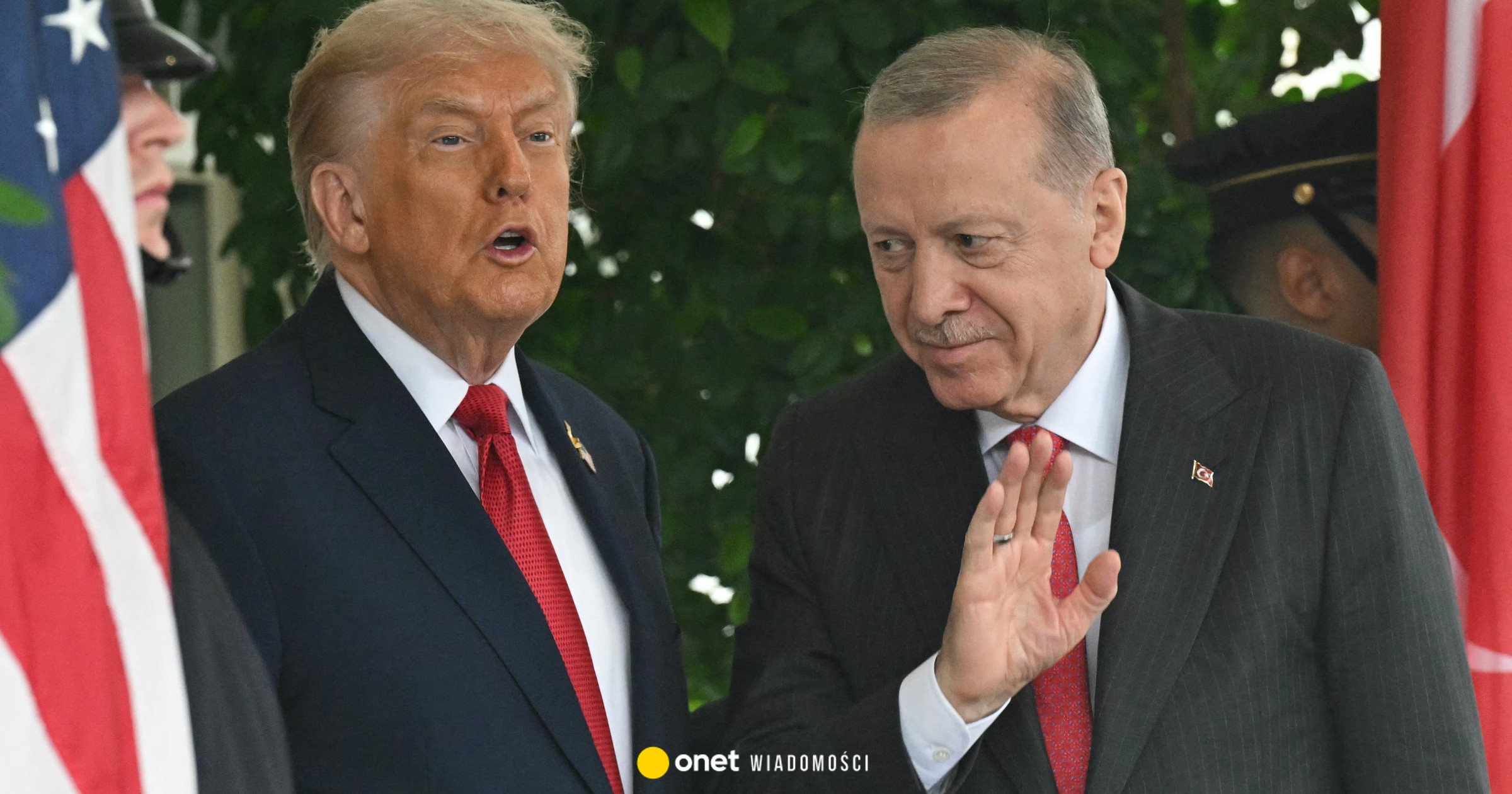
The former US diplomat says that although Türkiye is a key NATO member with the alliance's second-largest ground army after the United States, it does not automatically agree with every US policy decision.
— Being a NATO member does not mean that you have to agree to every whim of the United States, emphasizes Bryza, adding that Turkey's national interests do not fully coincide with Washington's interests.
He argues that Türkiye is angered by Iranian missiles over its territory but does not want to be drawn into military action against Iran.
Ramin Jabbarli, director of the American Foundation for an Integrative Society, emphasizes in an interview with the Kyiv Post that Turkey is particularly interested in avoiding instability in Iran, including any civil war scenarios.
In his opinion, one of Ankara's main concerns is that any attempt to use Kurdish armed groups against Tehran could accelerate internal disintegration and lead to destabilization in the entire region.
“This raises a deeper fear in Turkey: if Iran collapses, Ankara will be the first country to suffer the consequences,” Jabbarli says.
'I saw how reluctant Türkiye was'
Turkey's caution, Bryza notes, stems in part from its experience with the U.S.-led invasion of Iraq in 2003.
The war began on March 20, 2003, with a “Shock and Awe” bombing campaign followed by a ground offensive. At that time, Bryza served as director for Europe and Eurasia on the White House National Security Council.
In this capacity, he was closely involved in US policy towards Turkey in the run-up to the war, including efforts to obtain that country's consent to US troops opening a northern front in Iraq. This plan failed, and the Turkish parliament rejected the proposal in March 2003, emphasizing its reluctance to support a new war along its border.
The article continues below the video
— I was co-responsible for a diplomatic project aimed at persuading Turkey to agree to our request to invade Iraq through its territory. I saw how reluctant Türkiye was not only to support our plan, but also how hard it tried to convince the United States not to start another war on the border between Turkey and Iraq — Bryza recalls in an interview with a Kyiv Post journalist.
— The consequences for Turkey could be enormous: economic, political and humanitarian, including those related to refugees. Turkey's position will not change, and the United States can return home after this, he adds.
Bryza thinks that in his opinion the same pattern can be seen in the current conflict: Türkiye did not choose the war, behind the scenes it advised Washington not to start it, and now it is trying to limit the consequences by not getting drawn into military action.
Another Patriot system for Ankara
His comments come as the Turkish Defense Ministry said Wednesday that NATO was deploying an additional Patriot missile battery at Incirlik Air Base, just days after the third ballistic missile launched from Iran was shot down.
— In addition to the existing Spanish Patriot system stationed at this base, another Patriot system is being deployed, a ministry representative told reporters at the Turkish base near the city of Adana, as reported by AFP.
Ankara has been trying to acquire Patriot systems for years, but has never been able to purchase them and deploy them as its own long-term shield.
For former Turkish ambassador to Iran, Umit Yardim, the move has both political and military significance. He emphasizes that Iran has long warned against deploying Patriot systems in Turkey. — Patriot systems are being watched very closely by Iranian defense authorities because in their eyes they directly symbolize NATO's presence, Yardim says in an interview with the Kyiv Post.
Award for role in the Gaza Strip
In early March, the United States tentatively agreed to discontinue the criminal case in which Turkish state bank Halkbank was accused of participating in a multi-billion dollar operation aimed at circumventing sanctions against Iran.
U.S. prosecutors said Turkey's help in negotiating a ceasefire and releasing hostages in the Gaza Strip contributed to the settlement.
In a document filed in the U.S. District Court for the Southern District of New York, prosecutors stressed that resolving the case was in the “best interests” of the U.S. government, ending years of proceedings that have strained relations between Washington and Ankara.
Many analysts saw the move as a diplomatic gestureas Halkbank faced a record fine. Bryza notes that Ankara helped bring Hamas to the negotiating table, supported ceasefire efforts and helped free hostages in the Gaza Strip. This is part of the role Türkiye wants to play in trying to stay out of the conflict.
I’m Ashley Davis as an editor, I’m committed to upholding the highest standards of integrity and accuracy in every piece we publish. My work is driven by curiosity, a passion for truth, and a belief that journalism plays a crucial role in shaping public discourse. I strive to tell stories that not only inform but also inspire action and conversation.