US intelligence chief says Iran has not tried to restart nuclear program after June bombings. Statements contradicting those of President Trump

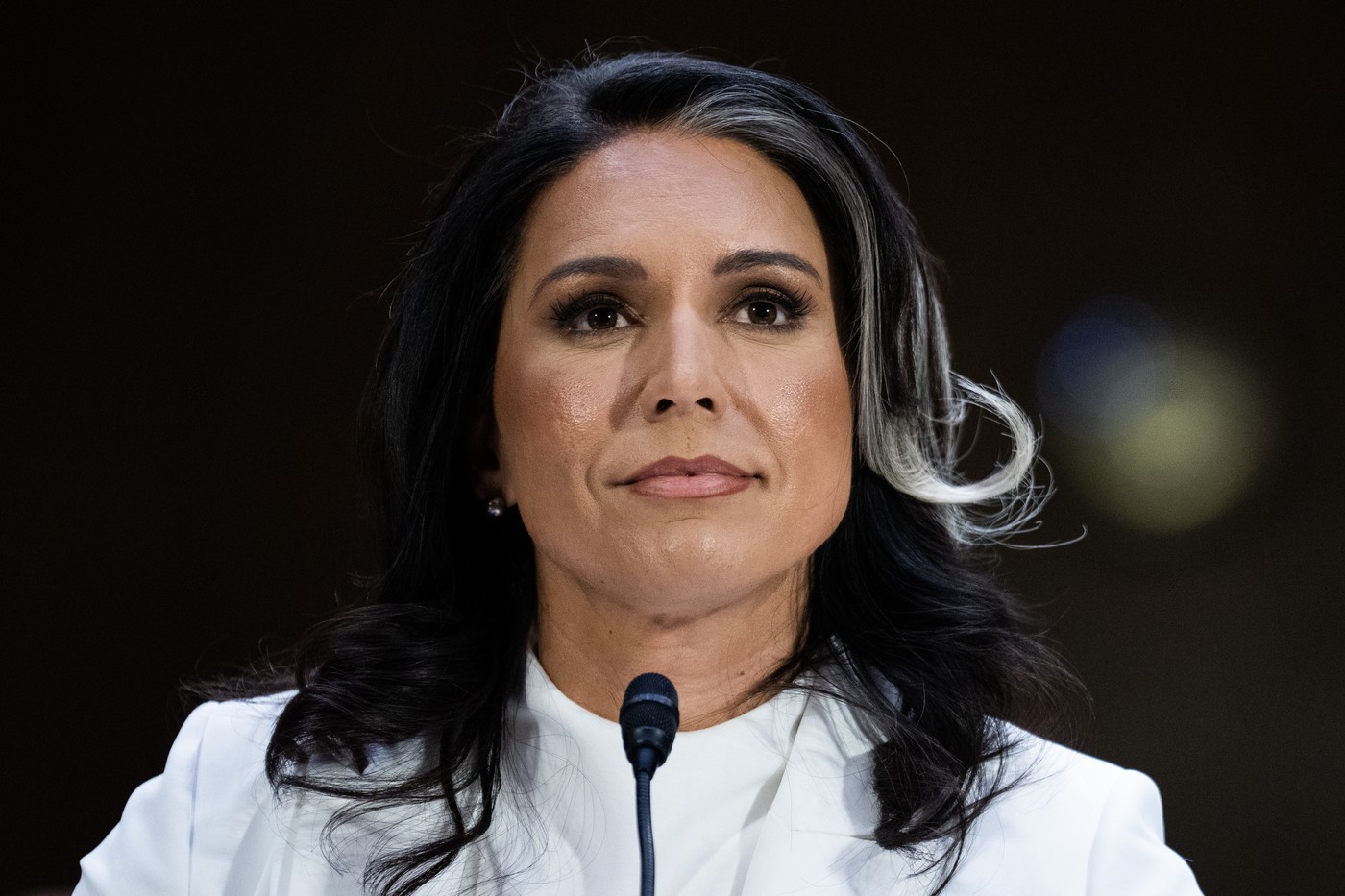
Apparently contradicting President Donald Trump, the director of the National Intelligence Service of the United States, Tulsi Gabbard, declared on Wednesday, at a hearing in Congress, that Iran did not try to rebuild its uranium enrichment program following last year's American strikes on Iranian nuclear facilities, during the 12-day war between Iran and Israel, writes News.ro. However, Donald Trump stated in recent weeks that Iran was trying to rebuild its nuclear program following the June 2025 operation and this was one of the reasons why the US, along with Israel, attacked Iran again on February 28, 2026.
“As a result of Operation Midnight Hammer (June 2025 – no), Iran's nuclear enrichment program was destroyed. No effort was made to try to rebuild its enrichment capacity,” Tulsi Gabbard, a close associate of Donald Trump, wrote in her statement to the Senate Intelligence Committee before her hearing. “The entrances to the underground facilities that were bombed were covered with earth and plugged with cement,” she added.
The top Democrat on the Senate committee noted, however, that Gabbard did not include that assessment in the statement she read aloud to the committee and asked if that was because she did not want to publicly contradict the president. Gabbard replied that he chose to leave out certain parts of the prepared statement because “time is running out.”
On the other hand, Tulsi Gabbard stated that, in the assessment of the US intelligence community, the Iranian regime “appears to be intact, but largely weakened by attacks on its leadership and its military capabilities.”
Domestic tensions will rise, Gabbard believes
“The intelligence community (IC) estimates that if a hostile regime survives, it will likely attempt to embark on a multi-year effort to rebuild its military, missile and drone forces,” Gabbard told the US Senate Intelligence Committee at a hearing on global threats. His comments come after a number of Iran's top leaders, including Ayatollah Ali Khamenei, were killed.
Gabbard said that before the start of US and Israeli military operations in late February, the IC assessed that “Iran was trying to recover from severe damage to its nuclear infrastructure during the 12-Day War and continued to refuse to comply with its nuclear obligations.” She did not, however, provide details on these recovery efforts or whether Iran has attempted to rebuild its enrichment capabilities.
“Iran's conventional military power projection capabilities have been largely destroyed, leaving limited options,” Gabbard said. The American campaign of “maximum pressure” through economic sanctions and the reinstatement of European sanctions have “significantly degraded” the “strategic position” of Tehran.
“The IC estimates that domestic tensions are likely to increase as Iran's economy deteriorates,” Gabbard said.
She reiterated her assessment that Iran “could use” existing technology “to begin developing a militarily viable intercontinental ballistic missile (ICBM) before 2035, should Tehran attempt to pursue this capability,” but said the assessment would be updated to take into account the impact of “Operation Epic Fury.”
Gabbard declined to say whether Trump had been briefed on the possible closure of the Strait of Hormuz
The director of the US National Intelligence Service on Wednesday declined to say whether she was asked to brief President Donald Trump on the possibility of Iran closing the Strait of Hormuz before the US launches military action against the country, CNN reports.
“I'm not going to comment on what the president asked me or didn't ask me on any subject,” Gabbard said in response to a question from Democratic Sen. Mark Kelly, a former astronaut.
Asked the same, CIA Director John Ratcliffe said that such briefings do not usually come at the request of the White House, but rather that intelligence agencies present important information to the White House as it arises. “There have been and continue to be (intelligence) analyzes regarding the Strait of Hormuz,” Ratcliffe said.
The Pentagon and the National Security Council significantly underestimated Iran's ability to close the strait in response to US military strikes while planning the ongoing US military operation, CNN reported last week, citing sources familiar with the matter.
White House spokeswoman Karoline Leavitt said Trump had been “fully briefed” on plans in the event of Iran closing the strait.
Later in the hearing on Wednesday, John Ratcliffe said that Iran had requested intelligence assistance from Russia and China, but declined to provide details on this in an unclassified setting.
Gabbard claims it's not up to her to determine what constitutes an “imminent threat”
The director of the US National Intelligence Service claimed on Wednesday in front of congresses that it is not her competence to determine what constitutes an “imminent threat”.
“The only person who can determine what is and what is not an imminent threat is the president,” Tulsi Gabbard said during the Senate hearing on global threats.
Gabbard's surprising statement, in an exchange of words with Senator Jon Ossoff, comes as the administration argued that Iran represented an imminent threat to the United States that required American military action.
“Was it the intelligence community's assessment that, despite the destruction, there was, I quote, an 'imminent nuclear threat' posed by the Iranian regime? Yes or no?” asked the Georgia Democrat. “It is not the responsibility of the intelligence community to determine what is and is not an imminent threat,” Gabbard said, explaining that the president makes such an assessment of imminence based on “the volume of information that he receives.”
“It is precisely your responsibility to determine what constitutes a threat to the United States. This is a global threat hearing where, as you mentioned in your opening statement, you present the intelligence community's threat assessment,” Ossoff replied.