Policeman confession. “The smell of the decaying body stays on the clothes”

You can feel the smell before I get to the door. Sweet, musty, sharp. A hard smell that settles on my face. I am 22 years old, I am a newly baked policeman and I have no idea what awaits me. The skyscraper in the middle of the Ruhr Zagłębie, nine floors, linoleum corridors, gray doors, for each of them life. Or not.
On the fourth floor, larvae crawls under the door.
It takes a long time before we manage to open them. A man lies behind the door. Or rather, what is left of it. Half of the body is in a tiny toilet, half in the corridor. He used to be alive. He had a chance, dreams, maybe fate hurt him. I don't want to accept that someone was born to finish.
It is black, surrounded by a fluff. The skin looks like rubber. I have to go over him to get to the apartment. I breathe as shallow as I can, but the smell reaches my nostrils.
For many weeks, no one reported the disappearance of a man lying on the floor. He just died – alone. The smell of decay remains on my skin, in my hair, on notes and clothes for many hours. I feel like I swallowed a piece of his body.
At that time I didn't know how much death would come. Today I am 61 years old and I am a senior criminal police inspector.
Images that cannot be erased from memory
The police are always called when something that others do not want to see. When people die, disappear, break down, fall into despair. We are usually the first at the scene. We go over the corpses, search the apartments that no one would enter voluntarily. We see what others displace from memory. And we carry what we have experienced. Some paintings pale with time, others remain as if everything happened yesterday. And with memories voices, looks, smells. I had to learn to live with it. I had to learn to keep a distance.
Why did I become a policeman? I don't know exactly to this day. Perhaps she motivated me justice. I wasn't even four when I objected to my aunt, because in my opinion she unfairly treated her daughter.
I was 16 when I started thinking about my future work. I dreamed of photography and design. But I didn't know how to achieve it. My family had a practical approach to life, my father was a craftsman. For him, the survival of the day mattered, not passion. The road to creative competitions seemed closed.
The uncle of my then girl was a policeman. Thanks to him, this profession became real for me. It was clear that I would not go to the army. I associated with blind obedience and ordering. To this day, I am convinced that my analytical and critical nature would not work in the then army. And the army would not work in my life. In this way I came to the police. At that time, those who joined the police service did not have to perform military service.
Meetings with death
The reality of the profession exceeded everything I imagined. I was a patrol policeman, a reserve policeman, investigator, project manager, head of 40 employees. I saw interventions from every perspective. However, death had the greatest influence on me. Corpse. Accidents. Suicide. Meetings with loved ones of the dead.
I remember a young woman, 35 years old. She lay naked on the kitchen floor. To see the scene, I had to go over her dead body. I have never forgotten this situation. I was infinitely sorry for her. I was ashamed that I had to look at her. Did she think before that a stranger would ever see her?
Even more difficult to bear was the sight of her two daughters, they were seven and 10 years old. Terrified and helpless, they sat in the living room of a tight, well -furnished apartment, which was their safe home a moment ago.
I felt the need to take them. To the place that would allow them to forget about everything that happened. Instead, we had to question them because at the time of death they were the only people in place. What happened?
The sliding door to the bathroom that led from the kitchen was clearly damaged at the height of the lock. The girls cried and said that the whole family – father and husband at the time of the woman's death was still at work – wanted to go to the nearby camping field for the weekend. I saw fresh underwear arranged in the basket. The mother wanted to take a bath before leaving.
Suddenly there was a power failure and the girls ran to the bathroom. They cried and knocked, but the mother did not answer. Daughters apparently panicked and desperately tried to open the door with various items. They used scissors, a knife, a screwdriver. They failed.
Finally, they contacted the father who was at work and called on the fire brigade. A few minutes later, an ambulance doctor found the death of a young mother as a result of electric shock. The woman used a hair dryer in the bathtub. A picture emerged from conversations with the family that she could commit suicide. This could not be stated with complete certainty.
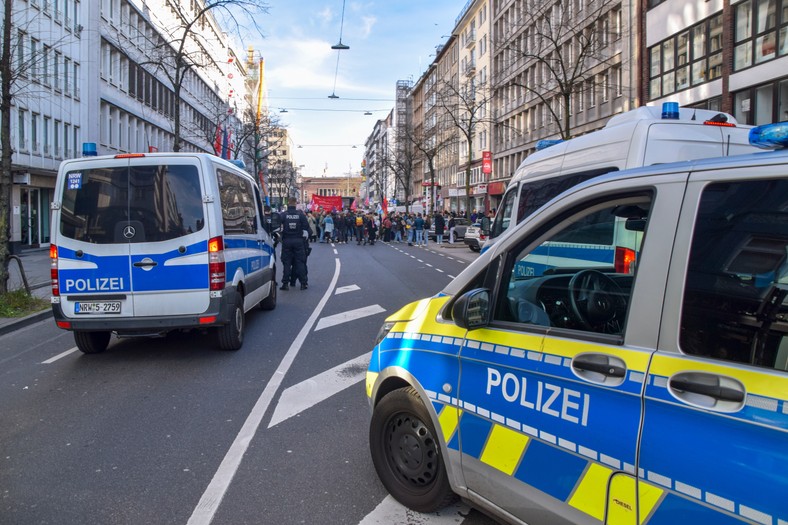
Action of the German police in Dusseldorf, an illustrative photo
“Shoot them all”
There were many such interventions. People who died alone or of their own will. Men, women, children. Notes left, unexpected meals, neglected rooms. Some relatives of the dead broke, stared at the void or cried and threw themselves into my arms.
She accompanied everywhere violence. Especially domestic violence. I especially remember one night. The woman and the man stood opposite each other on the street. He screamed, she cried. We were experienced and tried to alleviate the situation with words. Suddenly the man hit his wife in the face. My colleague and I knocked him down. When we put him in a police car, his wife ran from behind and shouted: “My husband! What do you do to my poor husband?” She grabbed my finger and bending him. However, I did not want to use the force of the woman we tried to protect, although it would be necessary to defend. I still feel pain to this day. She was so involved in this treacherous bond of alleged love that she had forgotten about herself.
I also experienced other fronts. Demonstrations, aggression from all sides. During one of the events in Berlin, passwords were first chanted, then stones and bottles flew. One crashed my knee, my friend's next helmet next to me. Someone shouted in my face: “Take machine guns and shoot them all. It wasn't for Adolf!” I shouted to keep his Nazi nonsense for himself.
Surrounded, threatened, hated – both by the left and the right. A policeman's work is often being in between. Between enemy paintings, projections, contempt. Between the victims and the perpetrators. Between order and chaos. Between corpses and broken hearts. Between murders and misunderstandings.
Lifebuoes
You have to endure it all. Somehow. I learned not to take too much home early. Do not allow everything to yourself, but at the same time not to become indifferent. It's a thin border. Sometimes he helped black humor. Sometimes silence helped. And sometimes a walk in the bosom of nature. My salvation was photography, travel, books – just not crime. I hate them. They have too little to do with reality.
The same applies to criminal films. Usually, after a few minutes I have to turn off the TV or – because my wife likes them very much – take care of something else because I don't want to spoil her with too many comments.
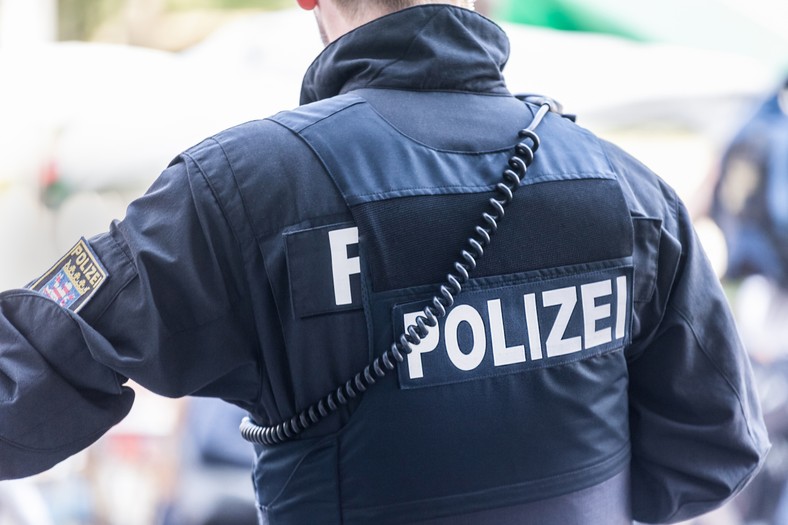
German policeman, illustrative photo
Working in the police allows you to look into the hidden corners of society. I saw many appearances and little reality. Also, and sometimes primarily in “good homes”. There is actually nothing that would not be – only the nuances and ways of expressing differ.
Some things never gave me peace. Children living in broken families. Those who said: “Help me”. And I knew I couldn't just take them. I wrote reports, reported matters – but many of them disappeared in the system. This helplessness hurt me.
All the pages of the profession
There are also better sides of my work. An old lady on a bus who forgot where she lives. How she patted my hand when I calmed her at the station. Or a little boy with big eyes who asked if he could get into the police car. A family who thank you for your help. The duck family, which we saved from the national road – chicks in my hat.
I have experienced all the pages of this profession for over 40 years. Difficulties. Helplessness. Anger. Gratitude. Colleagues who stayed and those who left. Good bosses. Bad. Painful interventions and those that fill with pride. I was often frustrated, but never indifferent.
The public has changed. The police once had more support. Today, distrust, criticism, indignation fueled by the media, is often found. I know we have to justify ourselves. But I would like it to be more distance. More understanding for what it means to take responsibility when others run away or look away. Making decisions in a second, sometimes with the consequences that change life.
I will retire soon. When I look back, I don't feel bitterness. I feel gratitude for experience. For the trust I was given to me. He builds the trust of people. I looked where others looked away. I did what was necessary – often in silence. I was where others came from a long time ago. And I remained a man. I didn't become bitter. I didn't get cynical. The same is a small miracle in itself.
What I experienced in my work changed my view of my life. It is very fleeting. There is nothing left.
When I think about many of the dead I saw, I remember above all what happened next. Silence. Questions. Others alive. And my promise: I won't forget about you.