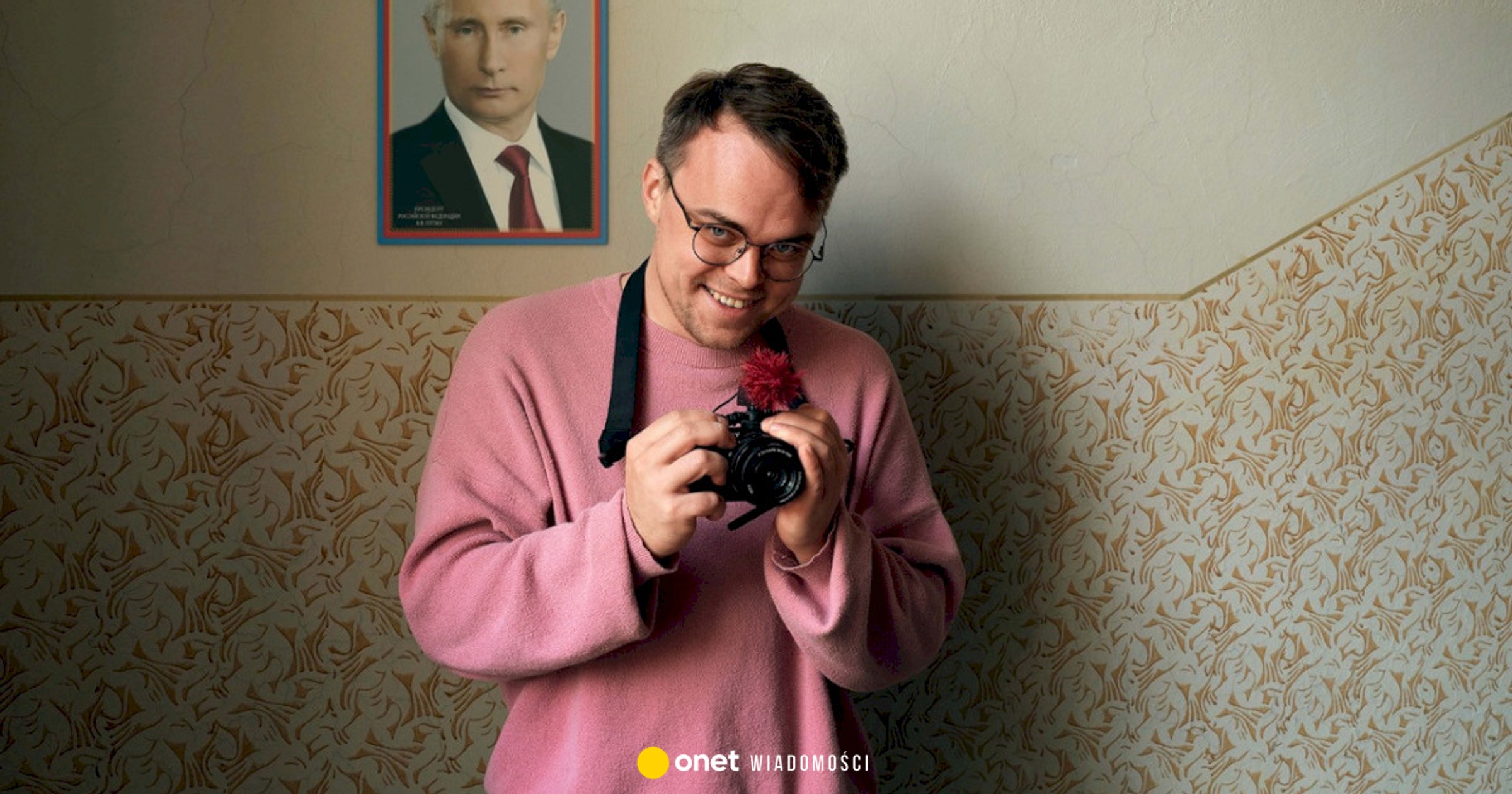
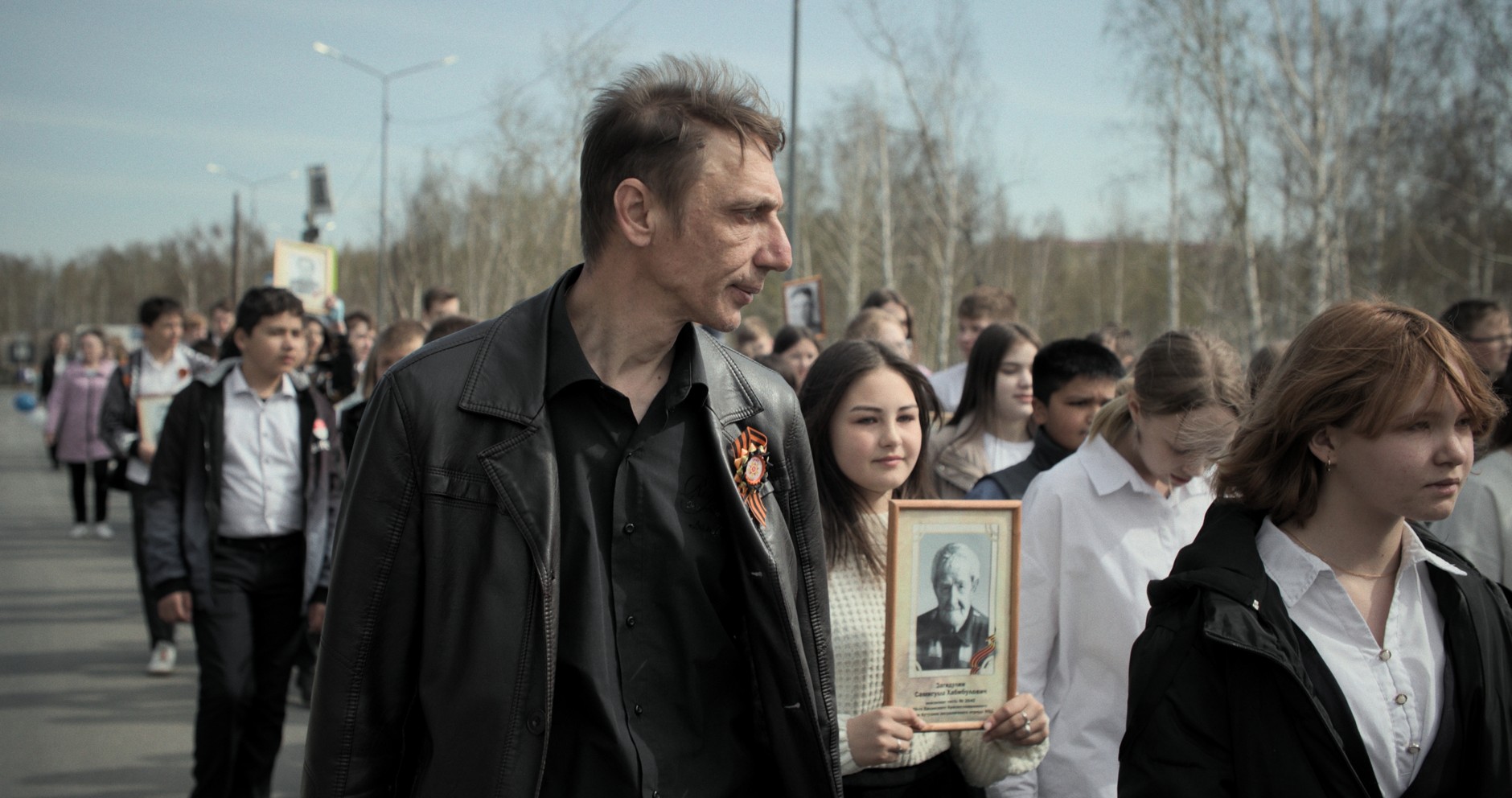
The plot is simple: in an ordinary provincial school in the city of Karabash in the Chelyabinsk region, Pavel Talankin works as a teacher-event coordinator and videographer. Open and willing to establish relationships with studentsquickly becomes the soul of the school and gathers around itself a group of active young people who, despite the dullness surrounding them, want to develop artistically.
Paul, of course, agrees – in the name of art, of course. In public, he continues to spin and organize the same propaganda, but behind the closed door of his office, he transforms into a fighter against the regime and records penitential monologues about how no one in this city understands him.
First, let's look at the moral side of this story – Talankin deceives all the characters in his film, convincing them that he is making the film on behalf of the Russian Ministry of Education. Once he goes out and shows the film to the public, he explains that it was even better that way — because if he had to ask all the characters for permission to show their faces and personal stories, they would all be arrested.
This is just sheer fraud. It must be made clear: using personal trust to collect materials and then showing them to Western audiences without asking is a moral transgression. In the Czech Republic, where Paul currently lives as a hero of political resistance, for showing images of dozens of minors without consent, he would most likely not avoid a serious prison sentence. And it would be completely reasonable.
Resistance to show
Now the most important thing – the image of Paul himself, whom the film carefully presents as a “lonely hero” secretly fighting the regime. We get some “evidence” for this:
- a white-blue-white flag of “Russian democratic resistance” hangs in his office;
- during one of the assemblies, instead of the Russian anthem, he plays a song by Lady Gaga;
- in an empty school he sticks X-shaped crosses on the windows – supposedly “a sign of support for Ukrainian refugees”;
- at night he turns off the screens in the local library that show a film he made (sic!) supporting the war and “veterans”;
- one day he heroically kicks the Russian flag on the school roof.
I can honestly say that all these situations are cowardly stagingmade for future, sensitive viewers, and probably no one except Paweł saw it. Take, for example, the flag of “Russian democratic resistance”, thanks to which – as Paul himself says at the end of the film – “fewer and fewer children began to come to him for fear of repression.”
But there is one inaccuracy – we only see the flag in the office when Paweł is there alone. In all scenes with students or colleagues, there is no flag on the same wall. So this whole “heroic resistance” thing is about pulling out an opposition flag from under a desk in a closed room and showing it to the camera.
Something else on the forum. In public, Paweł is a conscientious worker — she watches flag waving, talks about important matters and passionately practices saying the word “de-mi-li-ta-ry-za-tion” with her teacher. He filmed marches of “veterans of special military operations”, classes conducted by the Wagner Group for students, and politely agreed at all pedagogical councils.
His public “rebellion” is limited to loud shouting at his mother, who works in the library, and who is then sealing old textbooks. – He's an idiot! – exclaims Pavel, probably referring to Vladimir Putin. Then he leaves the library and starts editing another film about the “SOW heroes”.
What do we actually see? We see a figure as if from a German concentration camp: an officer who… under the guise of opposition activities, he films his colleagues persecuting another group of prisoners and explains to everyone that it is a report for Goebbels' office. Locking himself in his office, he curses Hitler and puts on a headband with Nazi symbols for the camera.
And then he goes out, gives a few kicks to the prisoners who were staring, and on the spot reports to the representative of Goebbels's office that “ideological work is being carried out in accordance with the recommendations of the National Socialist Party.” Western audiences marvel at these acts of moral exhibitionism: look what a heroic man – alone against the regime.
“We were forced.” Definitely?
What Paul and his supporters don't seem to understand is that the main reason why militaristic propaganda was able to triumph in Russian schools is not because of the fanatical historian Abdulmanov, who truly believes that Russia is fighting neo-Nazis in Ukraine. At least Abdulmanov has some principles — even if they seem extremely nasty to us.
Historian Abdulmanov with students. A still from the movie “Mr. Nobody vs. Putin”Pavel Talankin / mat. press releases
The main reason for the victory of militaristic propaganda in Russian schools (as well as the real sentences for many of those who dared to openly oppose the war) are teachers such as Pavel Talankin. Those who in the spring and summer of 2022 cursed in the kitchen and hung out opposition flags in empty offices, and then they did their job diligently, supporting the government's propaganda.
The words often appear in the film: “we were forced”, “they ordered us”, etc. This is significant. The main flaw of this film is that it legitimizes the everyday, unethical behavior of “ordinary teachers” such as Paweł, who were allegedly “forced” by someone.
No one would expect Paweł to run around Karabash with anti-war banners. For him and others like him, it would be enough to quietly and silently say to his superior: no, I won't do it. And that's it. He would face no penalty for this, except simple dismissal.
If he had refused to record all these “conversations about important matters”, if a few more teachers had refused to conduct them – quietly and without publicity – perhaps the boys from this school in Karabash who would die there would not have been sent to war. Because children and their parents would see that something is wrong here, since teachers – respected people! — refuse to participate in these activities.
It is said that It is enough for good to do nothing and evil will triumph. Pavel Talankin showed this very clearly in his film “Mr. Nobody vs. Putin”. He probably didn't understand what he had done. Otherwise, he would have titled his film “Mr. Nobody for Putin” – that would have been more honest. It is because of the passivity of such “Mr. Nobody” that Putin won the fight for the domination of his narrative in Russian schools – not because Abdulmanov acted (because did anyone expect him to remain silent?), but because Talankin did nothing.
However, it turned out to be a moving film. The man did not prove to be a worthy teacher, but perhaps the director will become so with time.