Hundreds of tankers anchor off the coast of the Persian Gulf. They serve as floating reservoirs for the Gulf states – many onshore storage facilities are already full, so oil producers must move their supplies offshore.
Ship traffic in the Strait of Hormuz has been disrupted for over 12 weeks. A longer shutdown of oil sources for this reason is risky. Underground reservoirs are under natural pressure, which moves oil into the wells. If this pressure system becomes unbalanced, there is a risk that the source will permanently supply less oil.
Before the war (USA and Israel with Iran), the coastal countries of the Persian Gulf sent about 20 million barrels of oil every day. According to the International Energy Agency, the current crisis is already greater than the oil crisis of 1973. For now, it is difficult to predict when it will end.
The Gulf monarchies, whose prosperity depends largely on oil and gas exports, no longer want to accept this uncertainty. To take away Iran's advantage in the Strait of Hormuz, they are working intensively on new transport routes.
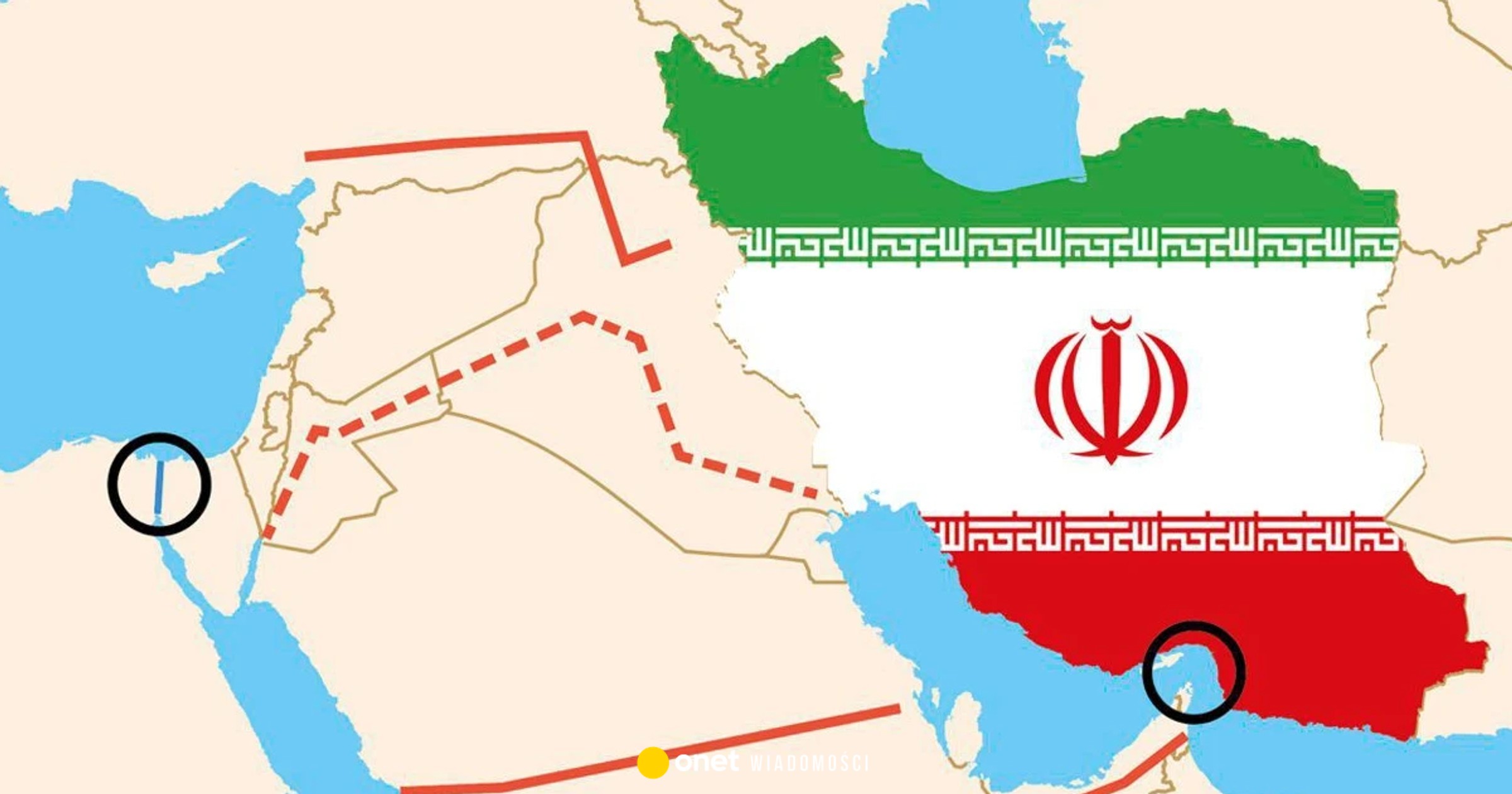
The United Arab Emirates (UAE) has decided to build a new pipeline. It is intended to transport oil from Habsan in the west of the country to the eastern port city of Fujairah on the Gulf of Oman. Thanks to this, the Emirates will be able to export oil without having to pass through the Strait of Hormuz. However, Fujairah is not completely safe: since the beginning of the war, there have been several drone attacks there, for which the UAE blames Iran.
Since 2012, the United Arab Emirates has already been operating a 370 km long pipeline on the same route. Up to 1 million 800 thousand can flow through it daily. barrels. The new pipeline is to run parallel to it and double the capacity to 3 million 600 thousand. barrels per day. It is scheduled to be ready in 2027.
The announcement came shortly after the UAE left the Organization of the Petroleum Exporting Countries (OPEC). This step freed the country from the mining limits to which the organization's members commit.
The Emirates built the first pipeline in 2012 because they expected Iran might one day block the Strait of Hormuz. Relations between the two countries have long been considered tense. Since 1971, Iran has occupied the islands of Tunb and Abu Musa in the Persian Gulf, to which the United Arab Emirates also claims. Moreover, in 2020, the Emirates became the first Gulf state to officially recognize Israel, Tehran's archenemy.
Also Saudi Arabia began building the Petroline pipeline to bypass the Strait of Hormuz in the early 1980s. The pipeline, also called East-West, was built during the Iran-Iraq war when Saudi tankers came under fire in the strait. It is approximately 1,200 km long and connects the Abqaiq refinery in the eastern part of the country with the port city of Yanbu on the Red Sea.
Two parallel pipes can transport 7 million barrels of oil per day. However, Saudi Arabia currently exports only less than 5 million barrels. This is due to the fact that the transshipment capacity of the Yanbu port is limited and the country itself consumes significant amounts of this fuel.
The export route through the Red Sea also has its pitfalls. Tankers taking the fastest route to Asia must pass through the Bab al-Mandab Strait off the coast of Yemen. In this southern mouth of the Inland Sea, Yemen's Houthi militia is constantly attacking ships. The rebels are considered allies of Iran.
If tankers choose the safer route through the Suez Canal instead, they lose a lot of time. On this route, they must sail around Africa and then reach Asia through the Indian Ocean. Shipowners need more staff and fuel for this. Moreover, insurance premiums are rising. The additional costs amount to up to one million euros per vessel.
The export routes of the UAE and Saudi Arabia are therefore unable to fully compensate for the losses in the Persian Gulf, and are not free from other threats. Nevertheless, both countries benefit from higher oil prices.
It is much more difficult for the countries of the Persian Gulf that have no access to the sea far from it. These include in particular: Kuwait, Bahrain and Qatar, which would have to build new pipelines through neighboring countries. This would require complex political negotiations. According to expert estimates, construction would take at least three to four years. Bahrain is also heavily in debt and finds it difficult to afford large investments.
Iraq, on the other hand, uses an old pipeline from the 1970s that transports oil from the north of the country to the Turkish port of Ceyhan on the Mediterranean Sea.. However, it has been closed in the meantime and is in such poor condition that currently only 250,000 water flows through it. barrels per day – even though it is actually designed for 1 million 500 thousand. Before the war, Iraq exported 3 million 400 thousand tons every day. barrels through the Persian Gulf.
“Although the current export volume cannot compensate for the losses in the south, the financial gain is quite significant thanks to high oil prices,” said Nizar Ali of the state-owned Iraqi oil marketing company in an interview with the German website Tagesschau.
Baghdad has now announced a major new Basra-Aqaba pipeline projectwhich will transport oil from the south of the country to the Red Sea to Jordan. Later, branches to Mediterranean ports in Turkey and Syria may appear. However, according to estimates, it will take years before the planned 2 million 500 barrels of oil per day flow through it.
The article continues below the video
The renaissance of freight trains
In the meantime Iraq switches to road transport. On some days, more than 400 trucks laden with oil set off for the Syrian seaport of Banyas. Syria charges transit and clearance fees for this – a welcome source of revenue for a country that is in the economic recovery phase after a civil war.
Since the beginning of the war Saudi Arabia and the United Arab Emirates are increasingly using freight trainsto transport endangered cargo from the Persian Gulf coast to safety. By 2030, a large infrastructure project is planned to connect six Persian Gulf countries with a railway network. These routes are intended to transport other industrial goods, but theoretically they could also be used to export oil.
However, neither rail nor road transport comes close to previous export volumes and is much more expensive than transport by pipeline or ship.
For now alternative routes therefore remain limited. Up to 7 million barrels of oil a day can now be exported through Saudi Arabia, the United Arab Emirates and the Iraq-Türkiye link – about one-third of the region's pre-war level. With a second pipeline from the Emirates to Fujairah, scheduled to launch in 2027, this volume could increase to over 8 million barrels.
The Persian Gulf countries have realized that in the long term they need to reorganize their export logistics. Experts doubt the region will return to… status quo ante (Latin for previous state of affairs), even if ship traffic through the Strait of Hormuz normalizes again. Most Gulf monarchies have the financial resources to build large pipelines. If they show the political will to implement these plans now, they could significantly diversify their oil exports in the future.
I’m Ashley Davis as an editor, I’m committed to upholding the highest standards of integrity and accuracy in every piece we publish. My work is driven by curiosity, a passion for truth, and a belief that journalism plays a crucial role in shaping public discourse. I strive to tell stories that not only inform but also inspire action and conversation.