Modern cars have become increasingly complex digital devices with extensive remote communication capabilities, and malware attacks can target not only the vehicles themselves, but also the systems to which they are connected, cyber security specialists.
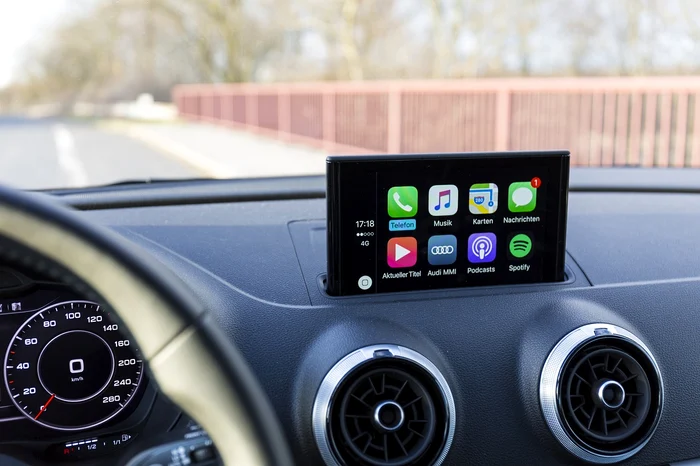
Modern cars have become increasingly complex digital devices. Archive photo
In 2026, attacks carried out by financially motivated malware actors will continue, mainly using ransomware, cyber security specialists warn, stating that the goal of such attacks is to encrypt victims' files, systems or entire networks, making them inaccessible, so that later the attackers demand a ransom (usually in cryptocurrencies) in exchange for providing the decryption key or restoring access. Also, Kaspersky specialists add, new data leaks (including confidential user data and information about vehicle movements) from car manufacturers' infrastructures may be revealed.
Another important vector is supply chain attacks by compromising contractor systems to disrupt critical systems and cause financial loss. Regular security audits identify vulnerabilities that can be exploited for such attacks. In the following we present the main problems identified by specialists.
Attacks on taxi infrastructure and transport and logistics companies
- Theft of personal data and disruption of critical systems.
Financially motivated attackers are mainly interested in users' personal data and access to their accounts. Ransomware attacks aimed at disrupting critical systems and causing financial loss to companies are also possible.
- Remote car locking.
This is a major risk because car sharing and taxi companies install modules in their vehicles that allow, among other things, remote locking at any time. If attackers gain access to the control system of these modules, they can block the machines en masse, for example, for ransom or sabotage.
- Hacking the systems of transport and logistics companies and interception of goods.
Another potential risk vector is attacks on transport and logistics companies to later intercept orders and physically steal the goods. In the context of digitalization of supply chain processes, attackers can physically steal goods without leaving cyberspace. They can remotely compromise systems and manipulate delivery data to redirect goods to a specific address for later resale.
Attacks on refueling and charging stations for electric cars
The digitization trend does not bypass the power infrastructure. Modern refueling and charging stations for electric vehicles are designed to be connected to cloud infrastructures. This opens up numerous opportunities for attackers. By 2026, attacks on these cloud infrastructures are possible, with the aim of directly stealing fuel or electricity, as well as customer data such as personal information or fuel card details.
How cars can be stolen
Globally, more and more modern, computerized vehicles with numerous electronic control units (ECUs) are being produced, and attackers will continue to exploit implementation errors and vulnerabilities to steal vehicles.
A recent example is when attackers were able to connect to the CAN bus of a major manufacturer's vehicles via a headlight, subsequently gaining access to the engine's ignition system. Experts expect new vulnerabilities used for car theft to be discovered in 2026. Entry points can be any accessible interface: CAN bus, OBD port, Ethernet port, NFC module, Wi-Fi and Bluetooth chips, and LTE modem.
Modern in-vehicle computing systems are connected directly or indirectly to the Internet, making attacks against them only a matter of time. To create attack-resistant systems, security principles should be integrated from the design and development stages. This will reduce some of the risks and decrease the likelihood of exploiting vulnerabilities. In addition, risks can be reduced by conducting periodic security audits to quickly identify and fix vulnerabilities, as well as by installing specialized solutions with protection against ransomware and other types of malware on endpoints in office and industrial networks.