Used textiles can be recycled, i.e. convert into other products. According to experts from the Lodz University of Technology, business potential is large, but research is needed. However, the most important thing is to change the awareness of citizens – convincing them that the collection of textiles makes sense.
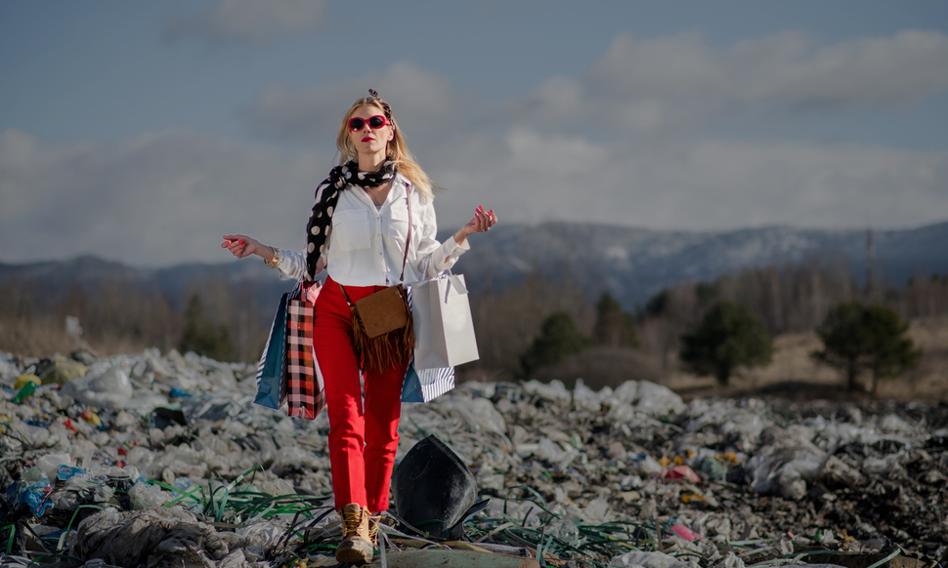
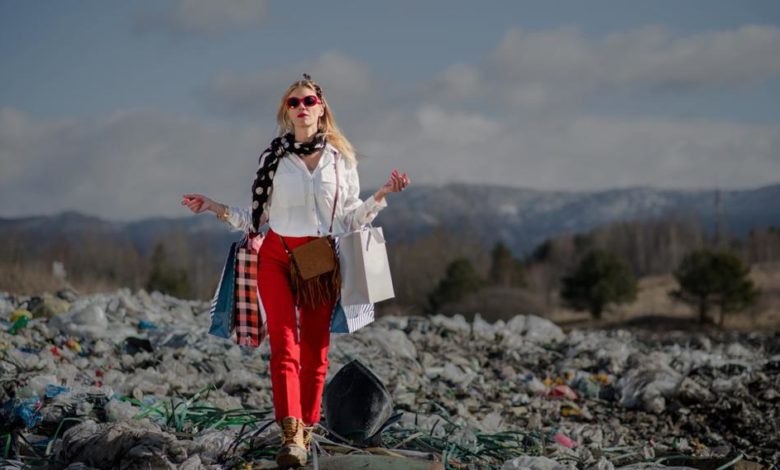
Reports of the European Environment Agency show that in the EU citizens buy 8.5 million tons of clothes, textiles and shoes annually. This means that The average European or European supplies about 19 kg of such products annually – as much as it will fit in a medium -sized suitcase. In 2021 – when there was no EU obligation yet – only 2.3 kg of textiles per person managed to give in a selective collection annually.
In Poland, since January 2025, used clothing and textiles are sorted as a separate waste faction. They should be put to selective municipal waste collection points (PSZOK).
“Last year, the vast majority of textiles went to mixed waste containers, where it was dirty with fats or other organic impurities. These materials were not suitable for reusing, so they simply went to the incineration plant. The possibility of recovering textiles was really small,” said Dr. Anna Bacciarelli-Ulach from the material technology and design department Textiles of PŁ.
The segregation of textiles is a constant challenge in recycling. Such waste must be divided into factions, including Natural plastics (e.g. 100 % cotton), plastics, mixed materials, footwear.
“PSZOK-i should segregate textiles in terms of raw material, but our diagnosis shows that they do not have enough knowledge in this respect. Anyway, few people know it. At the department of employees, employees may be able to recognize the material of clothing based on touch, but this is a skill that is difficult to expect from every PSZOK employee”-explained prof. Katarzyna Grabowska, dean of the Faculty of Materials Technology and Textile Design of PŁ.
In her opinion, however, either continue to segregate textile waste by hand – which is tedious work – or the systems that will do it automatically should be introduced.
Team, among others He is working on this as part of the EU Aidesigntex project. As part of it, a system of a system that allows automatic segregation of textile waste using artificial intelligence is to be created. To this end, researchers collect data on the raw material composition of various textiles and train neural networks on them. The project is still at an early stage; It is to last three years.
Researchers added that other projects are also underway in Europe regarding the use of NIR technology to automatically recognize raw materials, but for now they are only in the research phase.
The methods of developing individual textile waste fractions are different. As for the processing of materials from 100 percent. Cotton, you can make more cotton products from them. Students from the NED pointed out that when recycling, cotton fibers are significantly reduced and they cannot be used in any applications. You can produce a cleaner from them (i.e. the material used in industrial plants and in service workshops to wipe significant dirt with lubricants, oils, paints, etc.) or a regular T-shirt, but no jeans, for example.
When recycling cotton fabrics, one of the main challenges is to remove all elements made of other materials, such as buttons, tags or sliders. As scientists explain from the Lodz University of Technology, most of the textile recycling companies, this process is still done by hand – requires precise cutting of small details, which is time consuming and expensive.
An additional problem is the seams – Even in clothes made almost entirely of cotton, polyester threads are usually used, which are more durable and flexible than cotton. Although their participation is small, they can interfere with the further recycling process, especially if the goal is to obtain a uniform composition raw material.
Among the fibers used in the European Union or yarn as much as 58 percent. They are synthetic fibers, i.e. made of plastic – mainly polyester, nylon or acrylic. Their widespread use in the clothing industry results, among others with durability, flexibility and lower production cost compared to natural fibers.
Dr. Bacciarelli-Ulach explained that although the production of synthetic fibers consumes much less water than e.g. cotton cultivation (20-50 liters per 1 kg of synthetic fiber vs. up to 20,000 liters per 1 kg of cotton), their impact on the environment is significant for other reasons. The processes of producing these materials are energy -consuming and based on fossil fuelswhich translates into a higher carbon mark (on average 5.5-9.5 kg of CO2 equivalent per 1 kg of fiber, while for cotton it is about 2-4 kg of CO2).
An additional challenge related to the use of synthetic fibers is the emission of microplastics. According to the data of the European Environment Agency, thanks to the textile industry, it goes to the environment each year from 1.6 to even 61 thousand. tons of plastic microparticles. The microplastic is released primarily during the use and washing of clothes made of plastic. During each fabric washing cycle, microscopic fibers break away, which go to sewage. Since sewage treatment plants are not always able to stop them effectively, they go further – to the rivers, seas and oceans.
Despite these challenges, textiles made in 100 percent. from one type of plastic – such as Nylon tights or fleece clothes with PET – have much greater recycling potential than mixed materials. In their case, it is possible to use advanced technologies, such as chemical recycling, which allows you to spread the material into primary raw materials and re -use them in the production of new fibers.
However, the biggest challenge is textiles made of a mixture of various materials, and this applies to a significant part of the clothes available on the market. Even fabrics such as denim from which jeans are sewn often contain admixtures of synthetic fibers, e.g. elastane. An admixture of any raw material becomes a challenge in recycling, because the separation of ingredients is difficult and expensive.
Dr. Bacciarelli-Anra noticed that the textile industry and consumers are very eager to use clothing made of raw materials mixtures. The combination of various fibers gives fabrics the right properties, e.g. flexibility, softness, less tendency to crush. In her opinion, these types of materials are unlikely to disappear from the market, so you have to learn to process them.
The recycling of footwear is also a challenge. “However, you can see the potential, e.g. how can you recycled with polymer soles” – noted prof. Grabowska. There are no ready solutions yet. Shoes are often made of many materials, the separation of which is technologically difficult and sometimes unprofitable, so for now it is sometimes more profitable to return this type of waste to the incineration plant.
Dr Ulchaa emphasized, however, that even if there are no ready ideas for recycling of some products that must go to PSZOK-this does not mean that you might as well throw these things into mixed waste.
“We cannot give in to the pursuit of as many materials as possible to be used again,” she assessed. If the demand for innovative recycling solutions is noticed faster, and solutions for closed circuit will also be created faster.
And EU activities are aimed at introducing extended manufacturer's liability – from the very beginning of work on the product, designers will have to think about a closed circulation, i.e. plan how to re -use the materials from which they make the product.
“As a society, we are still not prepared for the functioning in a closed circulation economy. However, it is good that there is already an obligation to segregate used fabrics. Thanks to this, more and more companies will appear that will see in this growing market and understand that this is also a real opportunity for development and profit,” said Dr. Bacciarelli-Ulach. She expressed the hope that Polish companies would notice this emerging business potential.
However, in order for the processing companies to work properly dynamically, according to experts – their cooperation with scientists and research is needed, thanks to which the processing of clothes into new goods will become universality.
“For now, the most important are changes in the world of citizens – they must understand that it is worth approaching shopping responsibly, and after use to collect clothing and give it back where you can make it again,” summed up prof. Grabowska.
Ludwika Tomala (PAP)
lt/ agt/ amac/