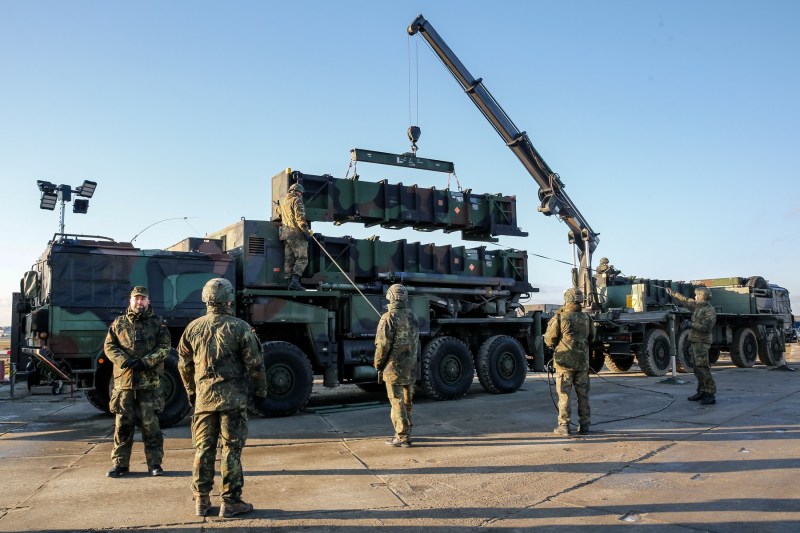
German soldiers carry batteries of the MIM 104 Patriot surface-to-air defense system. Jasionka base near Rzeszow, Poland on January 23, 2025. PHOTO: Dominika Zarzycka/NurPhoto/Shutt / Shutterstock Editorial / Profimedia
NATO Secretary General Mark Rutte on Tuesday in Kiev asked supporters of Ukraine to search their stockpiles of weapons and ammunition and give it everything they can, including anti-aircraft defense means, especially Patriot missiles, after the Ukrainian energy infrastructure was hit by a new massive volley of Russian missiles and drones, AFP and EFE agencies write.
“Ukraine is and will remain central to our security, and our commitment to supporting Ukraine is unwavering,” said Rutte, who arrived in Kiev after Russia launched 71 missiles and around 450 drones overnight in a new airstrike that Ukrainian authorities said again hit energy facilities.
“I urge the allies to look deeply into their stocks (of weapons and ammunition, no) and offer everything they can to meet Ukraine's needs, especially in terms of air defense,” the NATO head indicated, according to Agerpres.
Both Rutte and Ukrainian President Volodymyr Zelenskiy have emphasized Ukraine's need for American Patriot missiles and anti-aircraft systems to be able to intercept Russian ballistic missiles.
The Secretary General of NATO announced for next week a new meeting of the countries that militarily support Ukraine in the war with Russia, a meeting that will prioritize obtaining new Patriot systems and new missiles for these anti-aircraft batteries.
Rutte also mentioned that two-thirds of NATO states contribute financially to the initiative by which the Europeans buy weapons for Ukraine from the US and insisted that the military aid offered to Kiev should arrive faster.
President Zelensky said that at the second round of trilateral talks between Ukraine, Russia and the US, which will be held in Abu Dhabi on Wednesday and Thursday, he is willing to accept further de-escalation measures.
In this regard, Zelenski described as “very reasonable” the energy truce proposal advanced last week by US President Donald Trump and accepted by Russian leader Vladimir Putin only until Sunday, February 1.