One of Romania's most expensive economic losses, which is almost never discussed, although Statistics periodically brings it to the fore

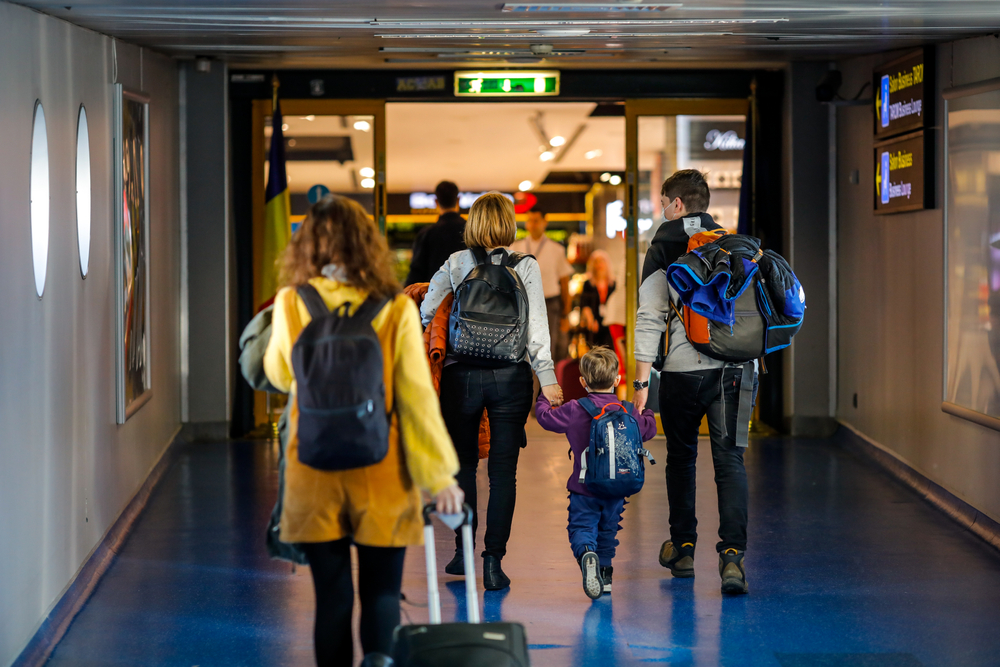
These days there is a lot of talk about immigration and emigration. Some families are already packed. PHOTO: Shutterstock
In 2024, almost 216,000 Romanians left the country, according to an announcement made these days by the National Institute of Statistics. More than 50,000 left permanently. The rest is temporary – at work, looking for a job or studying. Beyond the natural mobility in an open European Union, the numbers tell a more serious story: Romania exports exactly the people it needs the most.
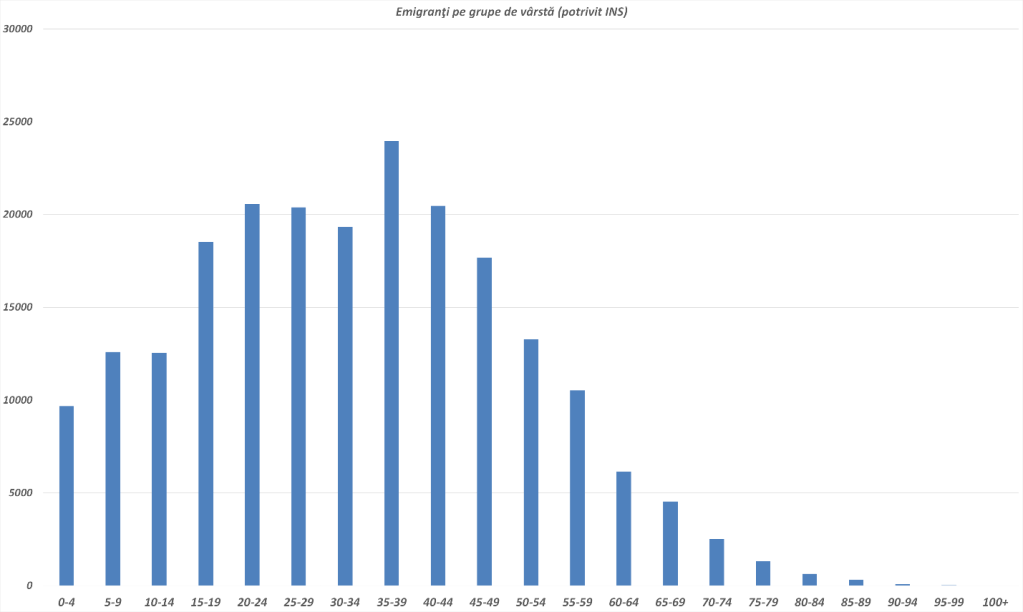
The age group that leaves the most is 35–39 years – the age of professional maturity, of maximum productivity, of irreversible life decisions, Statistics data shows. Almost 10% of Romanians who have left temporarily have higher education. And among those already settled in other European states, one in four is a college graduate.
The number of Romanians with higher education who went to work abroad increased by almost 70,000
In total, 2.34 million Romanians between the ages of 20 and 64 live today in another European Union state, according to Eurostat. It is one of the largest active diasporas in Europe.
However, her profile is more worrying: the number of Romanians with higher education who went to work abroad increased by almost 70,000, according to the latest Census data. Compared to 2008, the number of Romanian college graduates living outside the country increased by 144%.
The geography of the exodus, in turn, says something essential. Most Romanians with higher education who leave come from Bucharest, followed by Constanța and Bihor. At the general level of education, the biggest losses come from Moldova and the Capital – exactly the areas that would have needed the most human capital for convergence and development.
For each migrant with university education, Romania loses approximately 50,000 dollars
The cost of this phenomenon is not only social. It is also financial. For each migrant with university education, Romania loses approximately 50,000 dollars – the equivalent of 16-20 years of publicly funded education. An investment that the state makes in full and whose benefits are collected by other savings. Paradoxically, at the government level, this topic remains marginal, treated rather as a one-off problem of labor shortages, not as a strategic vulnerability.
The consequences are already visible. In the large university centers – Bucharest, Cluj, Iași, Timișoara – the pressure on the labor market is increasing, and skills are becoming increasingly difficult to retain. In health, the situation has long exceeded the alarm threshold: the rate of unfilled positions is more than twice the average of the economy.
For doctors, the situation is probably among the worst. Almost 2,200 Romanian doctors requested in 2020, the first year of the pandemic, the issuance of compliance certificates (documents that allow them to practice outside the country), according to data obtained by HotNews.ro from the Ministry of Health. Between 2000 and 2013, the number of doctors who left Romania exceeded 14,000 people. The result: entire rural communities remain without real access to medical services, and social inequalities deepen.
The term “brain drain” was first used by the British Royal Society to describe the departure of scientists from the United Kingdom to North America. Today, he describes the reality of Romania: engineers, doctors, researchers, locally trained specialists who build their future elsewhere.
Until 2006, Romanian migration was mostly temporary and dominated by people with secondary education. After joining the European Union, the profile changed radically: highly skilled migration became structural.
Romania is not only facing a labor shortage. They face a systematic loss of the future – one that does not appear in budgets, but is felt, year after year, in hospitals, universities, specialists in various fields and entire communities.
Read here the study “Impact of the brain drain in Romania. Possible solutions“.