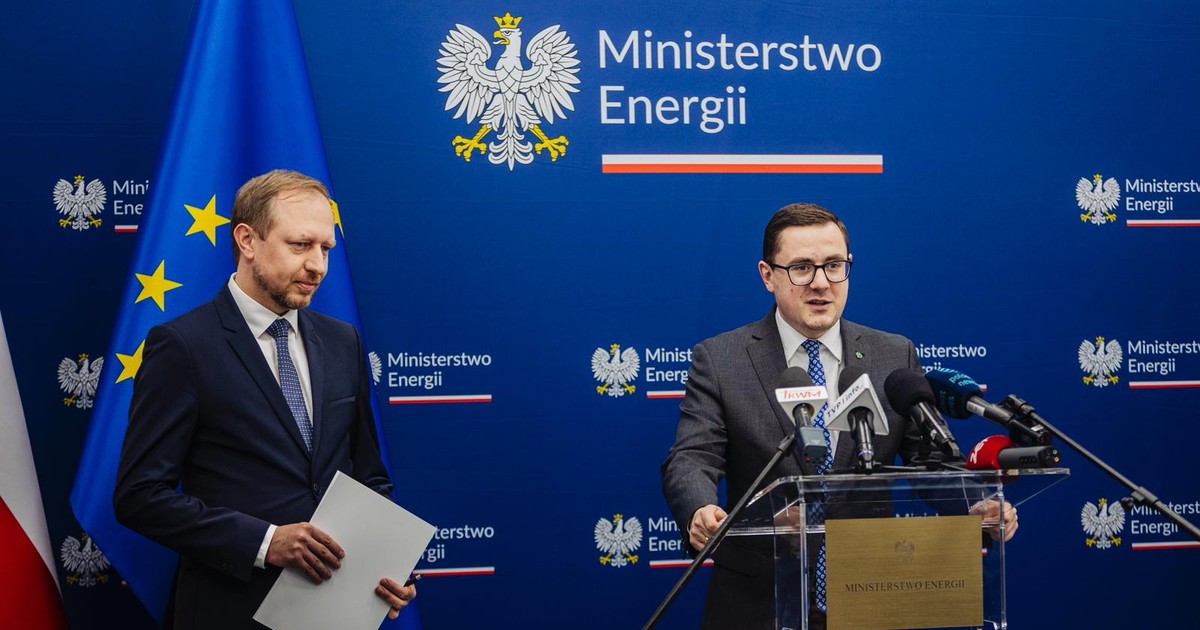
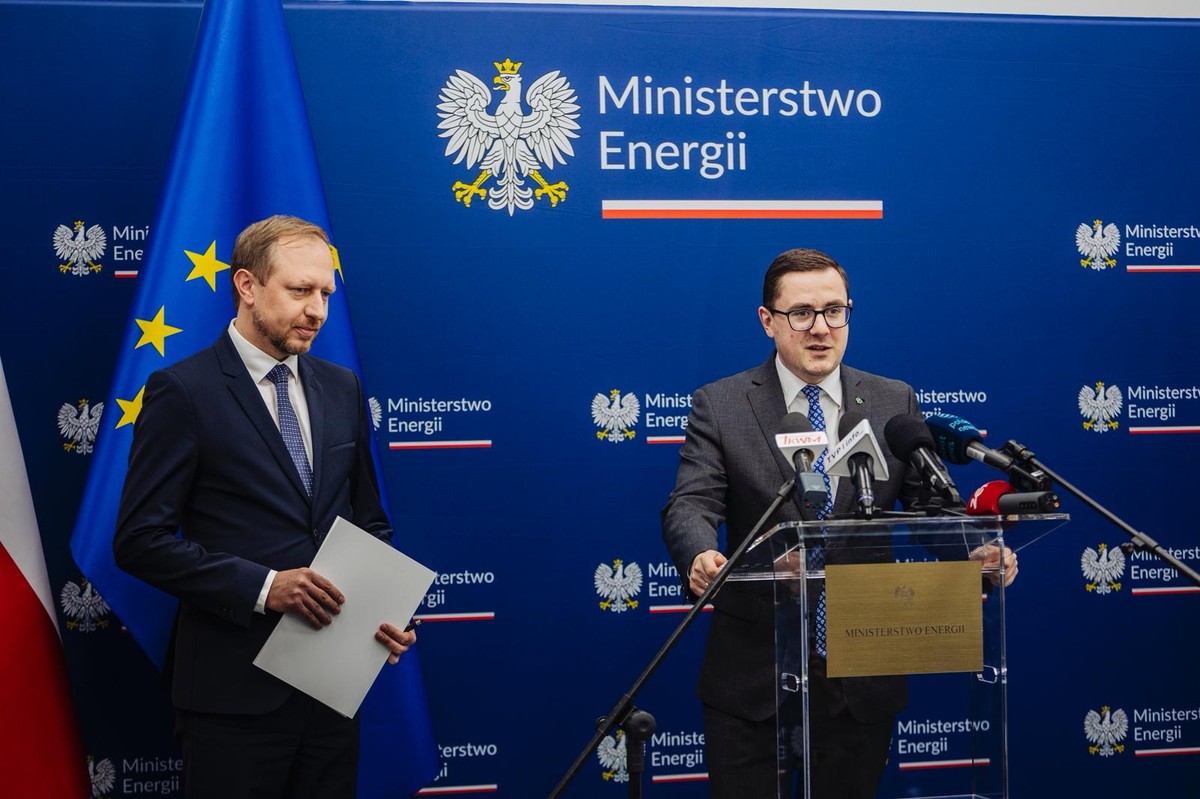
As Wojciech Wrochna, the government representative for strategic energy infrastructure, says, this act is intended to systematize the issued connection conditions and reduce the scope for speculation in the connection area.
— Connection costs are significant today and we cover them in our energy bills. A project with issued connection conditions is much more expensive than without these conditions, he emphasizes.
It states that Today in Poland we have issued connection conditions amounting to 240 GW of power (150 GW for renewable energy installations and 90 GW for energy storage), of which 36 GW has already been built, and 50 GW, as predicted by the government and Polish Power Grids, “will actually be built“. – The rest – over 150 GW – without contracts and operating installations – is to be released thanks to this regulation – emphasizes Wojciech Wrochna.
As he adds, “240 GW is three times more than the installed capacity in the system today – it is about 75 GW.”
According to Wrochna, there are entities in Poland that have conditions for a capacity close to 30 GW for photovoltaic installations. — Such an entity rules the system – operating practically in oligopoly conditions. Approximately 10 entities have the conditions for installations with a capacity of approximately 120 GW, he emphasizes.
– We have reached the limit, it is no longer possible to issue new connection conditions, meanwhile many projects with issued conditions are not being implemented – adds the government representative.
The minister explains the reasons for the fee increases
The project assumes an increase in the advance payment for connecting renewable energy sources to the grid from PLN 30 per kW to PLN 60 per kW. It also introduces a new additional application fee (PLN 1 per kW), and estimates the contract performance security at PLN 30-60 per kW – depending on the installation's power. The terms – today valid for two years – are to be valid for 12 months.
— The advance payment amount has not been changed for 17 years. The act increases its price – it is an indexation taking into account inflation, etc. We are also introducing an additional fee – which does not exist today – for processing the connection application. We are introducing this to filter out entities with speculative intentions, explains Wojciech Wrochna. He adds that the milestones provided for in the project “will eliminate those who do not implement the investment.”
Each contract will contain milestones, i.e. specific stages of the investment, for example timely obtaining a building permit. – Their implementation is required, and the consequence of their failure will be the termination of the contract, which eliminates speculation and allows for efficient planning of connections – explains the Ministry of Energy.
Read also: Is Poland at risk of a blackout? The operator of the Polish power system reveals its cards
How the government responds to allegations that the law is retroactive
Parts of the renewable energy industry accuse the project of changing “the rules of the game during its duration.” — New, high fees and financial security will also cover investments that have already obtained connection conditions or signed agreements with network operators. In practice, this means that the law will apply retroactively and undermine trust in the state – argues several organizations from the renewable energy industry in an open letter to Prime Minister Donald Tusk.
As they argue, for thousands of investors – mostly Polish companies – this means the risk of losing multi-million funds that were invested in accordance with applicable law. — In extreme cases, new financial obligations may amount to several to several dozen million zlotys for one project, with no guarantee that the investment can be implemented due to factors beyond the investor's control – emphasize entrepreneurs from the renewable energy industry.
— The allegations that the law is retroactive are misplaced. Someone who has connection conditions does not know on what specific terms he will conclude a contract. If we do not have a developed project or a specific contract, we cannot talk about an acquired right, and therefore we cannot talk about the retroactive effect of the law – argues Wojciech Wrochna, a lawyer.
As he sums up, the solutions proposed in the act are intended to “heal the system and provide opportunities for the implementation of new projects.”
— This bill is a compromise with the industry — the ministry gave up pushing the concept of an auction for the allocation of connection conditions. In consultation with the Ministry of Climate, the Ministry of Energy also decided to relax the security provisions. While working on this project, we were in constant dialogue with the European Commission, concludes Wojciech Wrochna.
Read also: Is Poland at risk of a blackout? The operator of the Polish power system reveals its cards
The government adopted the draft amendment to the Energy Law (UC84), developed by the Ministry of Energy, last week. Now the Sejm will deal with it.
The act will change the rules for connecting installations to power grids. It is intended to accelerate investments by supporting the development of renewable energy sources, energy storage facilities and biogas plants.
The ministry assures that the regulations will increase the availability of connection capacity and that end users will gain greater control over their costs.
Read also: New electricity and gas tariffs from January. What does this mean for bills?
The project is part of the anti-blackout package
The project is part of the anti-blackout package – the aim of the proposed changes is to accelerate the energy transformation, increase the security of energy supplies and improve the functioning of the market for energy consumers and producers.
— The purpose of the new regulations is unblocking unused connection conditions and fuller use of the existing energy infrastructurej. We create benefits for the entire energy market – we focus on faster procedures, greater transparency and more stable conditions for the development of new generation capacities. This is another step towards a modern, stable and effective energy system, says Minister of Energy Miłosz Motyka.
According to the project, investors will be able to benefit from flexible connection agreements, which will also allow the installation to be launched during the transitional period – before the network is fully developed. This change will shorten project implementation times and reduce barriers resulting from local capacity constraints.
It also envisages an extension of the “cable pooling” concept – it enables the connection to be shared not only by RES installations, but also by energy storage facilities and other installations. Thanks to this, the existing network infrastructure is to be used more effectively, without the need for expensive expansion.
The connection process is also expected to be less complicated by reducing the number of required documents.