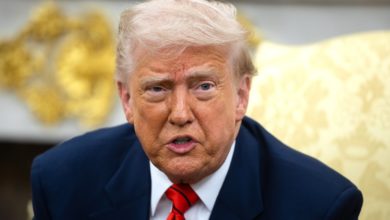
Since Donald Trump's military intervention in Venezuela, it has dominated the debate in Washington new word: FAFO, short for “F*** Around And Find Out”which translates to “go crazy and see what happens.” Trump's critics say this is what his strategy is – and nothing else.
Although the situation in Venezuela after the action of American special forces seems chaotic, there is a clear plan behind the American action. Trump uses a proven tool of power to subjugate a Latin American country at his discretion. However, Venezuelans know the Americans' weak point very well and – if necessary – they will use it without scruple.
First of all: the large oil reserves in Venezuela are a secondary issue for Americans. Unlike the beginning of the Iraq War in 2003, this year The US appetite for “black gold” is largely satisfied. The United States is today the largest oil producer in the world.
The article continues below the video
The main goal of the coup in Caracas is containment China, Russia and Iran — that is, America's three geopolitical opponents. China has been trying to take over Venezuelan deposits of rare metals for years, the Russians have been conducting military training there, and Iran has been building combat drones on the outskirts of the capital.
Washington cannot treat Rodriguez the way it treated Maduro
Removing leader Nicolas Maduro and putting heavy pressure on the interim government is intended to allow Trump to solve these three problems in one fell swoop. However, the question is: how does Washington intend to dot the i's? After all, Venezuela's interim president, Delcy Rodriguez, is closely associated with U.S. adversaries. This is shown by the list of the first three people who congratulated her after taking office: the Chinese ambassador, the Russian ambassador and the Iranian ambassador (who, however, instead of shaking hands with the woman, politely nodded his head).
Trump cannot simply arrest the new head of government, as he did with Maduro. Maduro was wanted by the United Statesand his kidnapping from Caracas was, according to US law, a police action carried out by the military, not a coup d'état. Especially since the US did not recognize Maduro as a legal president. However, there is no arrest warrant for Rodriguez. Both the political and legal hurdles Trump would have to overcome to attack her directly are much greater.
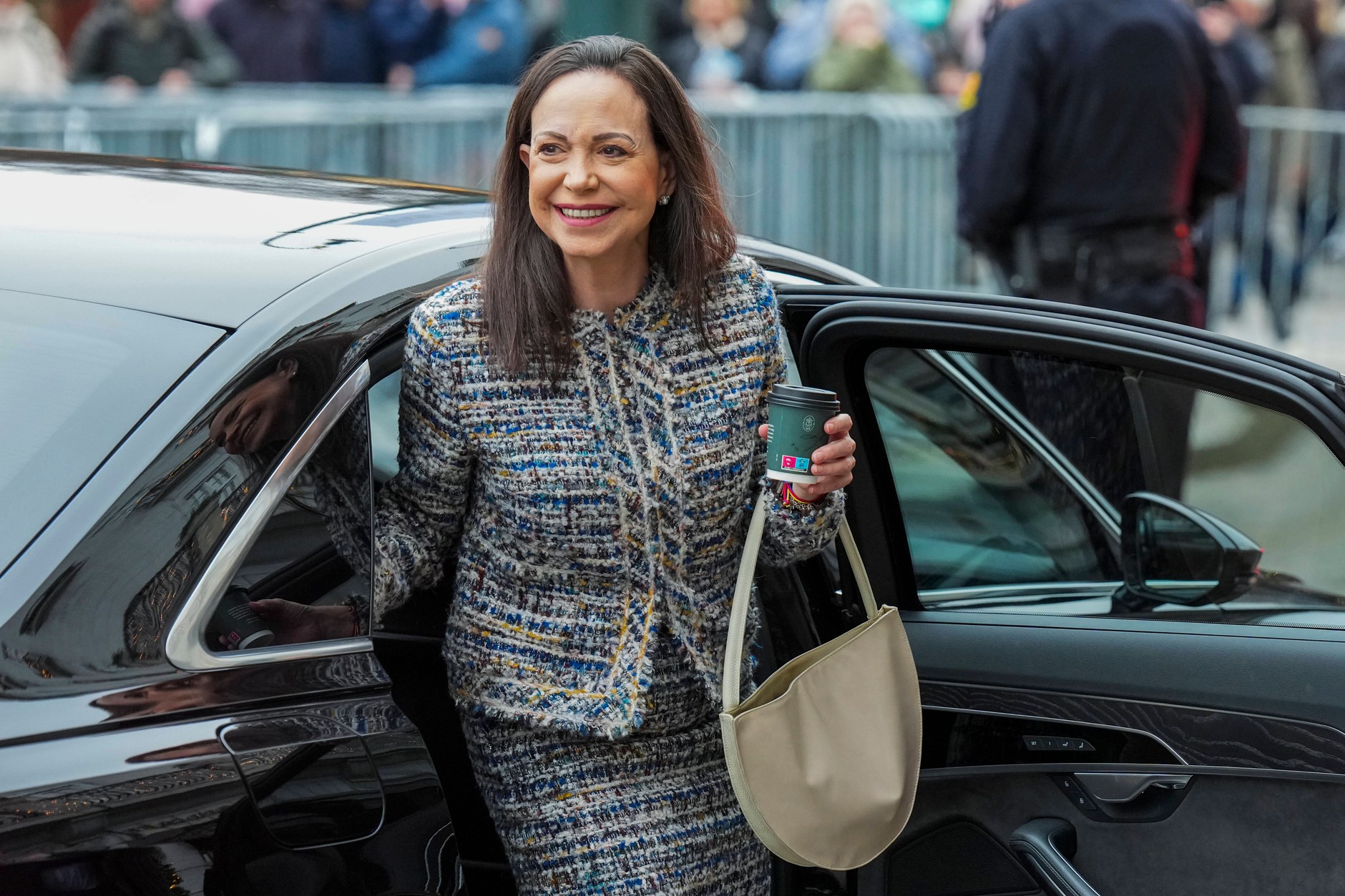
Another option could be to hand power to the opposition. Even the Nobel Peace laureate, Maria Corina Machado, who dedicated her award to Trump and currently lives in exile in the USA, was ready to do this. But American intelligence services advised Trump against this solution because Machado does not have the support of the military and would not be able to effectively manage Venezuela.
María Corina Machado, Nobel Peace Prize winner, in front of a hotel in Oslo, December 12, 2025.Ole Berg-Rusten / PAP
So it remains putting pressure on interim president Delcy Rodriguez. Trump is doing this by blocking Venezuelan oil exports. Without the sale of oil (which constitutes 90 percent of all exported goods), the regime in Caracas loses the resources necessary to survive. Venezuela is already having to limit production because the blockade causes its warehouses to be overflowing.
The regime will reach an agreement with the Americans, ordinary Venezuelans will be left with nothing
Rodriguez seems to have gotten the message. However, he has an ace up his sleeve: knows that Trump's threats have limits and he cannot simply take over Venezuela. According to American experts, to conquer this mountainous country would require at least 150,000, and preferably 200,000. soldiers – much more than 16 thousand currently stationed in the region.
The “peace president” in Washington cannot afford a guerrilla war that will cost American victims. With Trump's “America First” slogan, it would be difficult to justify a major war in Latin America. Moreover, for such an operation, Trump would have to obtain consent from Congress, unlike a lightning-fast action against Maduro, and this is currently bordering on impossible.
The Venezuelan regime (all others are still in power except Maduro) will likely cave and cooperate without another US invasion, while continuing to benefit from the country's natural resources – just as Venezuela's leaders have done for generations. The vast majority of the country's 31 million inhabitants are unlikely to experience any major changes. Their desperate hope for improvement in the competition for both sides plays a secondary role.
I’m Ashley Davis as an editor, I’m committed to upholding the highest standards of integrity and accuracy in every piece we publish. My work is driven by curiosity, a passion for truth, and a belief that journalism plays a crucial role in shaping public discourse. I strive to tell stories that not only inform but also inspire action and conversation.