During the first 11 months of his second term, US President Donald Trump's policy was full of decisions that resulted in the erosion of American soft power. The leader made drastic cuts to the USAID aid agency, limited American media activities abroad and interfered with the diplomatic service.
The day after the inauguration of the presidency, i.e. January 20, Trump signed an order for the US to withdraw from the World Health Organization (WHO). This led to a reduction in its budget from $5.3 billion to $4.9 billion, as the United States previously covered about 18 percent. WHO budget. The president accused this organization of failing to meet the challenges related to the Covid-19 pandemic and also accused it of lacking independence in the face of political pressure.
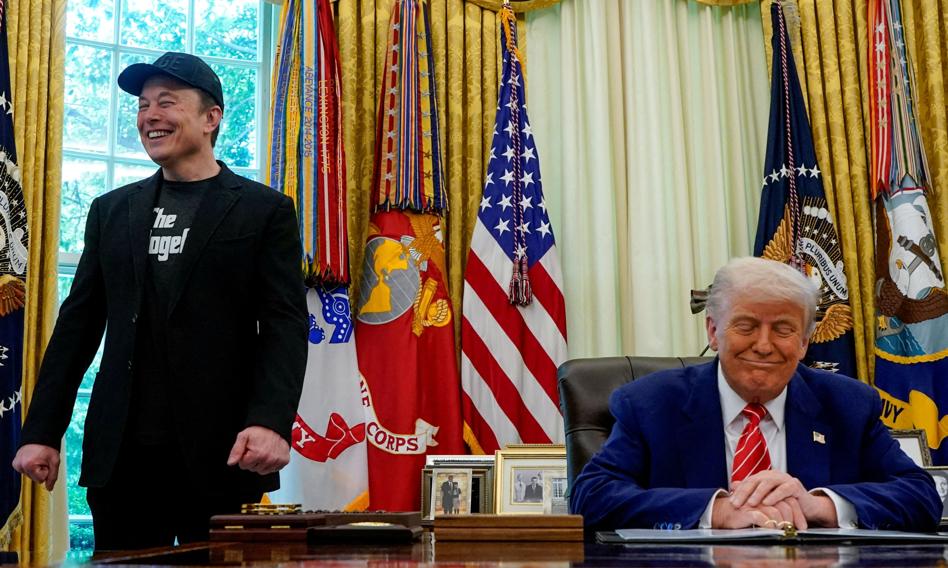
Another decision Trump made right after taking office in the White House was establishment of the Department of Government Efficiency (DOGE)led at the very beginning by multimillionaire Elon Musk. The purpose of this decision was, among others, reducing unnecessary regulations and spending in the federal government.
The president's other radical move was Agency for International Development (USAID), operating since 1961. This institution coordinates civilian foreign and development assistance. As Musk himself said, he decided to “throw USAID into a wood chipper,” calling the agency “evil” and “a nest of vipers of radical left-wing Marxists who hate America.” Without presenting any charges, the billionaire claimed that “USAID is a criminal organization.” Therefore, as he declared, “it's time to annihilate it.”
DOGE's actions began with removing the USAID logo from the institution's headquarters and closing its website. Then about 10,000 were released. employees and the $40 billion budget began to be cutintended to help over 100 countries. The agency was not completely eliminated, but the husk that remained after Musk's sharp cuts was placed under the management of the State Department. Over the next six weeks, Secretary of State Marco Rubio reduced the number of humanitarian programs by 83%. – from 6.2 thousand up to about 1 thousand
Non-governmental organizations that were supported by USAID around the world, including in Poland, were hit hard by the Trump-Musk duo's decision. In the long run, aid cuts may prove disastrous, especially for Africa. Reducing USAID health programs threatens, among other things, progress in the fight against HIV – especially considering that 25 million infected people live on the African continent, with the total number of patients in the world amounting to approximately 40 million. Since 2010, USAID initiatives have reduced the number of new HIV infections by half.
Moreover, as officials leaving USAID calculated, the closure of American projects would result in a 30 percent increase in the incidence of tuberculosis, which kills approximately 1.25 million people around the world every year. In their opinion, the result may also be that PLN 200,000 children will not receive proper help and will contract polio.
What is worth noting, nnot only the United States reduced its foreign aid budgets in 2025. This was also done by, among others, UK, Canada, France, Germany, Sweden and Switzerland.
One of the decisions made by DOGE caused a wave of laudatory comments from world autocrats. Trump decided to end funding for pro-democracy initiatives under USAID. The value of these projects was USD 1.6 billion, which represented 4%. the institution's annual budget. “A wise move,” commented former Russian President Dmitry Medvedev. The decision was also praised by the Prime Minister of Hungary, Viktor Orban, and the President of El Salvador, Nayib Bukele.
As a result, under Trump's executive order, the Global Media Agency was ordered to limit its operations and reduce its staff to a minimum, which in practice meant suspending the operations of Voice of America (VOA) television and radio, Radio Free Europe/Radio Liberty (RFE/RL) and Radio Free Asia. According to the New York Times, these editorial offices broadcast in 50 languages, reaching approximately 360 million recipients around the world, often without access to reliable news.
One of the last decisions of the White House administration was the dismissal in December of almost 30 high-ranking diplomats from posts including: in Senegal, Somalia, Nigeria, Cameroon and Rwanda. Heads of missions were also ordered to return to the country, including: from Egypt, Algeria, Slovakia, Montenegro, Armenia and North Macedonia. According to diplomatic sources cited by the British newspaper “Guardian”, these positions are to be filled by people loyal to the State Department.
According to Chris Patten, the last British governor of Hong Kong and former EU commissioner for external relations, “the geopolitical implications (related to President Trump's decisions) could be far-reaching.”
“While the United States is cutting aid budgets, China is stepping in to fill the void – expanding its influence in Africa and Southeast Asia through increased aid and investment,” Patten noted in a commentary posted on the Project Syndicate website. “As a result, China's popularity is growing in developing countries, while America's importance is rapidly declining,” added the former EU commissioner.
Marta Zabłocka (PAP)
mzb/ rtt/