The Gura Apelor Dam in Retezat, the winter attraction. The colossus raised from rocks and granite, in the heart of the mountains

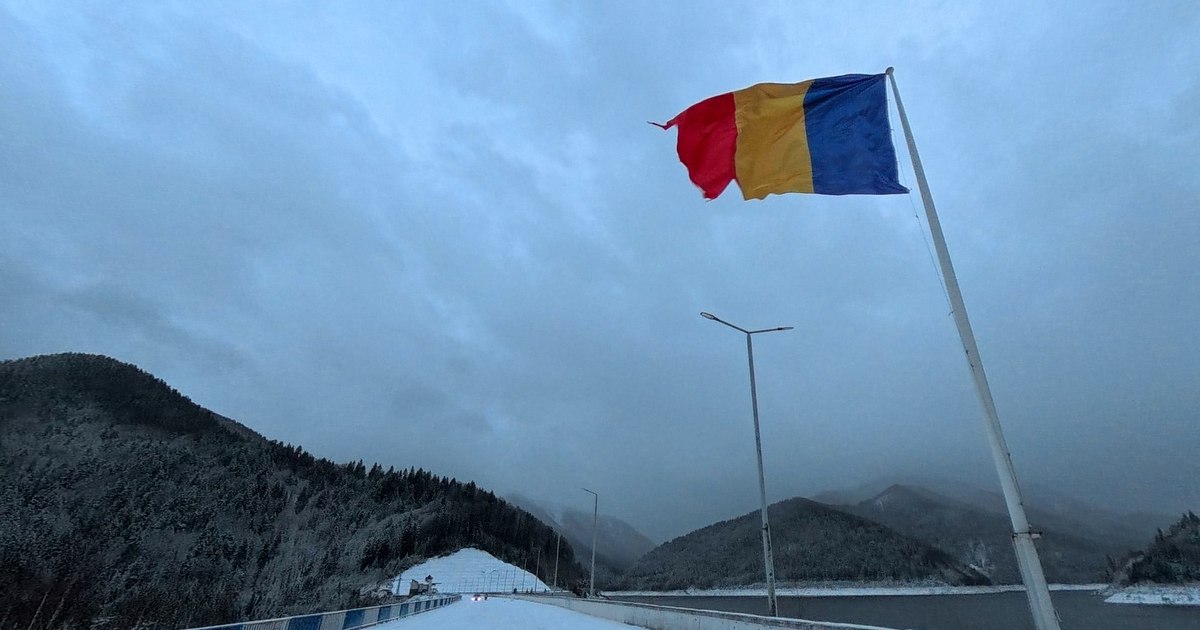
Over 10,000 people worked in the 1970s and 1980s at the Râul Mare – Retezat Hydropower Plant, which includes one of Romania's largest hydropower plants. The Gura Apelor reservoir has become a tourist landmark, attractive in any season, but winter gives it a special charm.
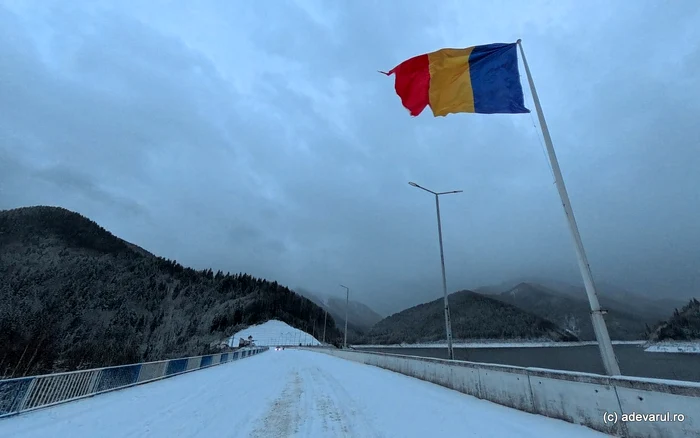
Lake Gura Apelor from Retezat. Photo: Daniel Guță. TRUTH
In the land of snow in Retezat, winter leads to the closure of most mountain trails, and most of the glacial lakes, the most sought-after attractions of the massif, become inaccessible to tourists or extremely risky.
Winter magic in Retezat
Heavy snows increase the risk of avalanches, bury tourist markers and, together with fog and cold, make ascents in the Retezat difficult even in more “safety-friendly” areas.
However, some places in the Retezat National Park remain accessible even by car. One of them is Gura Apelor Lake, the huge “reservoir” in the heart of the mountains for one of the largest hydropower plants in Romania.
The Râul Mare – Retezat hydropower development includes the Gura Apelor reservoir, the Retezat and Clopotiva hydropower plants (with a total installed power of 349 MW), the anchorage dam over 170 meters high and tens of kilometers of underground galleries, built between 1975 and 1999.
Located at over 1,000 meters above sea level, at the end of the road of over 20 kilometers (video) that goes up from the commune of Râu de Mori, on the valley of the Râului Mare, the Gura Apelor lake and its dam, built of rocks, clay, gravel and granite, are sought after by hiking and photography enthusiasts on winter days.
“We came from Cluj-Napoca and stayed at a guesthouse on the Răului Mare valley for a few days. Although we were afraid that the road would be inaccessible because of the snow, we managed to climb the dam and enjoyed the view of the lake and the snowy mountains around it.” a tourist reported.
51 years since the beginning of the works in Retezat
The tourists who came in the last few days decorated the dam with snowmen or were satisfied with the refreshing walk on the “back” of the colossus from Retezat. At the beginning of January, 51 years ago, the foundation stone of the dam in the mountains was laid, which would completely change the appearance of one of the wildest lands in Romania.
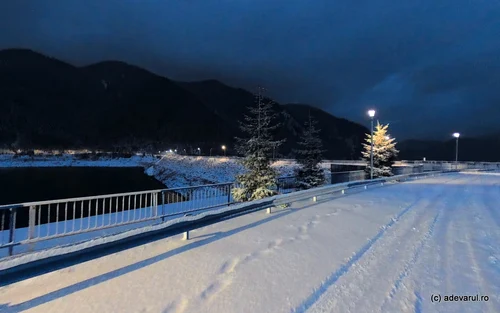
Image 1/17:
Lake Gura Apelor from Retezat Photo Daniel Guță THE TRUTH (15) jpg
The works on the Râul Mare – Retezat Hydropower Development began on January 10, 1975.
“The work in this area started with the digging of the water diversion gallery to build the dam on land, whose maximum height will reach 173 meters, being the highest dam in the country and which will create a reservoir with a volume of about 200 million cubic meters and spread over 400 hectares”, informed the engineer Nicolae Florescu in 1975, involved in the project.
The Gura Apelor dam was designed near the confluence of the Lăpușnicul Mare, Râul Șes and Lăpușnicul Mic rivers, in a popular tourist area that was the gateway to the trails in the Retezat and Godeanu Mountains.
“In theory, everything is very simple: you take a mountain, break it up and then transport it somewhere else, where it will form the new dam”the Flacăra magazine noted at the time.
Thousands of people worked in difficult conditions due to landslides, floods and harsh weather, and the construction site claimed more than 30 lives, most of them in the 1999 flood that hit the colony at the foot of the dam.
Over nine million cubic meters of rock were used in the construction of the dam, and the lake has an area of approximately 420 hectares, a maximum depth of over 160 meters and a maximum capacity of 210 million cubic meters of water.
The difficult conditions in Retezat
The works took place in a wild land, located at an altitude of over 1,000 meters and surrounded by the Țarcu, Godeanu and Retezat mountains, which rise to over 2,000 meters, a subalpine area with a harsh, cold and humid climate and with a relief dominated by precipitous slopes, massive granite rocks and numerous rapid and swirling streams.
The solution of building the dam from local materials was chosen to increase the economic efficiency of the work.
“In choosing the optimal dam option, the energy calculation was also taken into account, more specifically the consumption of primary fuels — diesel, gasoline, etc. — as well as electricity, incorporated in the construction materials, in their transport and putting into operation, as the technicians say. Just this calculation strongly advocated for the option finally chosen, not to mention the fact that it leads to a considerable saving of cement. You don't need to be a specialist to figure out how much cement would be “swallowed” a concrete dam the size of the one that was going to dam the waters of the Răului Mare, in the heart of the Retezatu. However, we can tell the lovers of numbers that this cement would have had to be transported in 49,000 wagons, that is, in about 700 trains. If it had been formed, it would have stretched from Bucharest to Timișoara.”informs engineer Nicolae Florescu, from the Institute of Hydrotechnical Studies and Designs, at the start of construction.
Tens of kilometers of galleries pierced the mountains
Huge efforts were made in the 70s and 80s for the construction of the main adduction from Retezat, a gallery with a length of over 18 kilometers and a diameter of 4.9 meters, dug into the mountains to collect the waters from Retezat and direct them to the Gura Apelor Lake.
“The last section of the Râul Mare – Gura Apelor adduction is 13,780 meters long and passes under the Retezat Scientific Reserve. The adduction and related intakes are located between 1,165 and 1,070 meters above sea level (meters above the sea – no) and also include four crossings (aqueducts) at the streams Paroș, Obârșia Nucșoarai, Nucșoara and the Râul Mare Tributary”, informs Hydroconstruction.
Another adduction of the Gura Apelor reservoir receives the waters of 12 streams on the northern slope of Retezat, through a system of underground galleries with a length of over 30 kilometers. In the first years of work, the galleries in the mountain were dug with rudimentary tools, and from 1980, for the first time in Romania, the mechanized excavation method was adopted by introducing a Robbins drilling machine, with an average advance of 174 meters per month and a maximum of 330 meters per month.
From Gura Apelor, the water is led through a concrete underground gallery, over 18 kilometers long, to the Retezat power station, one of the main producers of electricity in Romania. Although the initial term of execution was five years, the hydropower development was inaugurated in April 1986, 11 years after the start of the works, and the Retezat and Clopotiva hydropower plants went into operation in the following months.
Work on the dam continued until 1999, when it reached its final height (1,078.50 mdM). The Gura Apelor Lake in Retezat reached for the first time the maximum level of filling for which it was designed in 2021. In the coming years, the Retezat hydropower plant and its facilities will be renovated.